

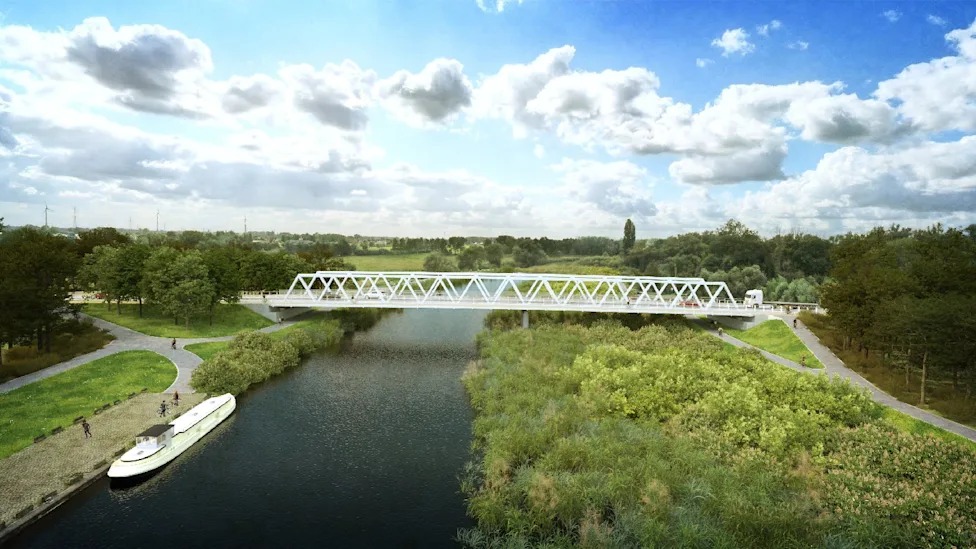
Work has officially started on the renewal of the new Durme Bridge in the town of Waasmunster, Belgium. Leaders gathered this week for a formal ceremony to mark the start of building efforts on site.
Representatives from the Flemish Roads and Traffic Agency joined officials from De Vlaamse Waterweg and local town leaders for the event. Senior managers from the primary build teams were also present to mark this milestone moment for local transit lines.
This project forms a key part of a larger plan to update the N446 regional road network. This essential road links the towns of Hamme, Waasmunster, and Dendermonde. Improving this connection will help lower daily traffic jams, improve safety, and ease movement for all motorists traveling through the region.
The primary project plan involves taking down the old structure and replacing it with a fresh crossing over the water. Crews will build a strong steel truss bridge at a site located slightly downstream from the original point.
Along with the new bridge structure, workers will upgrade surrounding roads, rebuild entry ramps, and add fresh links to riverside paths. These new path links will make walking and cycling along the river safer and more enjoyable for residents and visitors alike.
Building teams face technical tasks as they integrate bridge engineering, road layouts, and landscape design. Because the team will build the new crossing downstream, workers must reroute road paths on both sides of the river bank. These new road curves will seamlessly connect the new steel bridge to the existing network.
A group of experienced building firms is handling the construction. The lead company brings deep technical knowledge and collaborates with specialized road infrastructure and steel erection experts. Together, these teams will manage every stage from early ground site prep to final bridge testing.
Demolition of the existing bridge will happen in planned stages to protect the surrounding environment and maintain safety. Teams will carefully break down the old frame while keeping the river channel clear for boats and local water wildlife.
Local leaders emphasize that updating regional roads is essential for long-term growth and safety. The old bridge showed clear signs of wear and needed a complete replacement to handle daily vehicle loads. Modern engineering standards will allow the new bridge to support heavier transport and last for many decades.
Neighbors and local business owners have welcomed the investment in regional transit options. While road diversions will be active during construction phases, clear signs will guide drivers along fast detour routes to keep daily travel simple.
Environmental teams are also working alongside project managers to minimize disruption to nearby nature zones. Tree planting and green bank updates will follow the main construction phases to ensure the new site fits naturally into the surrounding river scenery.
The overall effort combines precise bridge building, modern road updates, and clean parkland design to serve the community for many decades to come. Building schedules remain on track, with all primary bridge work expected to reach full completion by the end of 2027.

