

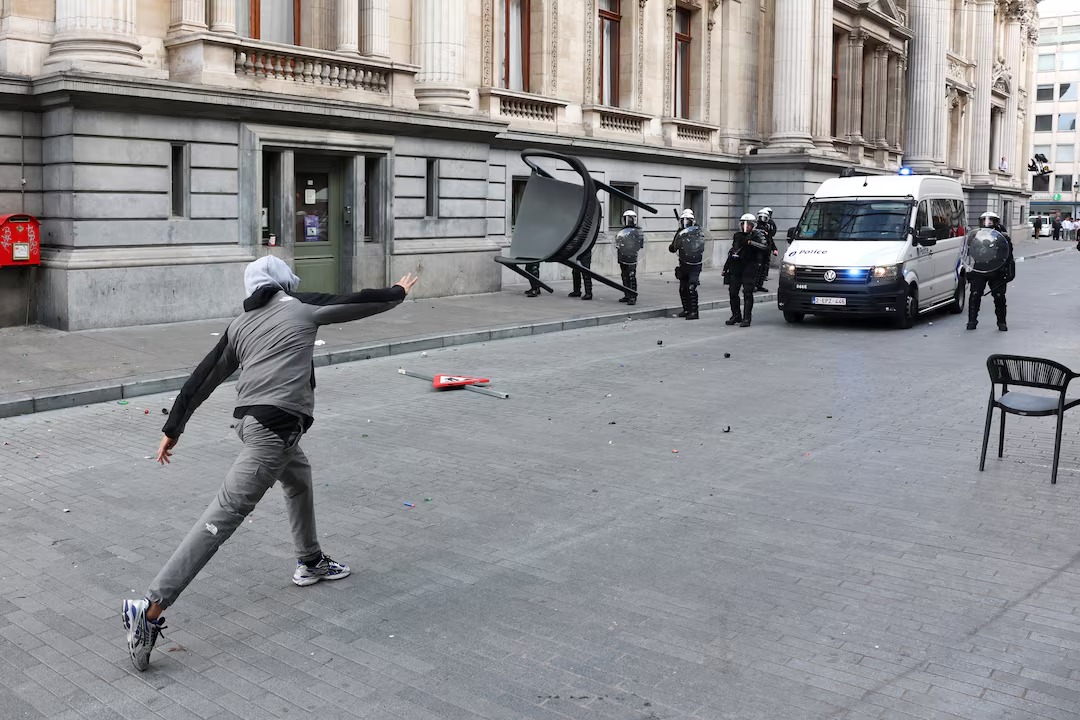
Several hundred mostly young demonstrators clashed with police in Brussels during protests linked to concerns about education costs and access to higher education. The gathering took place on Saturday, October 17, as student-led unrest in France spread into neighbouring Belgium. What began as a demonstration over education and public spending escalated when some protesters confronted police.
Many participants were concerned that proposed reforms could make higher education harder to access. Students also raised worries about the cost of studying and the resources available to young people. These issues have become more visible as families face wider financial pressure and debate the level of support that governments should provide for public services.
The situation became tense in central Brussels. Some demonstrators wore masks and shouted political slogans, while police responded with tear gas and water cannons after a car was overturned. Belgium’s Interior Minister Bernard Quintin condemned the violence and said the disturbance had moved beyond legitimate protest. Authorities said they would take steps to restore public order.
Similar demonstrations were reported in Liège, where students also voiced concerns about education costs and access to study materials. The protests reflect wider dissatisfaction among some young people who fear that changes to public policy could reduce their opportunities. However, the reasons for each local demonstration may differ, and the actions of a small group should not be treated as the views of every participant.
Belgium’s government faces the challenge of protecting the right to peaceful protest while preventing violence and damage. Police must respond to immediate risks, but the authorities also need to understand the concerns that bring people into the streets. A response focused only on public order may not resolve the debate over education funding and access.
The clashes show how quickly local demonstrations can be influenced by events in neighbouring countries. They also underline the importance of keeping protests peaceful so that the original demands remain clear. Further discussions between officials, education groups and students may help address concerns before tensions grow.

