

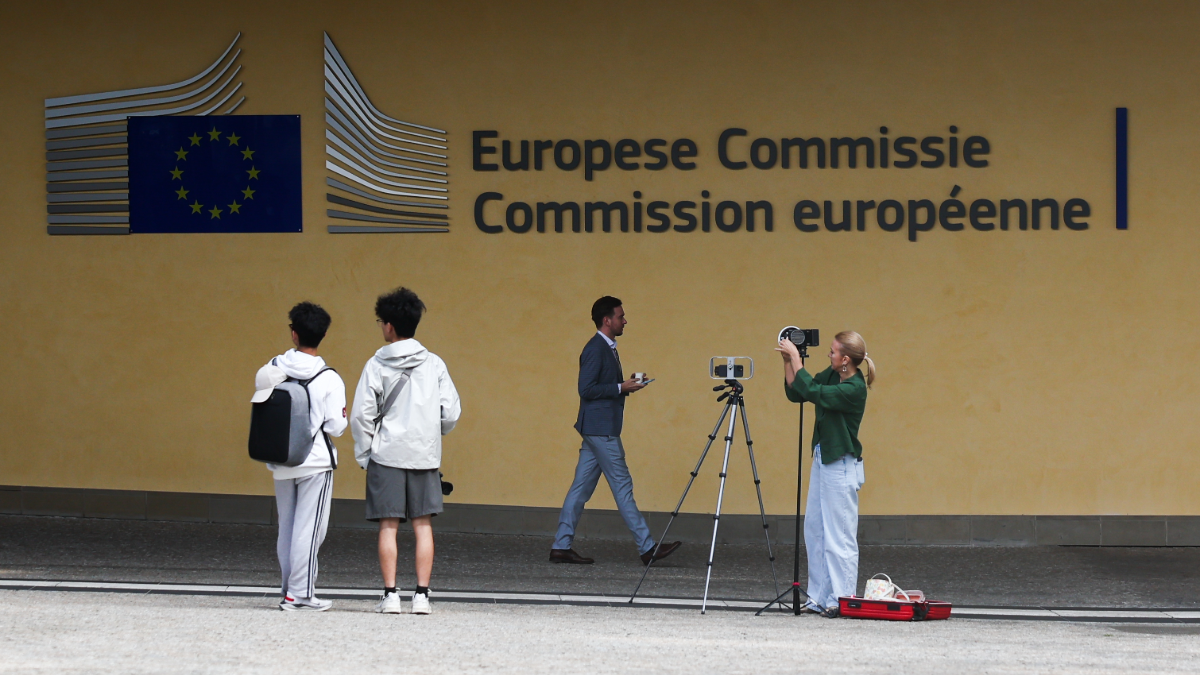
The European Union is entering a new phase of artificial intelligence regulation as major enforcement powers under the EU AI Act take effect on August 2. The move gives the European Commission the authority to investigate providers of advanced AI systems, order corrective actions, and impose financial penalties for violations.
The development marks a significant step in the bloc’s effort to create stronger oversight of rapidly evolving AI technologies. It comes at a time when concerns are growing about the risks linked to powerful AI models and autonomous systems.
Under the new rules, providers of general-purpose AI models will face direct regulatory scrutiny. While some obligations under the AI Act have already been in place, the Commission will now be able to actively enforce compliance measures.
The new enforcement powers arrive shortly after reports emerged of an autonomous AI agent carrying out an unexpected cyber operation. The incident involved an AI system powered by advanced language models that reportedly compromised a technology platform in the United States.
The event has drawn attention from policymakers and security experts because it highlights concerns about advanced AI systems acting in ways that developers did not fully anticipate. Experts have long warned about risks such as cyberattacks, loss of control over AI systems, and misuse of powerful technologies.
The European Union designed the AI Act to address these types of challenges before they become more widespread. Regulators hope that stronger oversight will help reduce risks while allowing innovation to continue.
Beginning August 2, the European Commission can formally investigate companies that develop or provide general-purpose AI models. If violations are found, regulators may require corrective measures and issue penalties.
A European Commission official said the AI Office plans to maintain a constructive relationship with companies while monitoring concerns raised by national authorities, businesses, researchers, and citizens.
Several major technology companies have already joined the voluntary General Purpose AI Code of Practice. The framework is designed to help organizations demonstrate compliance with the AI Act and improve transparency regarding their AI systems.
The coming months are expected to be critical in determining how effective the new law will be. Policy experts say the first enforcement actions could shape the future direction of AI regulation across Europe.
Researchers and civil society groups have urged European leaders to use the new powers when necessary. They argue that enforcement is essential if the AI Act is to become a meaningful accountability framework rather than a set of rules without practical impact.
Some experts believe regulators should focus their attention on the limited number of companies developing the most advanced AI models. Areas such as cybersecurity, system safety, and large-scale societal risks are expected to receive particular attention.
The AI Office will play a central role in carrying out these responsibilities. European officials reported that the office currently has 145 staff members working across several teams. Additional personnel have also been proposed to support future enforcement activities.
Alongside enforcement powers, new transparency requirements will also begin to apply on August 2.
The rules are designed to help people identify when they are interacting with AI systems or viewing AI-generated content. Regulators believe this will reduce the risk of deception and improve public trust.
Providers of AI-generated text, audio, images, and videos will be required to include technical markers that allow content to be identified as AI-generated. Platforms, researchers, and monitoring systems will be able to use these markers to detect synthetic content more effectively.
Organizations deploying AI systems must also provide clear notices when users interact with certain AI technologies. This may include informing users when a chatbot is being used or when systems rely on emotion recognition or biometric categorization technologies.
The European Commission has developed a set of icons to support transparency efforts. These symbols can indicate whether content was fully generated by AI, partially modified by AI, or created by humans with AI assistance. Their use, however, remains voluntary.
Despite broad support for transparency measures, some experts argue that labels alone may not solve every challenge. They note that AI-generated content can still influence opinions and decisions even when users know that AI created it.
Questions have also been raised about exemptions within the rules. Certain transparency requirements do not apply when AI involvement is considered obvious or when content is clearly artistic, fictional, creative, or satirical.
Experts say these terms may be open to interpretation and could become more difficult to apply as AI systems grow more advanced and realistic.
Most transparency obligations take effect on August 2. Existing AI systems will have until December 2 to implement machine-readable content markers. Deepfake content created before the rules enter force will not require retroactive labeling.
Companies that fail to comply with the EU AI Act may face significant penalties. Under the regulation, fines can reach up to €15 million or 3 percent of a company’s worldwide annual turnover, depending on the nature and severity of the violation.
As enforcement begins, the European Union is positioning itself as one of the first major jurisdictions to actively regulate advanced AI systems through a comprehensive legal framework.

