

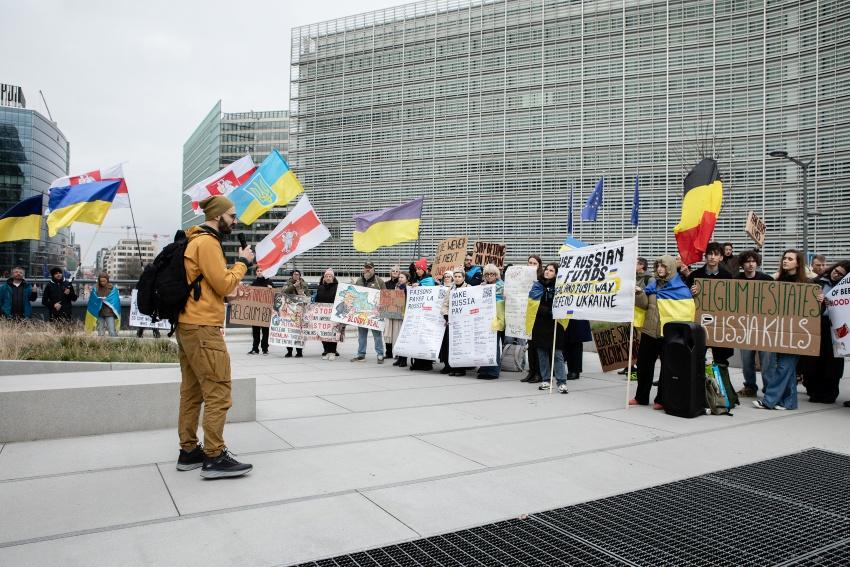
Belgium is facing fresh pressure from several European countries over the future of frozen Russian assets held in Europe. The Netherlands, Poland, Spain and Sweden have urged the European Union to reopen talks on using the money to support Ukraine. Much of the Russian central bank money is held at Euroclear in Brussels, putting Belgium at the center of the dispute.
The four countries sent a letter to EU leaders calling for new work on possible ways to use the frozen funds. They argue that Ukraine needs more financial support as its war with Russia continues. The countries want the EU to study legal and financial options for using the assets rather than leaving them untouched. The issue could return to the agenda at a meeting of EU foreign ministers in early September.
The amount involved is huge. Around €210 billion in Russian central bank assets is frozen in the European Union. About €185 billion of that amount is held through Euroclear in Brussels. This makes Belgium especially important in any plan to use the funds for Ukraine.
Belgium has resisted plans to use the assets directly. Its government has raised concerns about legal risks and possible financial losses. Officials fear that Belgium could face major costs if Russia takes legal action or if other problems arise from the use of the frozen money. The large amount held by Euroclear makes those risks especially important for the country.
The debate is not new. EU countries have already agreed to provide Ukraine with a major loan for 2026 and 2027. Supporters of using Russian assets say that the existing funds may not be enough to meet Ukraine’s needs. They argue that Russia should bear more of the cost of the damage caused by the war.
Belgium’s position has therefore become an important part of the wider EU debate. Other governments want a way to increase support for Ukraine without placing the full cost on European taxpayers. Belgium, however, wants stronger guarantees before agreeing to any plan that could expose the country to legal or financial risk.
The location of the assets makes the issue even more sensitive. Euroclear is based in Brussels and manages a huge amount of international financial activity. Any decision involving the frozen Russian funds could have effects beyond Belgium. It could also influence how investors view the safety of assets held within European financial institutions.
Supporters of the plan believe the frozen money should play a greater role in helping Ukraine. They say the funds are already blocked and could provide a major source of support. Belgium and other cautious governments remain concerned about the legal basis for taking such a step and about what could happen if Russia seeks compensation.
The issue could also become part of wider EU budget talks. European governments are already discussing long-term spending plans and the cost of supporting Ukraine. A new agreement on Russian assets could change the balance of those talks and give Ukraine another source of financial support.
For Belgium, the decision is difficult. The country is under pressure from several EU partners, but it also faces direct risks because so much of the frozen money is held in Brussels. The debate is likely to continue as European ministers prepare for their next discussions.
The dispute shows how closely Belgium is tied to the wider European response to Russia’s war against Ukraine. As EU governments seek more money for Ukraine, Brussels will remain one of the key places where the future of the frozen Russian assets is decided.

