

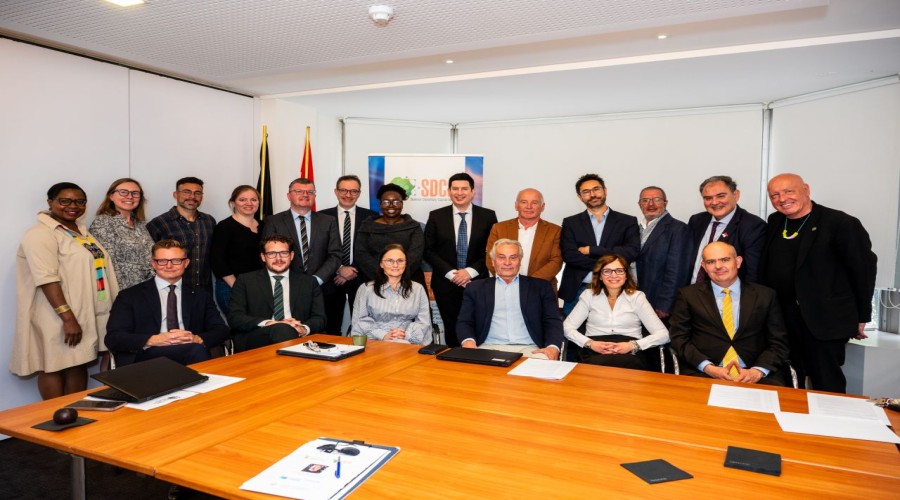
The Human Exposome Project Ethics initiative has taken a major step forward after international experts gathered in Brussels to begin developing a global ethical framework for one of the world’s most ambitious health research projects. The meeting focused on creating clear principles to guide exposome research and ensure that scientific progress is matched with strong ethical standards and public trust.
The Science Diplomacy Capital for Africa organized the high-level meeting at the South African Mission to the European Union on June 17. Around 30 experts from science, public policy, and international governance attended the session to prepare an initial ethical blueprint for the Human Exposome Project.
The participants worked together to draft a 20-point framework covering the ethical design, governance, conduct, interpretation, and practical use of exposome research. Organizers said the framework aims to support responsible scientific innovation while protecting transparency, fairness, and public confidence.
The initiative received support from the Transatlantic Think Tank for Toxicology, the Science Diplomacy Capital for Africa, and South Africa’s Department of Science, Technology and Innovation. Additional support came from the International Network for Governmental Science Advice and the Global Exposome Forum.
The meeting also honored the late Professor Julian Kinderlerer, the former President of the European Group on Ethics. Participants recognized his long-standing contributions to science governance and ethical policy development, highlighting his influence on international scientific cooperation.
The discussions were chaired by Professor Thomas Hartung and guided by several senior experts, including Daan du Toit, Eudy Mabuza, Denis Sarigiannis, David Budtz Pedersen, Caradee Wright, and Nathalie Moll. Together, they explored how ethical principles can shape the future of large-scale health research.
The Human Exposome Project seeks to understand the complete range of environmental exposures that affect human health throughout life. Researchers plan to study how environmental, biological, and social factors interact to influence disease, health outcomes, and overall well-being.
Scientists believe the project will complement genomic research by looking beyond genetics. While genes play an important role in disease risk, experts say many health conditions are also influenced by environmental and lifestyle factors. Mapping these exposures could help researchers better understand disease prevention and improve public health policies.
Experts at the Brussels meeting agreed that exposome science offers significant opportunities but also raises important ethical questions. They said strong governance is needed to ensure accountability, openness, privacy protection, and responsible use of scientific data throughout the project.
A key focus of the discussions was ensuring equal participation by developing countries. Organizers said previous large international research projects have often benefited wealthier nations more than lower-income regions. The Human Exposome Project aims to promote fair access, shared knowledge, and equitable distribution of scientific benefits across the world.
Participants also emphasized the importance of public engagement and democratic accountability. They agreed that scientific innovation should move forward with public confidence and clear ethical safeguards that protect individuals and communities.
The draft ethical framework will be reviewed again during a meeting at UNESCO on July 17 before its planned public release at the Science Forum South Africa 2026 in Tshwane. Organizers also announced plans for a global communication campaign throughout 2027.
Future presentations are scheduled for the AAAS Annual Meeting in Chicago, the World Science Forum in Istanbul, and the World Conference of Science Journalists in London. These events are expected to encourage wider international discussion and cooperation around exposome science.
Organizers said the Human Exposome Project represents a major opportunity to improve global health research while promoting ethical responsibility. By combining scientific innovation with transparency, fairness, and international collaboration, they hope the project will deliver benefits that are shared across countries, regions, and future generations.

