

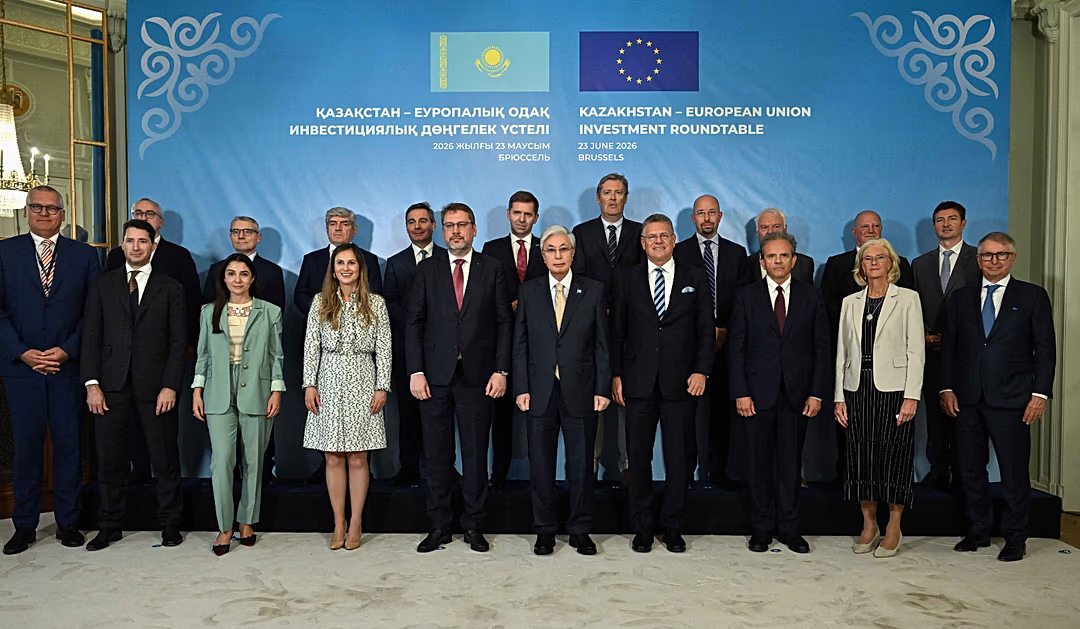
Kazakhstan has secured commercial agreements worth about €10 billion with European partners as President Kassym-Jomart Tokayev concluded a major visit to Brussels. The agreements highlight growing economic ties between Kazakhstan and the European Union and strengthen cooperation in transport, aviation, industry, and trade.
The deals were announced during a business forum attended by government officials, business leaders, and representatives of major European companies. The event marked a significant step in expanding relations between Kazakhstan and the European Union, which remains the country’s largest trading and investment partner.
The visit came more than a year after leaders from Central Asia and the European Union agreed to deepen cooperation during a summit in Samarkand. At that meeting, European leaders unveiled a major investment initiative designed to support development projects across the region.
During discussions in Brussels, European leaders reaffirmed Kazakhstan’s strategic importance. The country serves as a key link between Europe and Asia and plays a central role in the Middle Corridor trade route, which connects European markets with China and other parts of East Asia.
Kazakhstan has invested heavily in transport and logistics infrastructure to strengthen this route. Government officials said cargo volumes moving through the corridor have increased significantly over the past several years, rising from 800,000 tonnes annually to more than 4 million tonnes.
The government aims to further expand capacity to 10 million tonnes per year. Officials believe this would strengthen Kazakhstan’s position as a major transport hub connecting Europe and Asia.
Several agreements signed during the visit focused on improving connectivity. One of the most important was a new aviation agreement that will expand air travel opportunities between Kazakhstan and European Union member states.
The agreement will allow eligible European airlines to operate flights between Kazakhstan and several EU countries that previously lacked bilateral aviation arrangements. Officials said the move will improve travel options, support tourism, and encourage business activity between the two regions.
Another agreement will simplify visa procedures for Kazakh citizens traveling to Europe. While travelers will still require a Schengen visa, the process is expected to become easier, faster, and less expensive. Authorities also plan to standardize documentation requirements across participating countries.
Economic cooperation remained a central theme throughout the visit. Speaking at the business forum, Tokayev highlighted the importance of European investment in Kazakhstan’s economy.
According to government figures, trade between Kazakhstan and the European Union exceeded $45 billion last year. Nearly 4,000 European companies currently operate in Kazakhstan across various industries.
Tokayev also emphasized Kazakhstan’s role as a supplier of critical raw materials. He said the country is prepared to provide Europe with 21 of the 34 strategic rare earth materials considered important for modern industries and advanced technologies.
The largest commercial agreement announced during the visit involved Kazakhstan’s national airline, Air Astana, and Airbus. The deal, valued at approximately €7.3 billion, includes the purchase of 50 aircraft from the A320 family. Deliveries are expected to begin in 2031.
Another major agreement was signed with Alstom. The €967 million contract covers maintenance and servicing for locomotives operating within Kazakhstan’s railway network. Officials said the agreement will improve reliability and efficiency across key transport routes.
Additional deals were signed in sectors including petrochemicals, logistics, infrastructure, and industrial development. Kazakhstan’s sovereign wealth fund, Samruk Kazyna, accounted for about €8.4 billion of the total agreements announced.
Kazakhstan officials described the visit as a major success. They said the agreements demonstrate growing confidence among European businesses and reflect stronger economic cooperation between both sides.
Government representatives also expressed optimism that trade between Kazakhstan and the European Union will continue to grow in the coming years. With new investments, improved transport links, and expanding industrial cooperation, both sides aim to build a stronger partnership that supports long-term economic growth and regional connectivity.
The agreements signed in Brussels are expected to play an important role in advancing that goal while creating new opportunities for businesses, investors, and consumers across both regions.

