

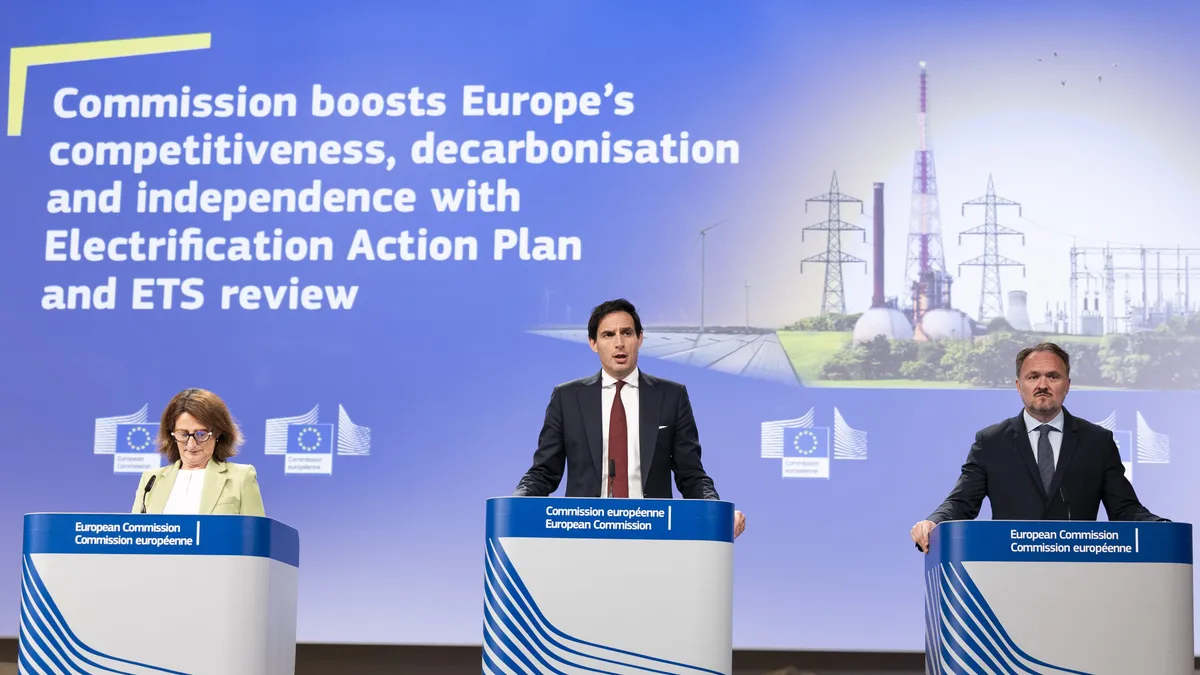
The European Commission has unveiled its long-awaited EU ETS Reform, introducing proposed changes to the European Union’s emissions trading system as policymakers seek to balance climate commitments with the needs of industry.
The emissions trading system, commonly known as the ETS, is the European Union’s main policy for reducing greenhouse gas emissions. The system places a price on carbon emissions by requiring companies in certain sectors to hold allowances that cover the carbon they release into the atmosphere. The approach is designed to encourage businesses to reduce emissions while supporting the EU’s broader climate strategy.
The latest reform follows months of negotiations between policymakers, industry representatives, and environmental groups. Discussions centered on how to maintain the EU’s climate ambitions while addressing concerns from businesses facing rising operating costs and increasing global competition.
The proposal comes at a time when European industries are under pressure from high energy costs, economic uncertainty, and international competition. Many businesses have argued that climate policies should provide enough flexibility to protect jobs and investment while allowing companies time to adapt to cleaner technologies.
At the same time, environmental organizations and climate experts have urged the European Commission to preserve the strength of the emissions trading system. They argue that weakening emission reduction measures could make it more difficult for the European Union to achieve its legally binding climate objectives.
One of the EU’s central climate goals is to reduce net greenhouse gas emissions by 90 percent by 2040 compared with earlier baseline levels. The bloc has also committed to reaching net-zero emissions by 2050, a target that forms the foundation of its long-term climate policy.
The emissions trading system plays a key role in achieving those objectives. By gradually reducing the number of available emission allowances over time, the system is designed to make carbon emissions more expensive and encourage investment in cleaner production methods, renewable energy, and low-carbon technologies.
Supporters of the reform say updating the ETS can help strengthen Europe’s climate policies while creating greater certainty for businesses planning long-term investments. They believe a stable and predictable carbon market encourages innovation and supports the transition toward cleaner industries.
Business groups, however, have continued to stress the importance of maintaining international competitiveness. Many manufacturers have warned that higher carbon costs could affect production, particularly in energy-intensive industries that compete with companies operating under less restrictive environmental regulations.
The European Commission’s proposal attempts to address these competing priorities by balancing environmental ambition with economic considerations. The reforms are intended to maintain progress toward climate targets while supporting industrial development and investment across the European Union.
The proposal will now move through the EU’s legislative process, where it will be reviewed and debated by the European Parliament and EU member states. Lawmakers are expected to discuss the details of the reform before any final legislation is adopted.
The outcome of those negotiations will help determine how the European Union advances its climate strategy over the coming decades. The EU ETS Reform is expected to remain one of the bloc’s most significant policy tools as Europe works toward reducing emissions, supporting economic growth, and achieving its long-term climate goals.

