

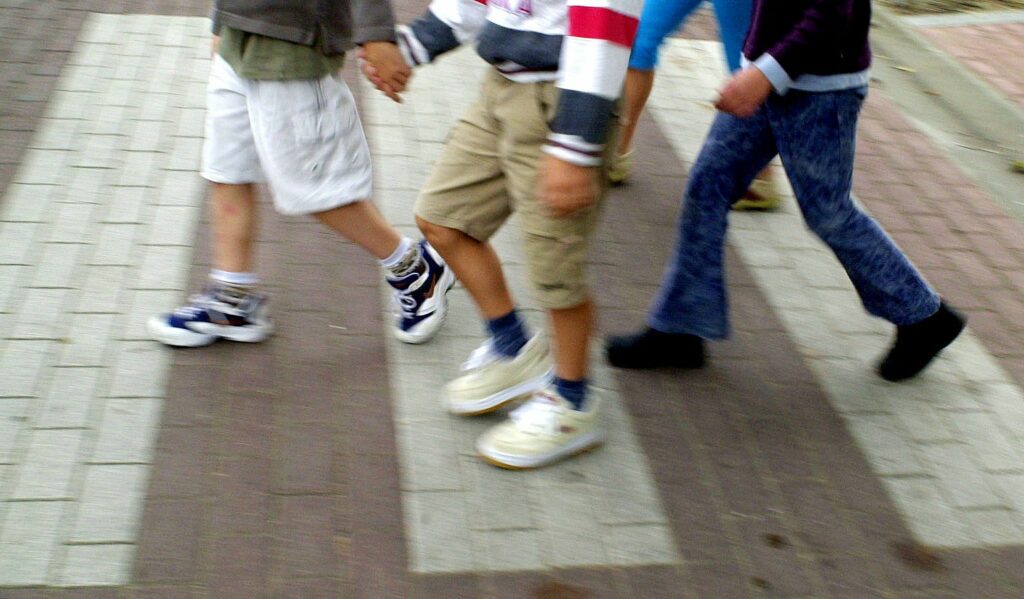
A new survey shows strong public support for cleaner and safer streets near schools in Brussels. The issue is linked to rising concern about Brussels school pollution and the health of children. The findings were published by Les Chercheurs d’Air in cooperation with research institute Dedicated. The results show that many residents want faster action to reduce traffic near schools. They also want more green spaces to improve air quality.
The survey found that 73 percent of Brussels residents support pedestrian streets in front of nurseries and primary schools. Even more support is seen for greener school areas. Around 83 percent of people back the idea of adding trees and plants near schools. The study is based on responses from residents across the region. It shows a strong demand for safer school environments.
Air quality in the city remains a serious concern. Road traffic is responsible for about 47 percent of nitrogen oxide emissions in the Brussels Region. None of the primary schools meet the nitrogen dioxide limits recommended by the World Health Organization. More than 120 schools are exposed to pollution levels two to three times higher than safe levels. The World Health Organization warns that this pollution can harm long term child health.
World Health Organization says nitrogen dioxide exposure can damage lungs, especially in children. It can increase asthma risk and slow lung growth. Experts say children are more exposed because they breathe faster and spend more time outdoors. This makes school zones a key focus for health protection. Many experts believe traffic reduction near schools is one of the fastest ways to improve urban air quality.
Despite strong public support, only a small number of local governments are moving forward with school street projects. These are roads that are closed to cars during school drop off and pick up times. They aim to reduce traffic, noise, and harmful air near school gates. Only Saint-Gilles, Forest, City of Brussels, Jette, and Schaerbeek are actively developing such projects.
Support for school streets is high across different groups. Women show slightly more support than men. Parents and non parents both strongly support the idea. People without cars show the highest approval at 76 percent. Car owners also show support at 69 percent, but at a lower level. The survey shows broad agreement across society.
Greener school streets receive even stronger backing. Around 88 percent of residents without cars support the idea. Overall support stands at 83 percent for adding more green spaces around schools. Campaigners say nearly 70 percent of schools in Brussels could easily adopt such changes. They believe small changes could quickly improve daily life for children.
Les Chercheurs d’Air is now calling on Brussels authorities to speed up action. The group says about 50 schools could quickly introduce pedestrian zones. They argue that children’s health must be treated as a priority. They also say delays are increasing exposure to harmful pollution.
Experts say the issue is part of a wider European trend. Many cities are introducing low traffic school zones to reduce pollution and improve safety. Cities such as Paris and Milan have already expanded similar measures. These policies aim to protect children and reduce emissions at the same time. Brussels is now under pressure to match other European capitals.
Dedicated worked on the survey data and analysis. Researchers say public opinion is clear and strongly in favor of change. They argue that school street projects are low cost and high impact. They also say that implementation could happen quickly if political will increases.
Campaigners warn that Brussels school pollution remains a serious public health issue. Traffic emissions continue to affect thousands of children every day. Poor air quality can also affect learning conditions and long term development. Experts say cleaner school zones could bring immediate health benefits.
Les Chercheurs d’Air says Brussels has a clear chance to act now. The group believes stronger political action is needed across all 19 municipalities. They argue that support from residents is already strong enough to move forward. The debate now focuses on how fast local authorities will respond to growing public demand.

