

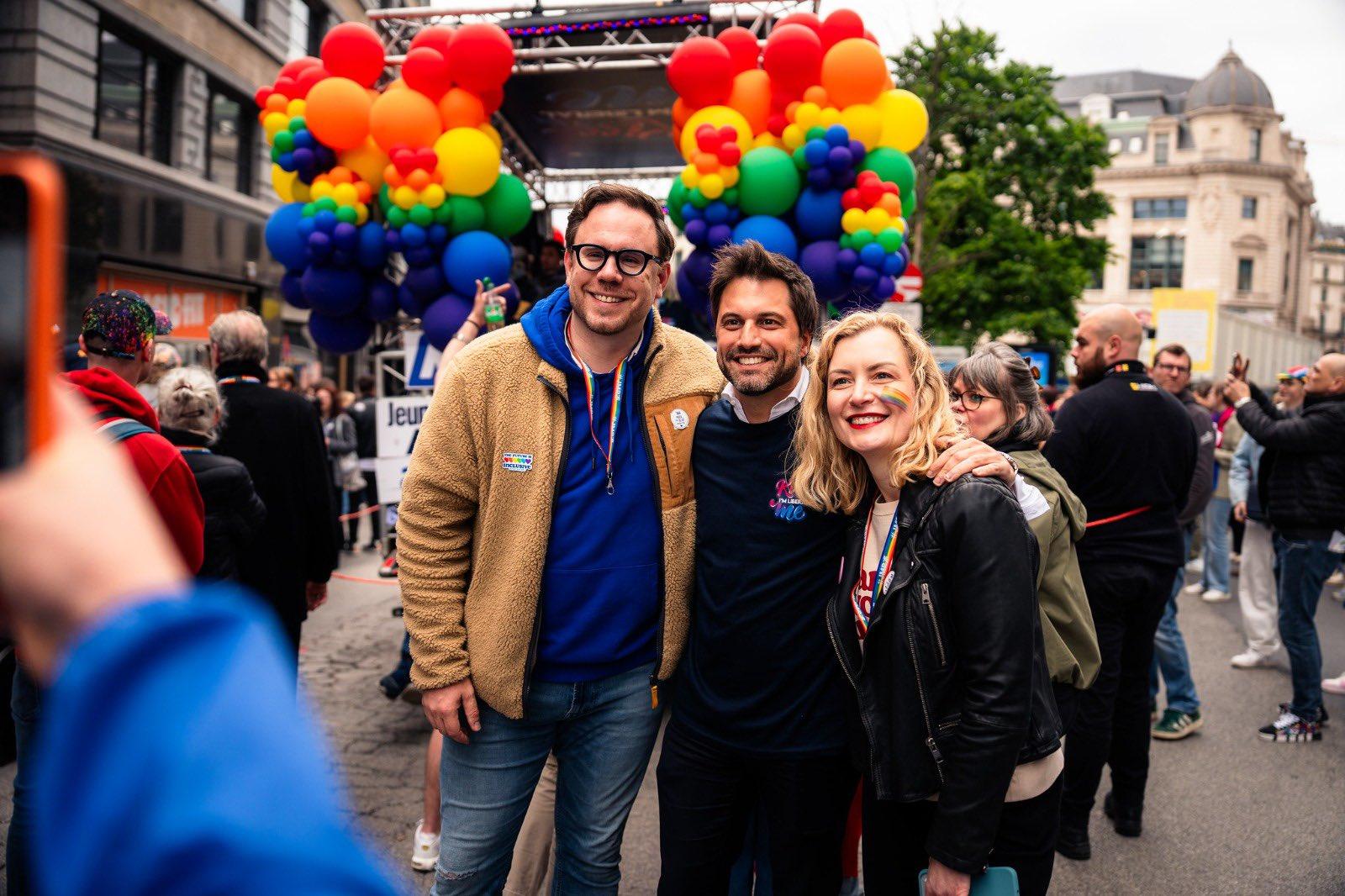
Thousands of people filled the streets of Brussels last weekend as liberals from across Belgium and Europe joined together for the annual Pride celebrations under the banner of the Alliance of Liberals and Democrats for Europe Party.
The event turned the Belgian capital into a vibrant display of rainbow colours, music, and political messages supporting equality and personal freedom. Members of Mouvement Réformateur, Jeunes MR, Anders, Jongliberalen, and European Liberal Youth marched side by side throughout the city center.
The annual celebration of diversity and inclusion took place just before the International Day Against Homophobia, Biphobia and Transphobia. That timing gave this year’s event stronger political significance as participants highlighted ongoing concerns over discrimination and hate speech targeting LGBTQI+ communities across Europe.
The focus on Brussels Pride liberal march activities reflected growing worries among many political groups and activists about rising hostility toward minority communities both online and offline. Organizers and participants stressed that Pride events remain important not only as celebrations but also as public demonstrations supporting equal rights.
Rainbow flags lined the parade route as marchers carried signs promoting acceptance, freedom, and human rights. Many messages also emphasized the need to continue protecting rights that campaigners say were achieved through decades of activism and political struggle.
According to figures shared by liberal political partners during the event, 63 percent of LGBTQI+ people in the European Union have experienced hate speech online. Participants said those numbers show that discrimination remains a serious issue despite legal and social progress made in many countries.
Several senior political figures joined the parade. Among those attending were Georges-Louis Bouchez, leader of the Reformist Movement, and Frédéric De Gucht, leader of Anders. Belgian liberal representatives including Sophie Wilmès and Hadja Lahbib also participated in the march.
The event drew support from liberal groups across Europe who said they wanted to show unity at a time when debates around equality, gender identity, and personal freedoms are becoming more politically divisive in several countries.
Participants argued that extremist rhetoric and hostility toward queer communities have increased in some parts of Europe in recent years. Many speakers and marchers said public support for LGBTQI+ rights must remain strong in response to those developments.
The Brussels Pride liberal march also highlighted concerns over online abuse. Campaigners warned that hate speech on social media platforms continues to affect many LGBTQI+ individuals, especially younger people. Activists called on governments and technology companies to strengthen efforts against harassment and discrimination online.
For many attending the parade, the event carried both emotional and political meaning. Some participants described the gathering as a reminder that visibility still matters in 2026 and that Pride events continue to play a major role in promoting inclusion and acceptance.
Organizers emphasized that equality and freedom are core liberal values and said support for LGBTQI+ communities should remain a priority across Europe. Marchers repeatedly stressed that love and personal identity should never become targets of political hostility or discrimination.
As celebrations continued across Brussels, participants expressed hope that public support shown during the event would encourage stronger protections for human rights and equal treatment throughout Europe.

