

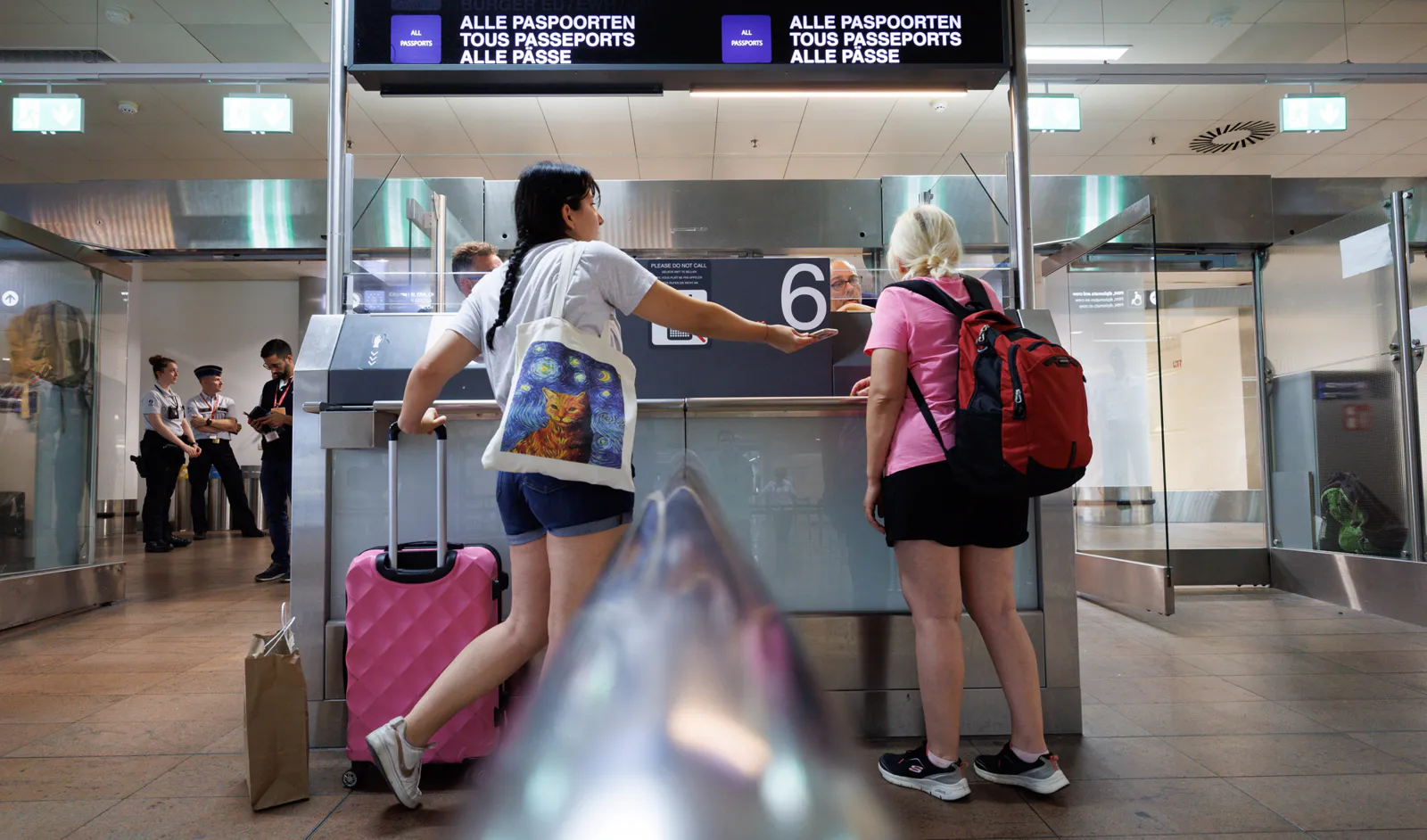
Belgium’s Interior Minister Bernard Quintin has called for urgent investment in Brussels Airport as long queues at border control continue to disrupt travel for passengers arriving from outside the Schengen area.
Travellers have recently faced waiting times of up to four hours at passport control. Some passengers have even missed connecting flights due to the delays, raising concern ahead of the busy summer travel season.
Airport chief executive Arnaud Feist has warned that the situation could escalate into “total chaos” if no immediate improvements are made. His comments reflect growing pressure on authorities to address both staffing shortages and infrastructure limits.
Quintin acknowledged that there is a shortage of border police. However, he said the problem goes beyond staffing levels. According to him, outdated infrastructure and technical issues with automated passport gates are also contributing to the delays.
He explained that only six control booths are currently in operation, with capacity for a maximum of 12 officers at any one time. This limits how quickly passengers can be processed, even when additional staff are available.
Quintin said ten new border officers have already started work, and another 60 are currently in training. Despite this, he stressed that staffing increases alone will not solve the bottleneck.
“There are only six control booths, with room for a maximum of 12 officers,” he said. “I cannot stack agents on top of each other.”
The minister also pointed to broader infrastructure priorities at the airport, suggesting that recent investments had focused on facilities such as parking, while border control capacity had not been expanded at the same pace.
Brussels Airport has recently been in the spotlight after announcing its first dividend payment in seven years, following a record revenue year. This has intensified debate over how profits should be reinvested into operational improvements.
Quintin argued that, as Flanders is now the airport’s largest shareholder, the regional government should take responsibility for supporting upgrades. He urged a shift in focus toward improving passenger processing systems rather than prioritizing financial returns.
The issue comes as passenger traffic continues to recover and grow after years of disruption in the aviation sector. Non-Schengen arrivals, in particular, are placing added pressure on border control systems.
The situation is expected to be discussed by Belgium’s federal and regional authorities in the coming week. Officials are under increasing pressure to find solutions before peak summer travel begins.
Industry observers warn that without investment in both infrastructure and coordination between agencies, delays could worsen significantly. For now, passengers continue to face uncertainty as queues remain unpredictable and congestion persists at one of Europe’s key transport hubs.

