

Brussels lobbying events are facing growing scrutiny as media-hosted gatherings increasingly connect corporate sponsors with top EU decision-makers. A new investigation highlights how informal dinners, conferences, and gala events have become a key channel of influence in EU politics.
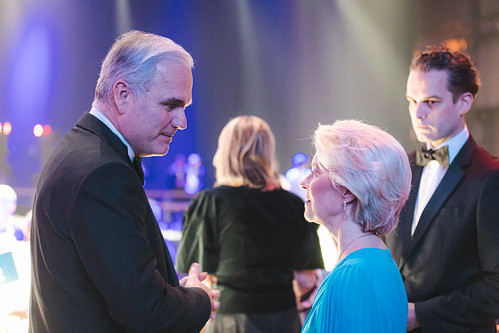
Meetings with European Commission President Ursula von der Leyen are usually tightly controlled and difficult to secure. However, at a high-profile media gala in Brussels, corporate executives were able to interact with her in informal settings that are not always recorded in official transparency disclosures.
The issue centers on how lobbying activity is defined under EU rules. Lobbyists must register most efforts to influence policy in a transparency database, while senior officials are required to publish formal meetings. However, informal or social interactions are not always included.
This gap has raised concerns among transparency experts. Critics argue that certain media-hosted events are creating a “grey zone” where access to policymakers can be bought through sponsorships and event packages.
At the same time, media organisations in Brussels are expanding their events businesses. Outlets such as Politico, Euractiv, and others now host dozens of conferences and dinners each year, often targeting EU policymakers, industry leaders, and lobbyists.
Industry analysts say these events have become one of the most profitable parts of modern media operations. As traditional advertising revenue declines, event sponsorships offer a new and steady source of income.
Critics argue that this shift risks blurring the line between journalism and lobbying. When companies pay for access to policy discussions or for seating arrangements near officials, some say the role of media organisations begins to resemble that of intermediaries rather than independent observers.
Transparency advocates warn that this system may not be fully covered by current EU rules. They argue that sponsorship-driven access to policymakers should be disclosed in the same way as formal lobbying meetings.
James Stevens said that any activity designed to influence EU policy should be transparent. He stressed that a press pass should not exempt organisations from disclosure rules.
Nick Aiossa also raised concerns about the role of media in hosting policy-related events. He said the boundaries between journalism and influence activity are becoming harder to define.
Under current practices, companies can sponsor events and gain access to policymakers without those interactions always appearing in official records. This has led to debate about whether existing transparency rules are strong enough.
Supporters of media-hosted events argue that they help facilitate open discussion between stakeholders. They say conferences and roundtables allow policymakers and industry experts to exchange ideas in a structured environment.
However, critics say the growing scale of these events is changing their nature. What began as networking opportunities is increasingly seen as a paid access system to political influence in Brussels.
Data from event listings shows a sharp rise in media-organised policy events in recent years. These gatherings often feature EU commissioners responsible for key policy areas such as digital regulation, health, energy, and competition.
The financial incentives are significant. Event sponsorships can generate high margins for media companies, making them an important part of their business models. Some industry estimates suggest margins can reach between 35 and 65 percent.
Companies across technology, pharmaceuticals, and energy sectors are among the most frequent sponsors. These industries are also heavily affected by EU regulation, making access to policymakers especially valuable.
Lobbyists say the events are often more about visibility and relationship-building than direct policy negotiation. However, repeated exposure to decision-makers can shape discussions over time, they argue.
Some civil society groups say they are excluded from these spaces due to high sponsorship costs. This raises concerns that influence may be concentrated among large corporations with greater financial resources.
Media executives defend the practice, saying they maintain strict internal separation between editorial work and commercial sponsorship. They argue that journalists retain full control over reporting and questioning.
Still, questions remain about how clearly these boundaries are maintained in practice. Critics say the overlap between sponsorship, access, and political engagement is becoming increasingly difficult to track.
The debate highlights a broader issue in Brussels: how to regulate influence in an era where media, business, and politics increasingly intersect. As lobbying methods evolve, pressure is growing on EU institutions to update transparency rules to reflect new realities.
For now, Brussels lobbying events remain a central part of the EU policy ecosystem. But concerns over access, influence, and accountability continue to grow as the line between journalism and lobbying becomes harder to define.

