

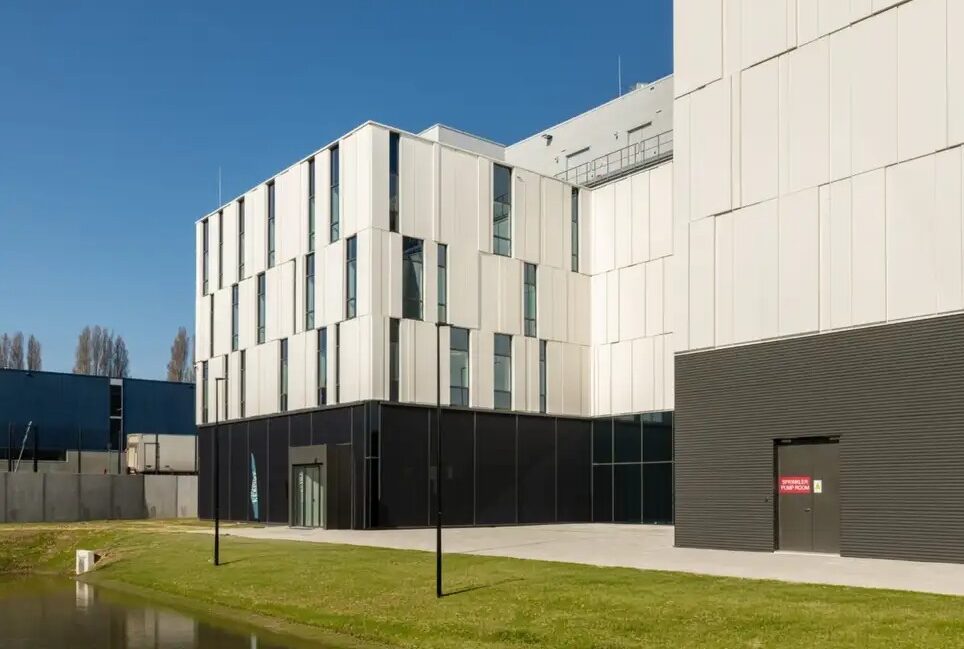
A new data centre in Neder-Over-Heembeek could account for about three percent of Brussels’ total electricity use during its first phase, raising questions about how the city should manage growing demand from digital infrastructure. The facility, known as KevlinX BRU01, is expected to consume around 140 gigawatt-hours of electricity each year once its first phase is operating. A second phase with similar capacity is planned no earlier than 2028, which could increase the site’s overall demand further.
Data centres support many services that people use every day, including cloud storage, online platforms, business software, and artificial intelligence systems. These services require large numbers of computer servers, as well as cooling equipment and reliable power supplies. As demand for digital services grows, data centres have become important parts of the economy. At the same time, their energy and water needs can put pressure on local infrastructure, especially in cities where electricity demand is already high.
The projected consumption has prompted questions from Brussels politicians about whether the region has a clear plan for future facilities. Lotte Stoops, a member of the Brussels Parliament, asked the government about the centre’s expected electricity and water use. The response indicated that the first phase could use around 140,000 cubic metres of water per year. The figures have renewed debate about how much capacity should be reserved for data centres compared with other needs, such as hospitals, public transport, homes, and electric vehicle charging.
The facility’s efficiency figures appear relatively favourable compared with some industry benchmarks. Officials said its power usage effectiveness would be below 1.2 during the first phase, while its water usage effectiveness would be below one. These measures are used to assess how efficiently a data centre uses energy and water. However, a relatively efficient building can still consume a large amount of electricity and water when it operates at scale. This is why policymakers are considering both efficiency and total demand.
Another issue is whether waste heat from the servers can be reused. Data centres release heat as they operate, and that energy may be useful for a future district heating network. The operator has signed a protocol agreement with Sibelga concerning possible use of the heat. The environmental permit also requires the installation to be designed so that at least 75 percent of the heat can be recovered, with space reserved for the necessary equipment. The project still needs a concrete plan for putting that heat to practical use.
Planning rules could become more important as other projects are considered. Another company is reportedly planning a data centre of a similar size in Brussels, though its exact location has not been specified. If several large facilities are built, authorities will need to assess the combined effect on the electricity grid, water supplies, and local climate goals. Decisions about grid upgrades may also influence the cost and timing of other projects.
Supporters of data centres point to their role in digital services, investment, and employment. Critics argue that these benefits should be balanced against the resources they consume and the needs of local residents. The debate is not simply about whether Brussels should host such facilities, but about what conditions they must meet. Clear rules could set standards for energy efficiency, water use, heat recovery, and environmental reporting.
The next challenge for Brussels is to establish a policy framework before demand rises further. A well-designed plan could help the region benefit from digital infrastructure while protecting resources needed by other services. Without a clear approach, officials may find themselves deciding each project separately without a full view of its wider impact. The data centre debate is therefore part of a larger question about how cities can support digital growth while managing limited energy and water resources.

