

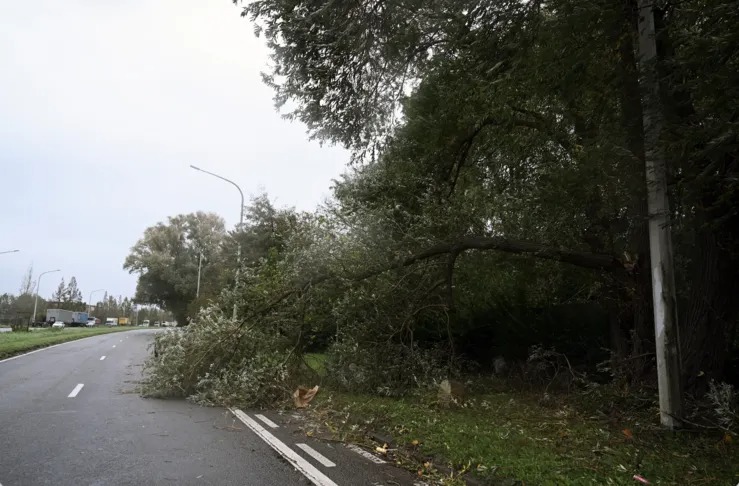
Storm Austen has brought strong winds to Brussels, leaving four people injured and disrupting public transport across the Belgian capital. Authorities extended an orange weather alert to the Brussels-Capital Region as the storm moved across parts of Belgium. Emergency teams were called to deal with fallen trees, damaged branches, and other problems caused by the severe weather.
Three people were injured when a tree fell onto a cafe terrace in Brussels, while another person was struck by a falling branch. The incidents show how quickly strong winds can turn ordinary public spaces into dangerous areas. Trees, outdoor furniture, signs, and loose objects can become hazards when gusts reach high speeds. Residents and visitors have been urged to take care and avoid places where damaged trees or structures may fall.
The Brussels fire brigade said many emergency calls were being handled, with dozens of other incidents still awaiting attention. Firefighters and local services often face heavy demand during storms because damage can occur in several places at once. Crews must decide which incidents pose the greatest immediate danger, including threats to people, blocked roads, and damage to buildings or public infrastructure.
Transport has also been affected. Several train services and tram lines faced disruption after storm damage, according to the city’s public transport operator. Even a short interruption can affect thousands of passengers who rely on public transport to reach work, school, appointments, and other commitments. Operators may need to inspect tracks, overhead equipment, and nearby trees before services can safely return to normal.
The storm has also affected maritime activity. The Port of Antwerp-Bruges reported that shipping traffic had come to a standstill, with no arrivals or departures scheduled at the time of the report. Strong winds can make it unsafe for vessels to enter or leave ports, particularly when ships need to manoeuvre in narrow channels. A temporary pause may be necessary to protect crews, vessels, and port workers.
Weather warnings are designed to give people time to prepare for dangerous conditions. An orange alert signals that the weather may cause significant disruption and requires extra care. Residents should secure loose items, avoid walking under damaged trees, and follow updates from local authorities. Drivers should also be cautious around debris and avoid flooded or blocked roads.
Businesses may face disruption as well. Cafes with outdoor seating, shops, delivery services, and event organisers may need to close or change their plans. The effects can be especially hard on small firms that rely on daily sales. Transport delays can also affect workers and deliveries, while damage to public areas may require repairs before normal activity can resume.
Storms are a recurring challenge for cities because buildings, trees, transport systems, and public spaces are closely connected. Strong winds can damage one part of the network and cause wider delays. Good planning, clear warnings, and rapid repairs can reduce the impact, but not every risk can be removed. Public safety remains the main priority during severe weather.
For people in Brussels, the immediate task is to stay informed and avoid unnecessary risks until conditions improve. Travellers should check train and tram updates before leaving home, while residents should report serious hazards to the proper authorities. The storm’s full effect will become clearer as inspections continue. The incident is a reminder that severe weather can quickly affect daily life, public transport, and business across the capital.

