

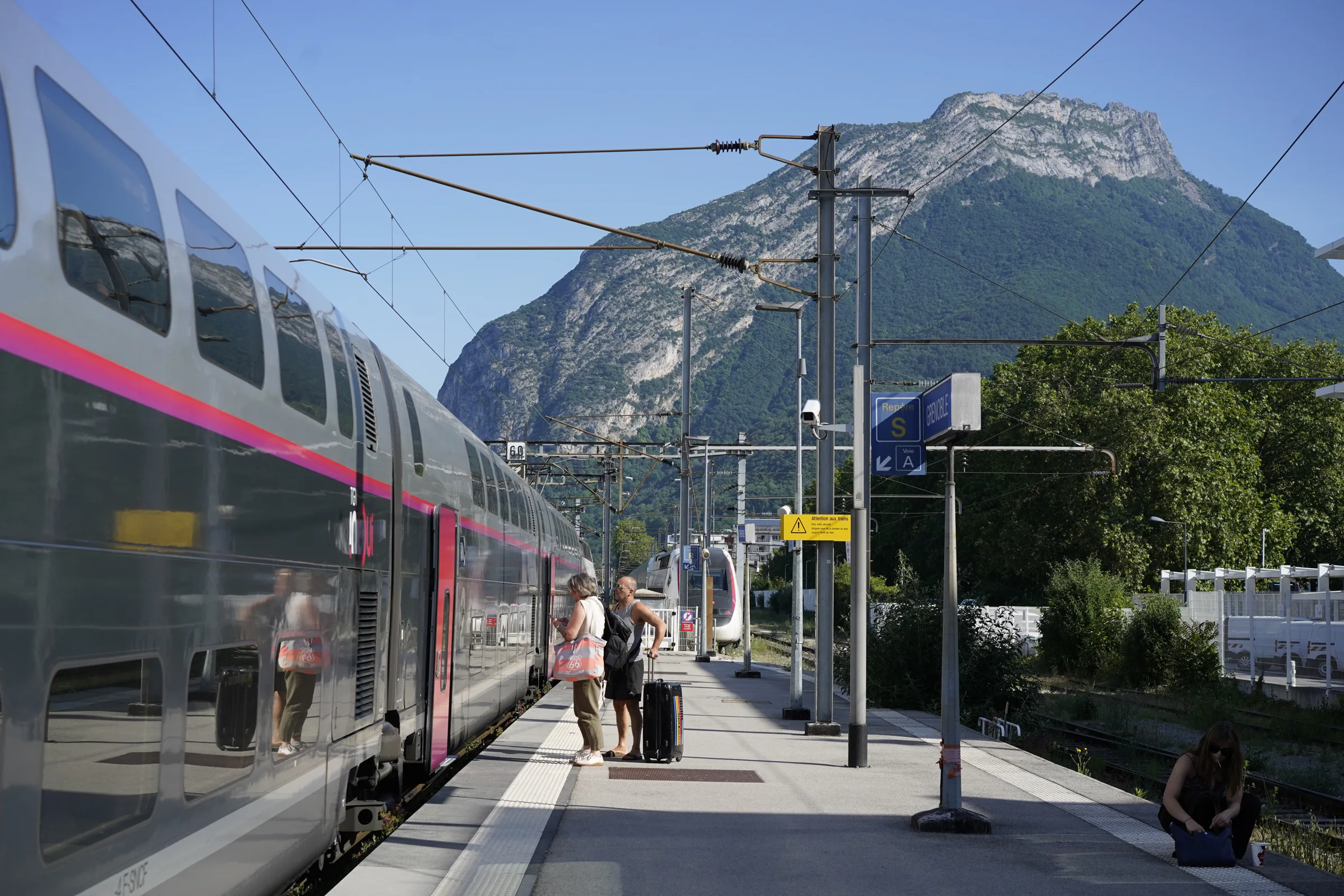
A new high-speed rail link between Brussels and Basel is set to begin in July 2027, marking an important step in expanding rail travel between Belgium, France, and Switzerland. The service will be operated as a pilot project to test passenger demand on this international route.
The new connection will extend the current TGV Inoui service that already runs between Brussels and Strasbourg. It is jointly operated by France’s national rail company SNCF and Belgium’s rail operator SNCB, with cooperation from Switzerland’s rail operator SBB.
Under the new plan, the train will run to Basel on Fridays, Saturdays, and Sundays. There will be one daily service in each direction. This limited schedule is designed to evaluate how much demand exists for direct high-speed travel between Belgium and Switzerland.
According to the Belgian rail operator, the TGV Inoui will leave Brussels at around 7:00 am. It is expected to arrive in Basel at approximately 12:30 pm. The return journey will depart Basel at around 2:00 pm and reach Brussels at about 7:00 pm. This timing allows same-day connections for both business and leisure travelers.
The train will continue to follow the same route used on the existing Brussels–Strasbourg service. Key stops along the way will include Lille-Europe, Roissy Airport TGV, Champagne-Ardenne TGV, Meuse TGV, Lorraine TGV, and Strasbourg. These stops are already part of the established high-speed network connecting Belgium and eastern France.
The introduction of the Brussels–Basel extension reflects growing demand for cross-border rail travel in Europe. Rail operators are increasingly focusing on direct international routes as an alternative to short-haul flights. This shift is also linked to efforts to reduce carbon emissions and improve sustainable transport options.
At present, there is no direct daytime train service between Brussels and Switzerland. Travelers typically need to change trains in France or Germany. The new TGV Inoui extension aims to simplify this journey by offering a direct weekend service.
However, the Brussels–Basel route is only one of several new rail projects under development. Night train operator European Sleeper is planning a service connecting Brussels with Switzerland and Italy. That service is expected to start earlier but will not include Basel as a stop. Instead, it will serve destinations such as Lugano in southern Switzerland and continue toward Milan.
Another major development is planned by Eurostar, which has announced a future high-speed connection between Brussels and Geneva. That service is still in planning stages and is expected to take several years before launch.
Rail experts say these projects reflect a wider revival of long-distance train travel in Europe. Demand for overnight and high-speed rail has increased in recent years, especially among passengers seeking more sustainable travel options compared to air transport.
The Brussels–Basel pilot will help operators measure passenger interest before deciding on long-term expansion. If demand is strong, the service could become more frequent or permanent in the future.
For now, the project represents a cautious but important step toward better rail connectivity across Western Europe.

