

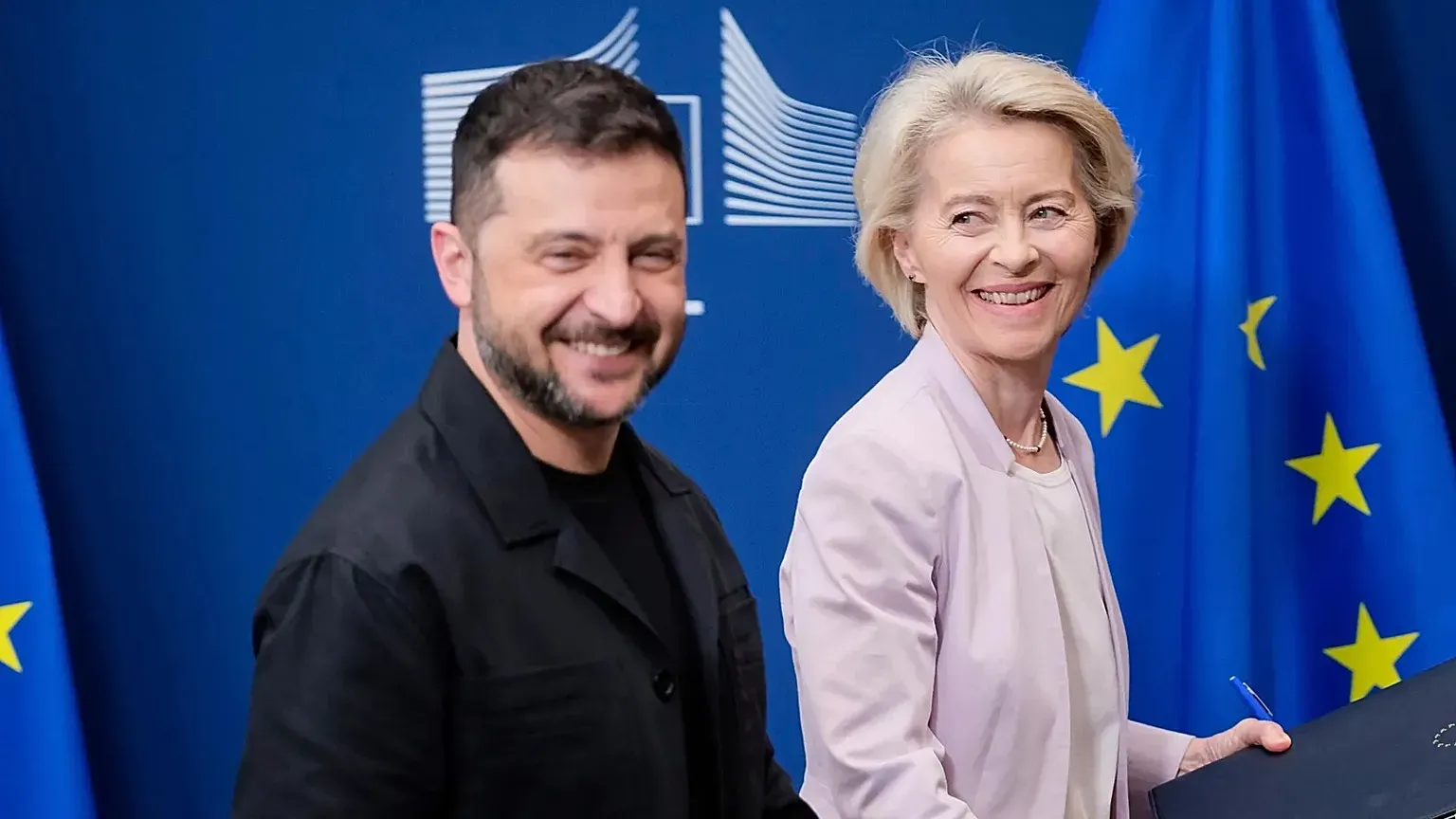
The European Commission has approved six point one billion euros in additional military assistance for Ukraine, with a substantial share earmarked to help Kyiv secure Patriot interceptor missiles needed to defend its cities against intensifying Russian ballistic missile attacks. The funding, announced from Brussels, draws on the European Union’s broader ninety billion euro support loan for Ukraine, of which twenty eight point three billion euros has been reserved specifically for military aid this year.
European Commissioner for Defence Andrius Kubilius confirmed the decision officially enables Ukraine to purchase PAC-3 interceptor missiles for its Patriot air defense systems, addressing one of the most urgent capability gaps facing Ukrainian forces as Russia has increasingly shifted toward harder to intercept ballistic missile attacks. The funding package includes five specific exceptions from standard European Union eligibility conditions, three covering Ukrainian made drones and components that exceed normal cost thresholds, and two specifically addressing American made equipment, particularly the PAC-3 missiles themselves.
This latest tranche represents the final allocation from this year’s dedicated military funding envelope, according to Kubilius, meaning all twenty eight point three billion euros designated for Ukraine’s defense from the broader loan program has now been formally agreed for 2026. The approval comes just days after Brussels separately cleared Ukraine’s specific request, filed on September 3, to spend more than two billion euros of loan money directly on Patriot interceptors, marking the first time Ukraine has formally tapped this particular funding mechanism for American made air defense equipment.
Brussels is simultaneously urging European Union member states that still maintain Patriot interceptors within their own national stockpiles to donate those systems to Ukraine immediately, with replacement deliveries scheduled to arrive later once fresh production becomes available in 2027. That approach reflects the urgent timeline facing Ukrainian air defense needs, since newly ordered interceptors cannot realistically arrive before winter weather intensifies Russian bombardment campaigns against Ukrainian population centers and infrastructure.
Ukrainian President Volodymyr Zelenskyy has stated his country needs approximately three hundred Patriot interceptors to adequately protect against Russian attacks through the coming colder months, though PAC-3 missiles produced exclusively by American defense contractor Lockheed Martin remain in notably short supply globally. This scarcity has prompted Brussels to explore multiple parallel pathways for securing adequate interceptor stocks, including both direct purchases funded through the loan program and encouraging existing stockpile transfers among willing member states.
The funding announcement followed closely on the heels of the inaugural meeting of the EU-Ukraine Drone Alliance, which brought together eighteen European Union companies alongside nine Ukrainian firms specifically focused on expanding joint drone production capacity. That industrial cooperation initiative reflects growing recognition that sustained defense support for Ukraine increasingly requires building manufacturing partnerships rather than relying solely on transferring existing equipment stockpiles from allied nations.
The broader Ukraine Support Loan program, structured as ninety billion euros in total European Union financing, splits roughly into sixty billion euros for defense procurement and thirty billion euros for direct budget support covering Ukraine’s governmental operating needs. Notably, Hungary, Slovakia, and the Czech Republic have remained outside this joint borrowing arrangement, with the rest of the European Union proceeding together after months of internal debate over whether immobilized Russian central bank assets might have offered an alternative funding mechanism.
As this latest funding tranche moves from formal approval toward actual disbursement, NATO Secretary General Mark Rutte has indicated the alliance is working in parallel to accelerate deliveries under its own program for supplying American made weapons systems to Ukraine. With winter approaching and Russian ballistic missile attacks continuing to strain Ukraine’s existing air defense capacity, the coming weeks will test how quickly this newly approved funding translates into actual interceptor deliveries reaching Ukrainian forces.

