

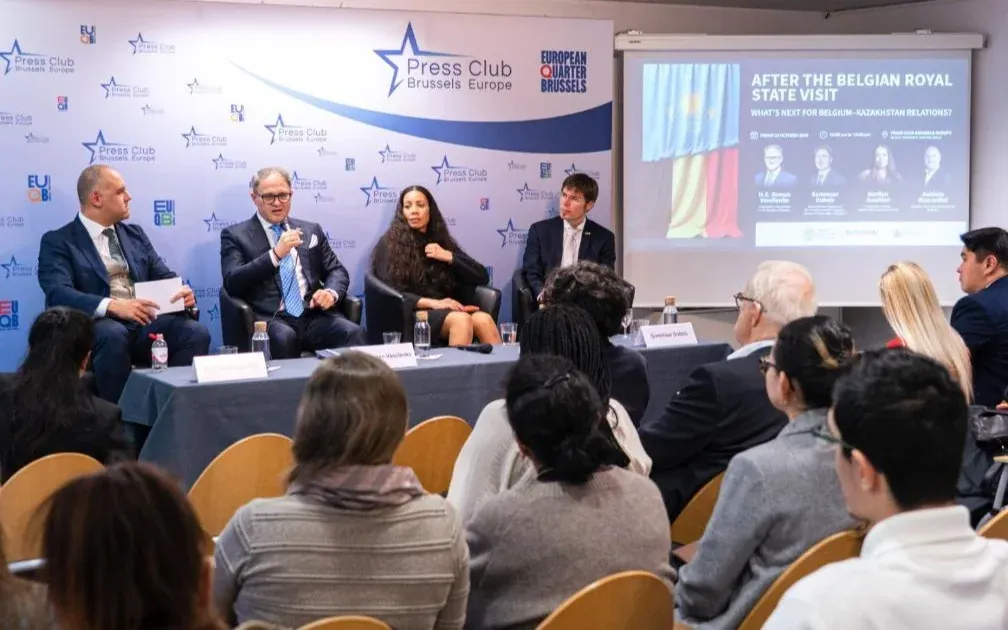
Officials have discussed ways to strengthen Kazakhstan’s partnership with Belgium and the European Union during talks in Brussels. The meeting reflects a shared interest in keeping diplomatic channels open and finding areas where cooperation can grow. Such talks can cover trade, investment, transport, energy, education, and wider regional issues. Any progress will depend on the practical steps both sides are prepared to take after the meeting.
Brussels is an important place for these discussions because it is home to Belgium’s federal institutions and the main offices of the European Union. Meetings held there can connect national interests with wider European policy. For Kazakhstan, building relations with Belgium and the EU can provide opportunities to develop business links, reach new markets, and maintain contact with European decision-makers. For Belgium and the EU, engagement can support ties with a country that plays a role in Central Asian trade and regional affairs.
Economic cooperation is often a key part of such partnerships. Businesses may look for opportunities in transport, energy, agriculture, technology, and industrial development. Better access to information and clearer rules can help companies assess whether a market suits their needs. However, trade does not grow simply because officials meet. Firms also need reliable contracts, workable transport links, fair competition, and a clear understanding of local laws and standards.
Energy and transport can also shape relations between Europe and Central Asia. Kazakhstan has a significant role in regional energy and raw-material supply, while European countries seek stable links with a range of international partners. Transport routes that connect Central Asia with Europe can offer alternatives for moving goods, although costs, border procedures, and infrastructure limits remain important factors. Cooperation in these areas requires long-term planning and investment from both public and private bodies.
Diplomatic engagement can extend beyond business. Governments may discuss education, scientific research, culture, climate goals, and exchanges between universities or professional groups. These links can help people understand one another’s societies and create networks that last beyond a single meeting. They can also give students, researchers, and companies more chances to work across borders.
At the same time, closer ties require careful attention to different laws and policy priorities. The European Union has its own standards and rules for trade, data, the environment, and other areas. Kazakhstan and Belgium may need to identify where their goals align and where further work is needed. Clear communication can help reduce misunderstandings and set realistic expectations for future cooperation.
The value of the meeting will be judged by what follows. Officials may need to organise further talks, identify specific projects, or set out areas where each side can take action. Businesses will look for clear signs that discussion is turning into practical opportunities. Public institutions may also need to maintain regular contact so that progress is not lost when individual officials change roles.
The talks in Brussels underline the continuing interest in links between Kazakhstan, Belgium, and the wider European Union. They offer a channel for exploring shared priorities and managing differences through dialogue. Still, a meeting alone does not prove that new agreements have been reached or that trade will rise. The next steps, and the results they produce, will show how far the partnership can develop.

