

Belgium could face economic pressure from Europe’s ongoing drought as falling water levels on the Rhine disrupt shipping, reduce freight capacity and threaten supply chains linked to Germany.
The potential impact on Belgium remains uncertain, with no independent forecast currently available. However, economists warn that the country’s close integration with German industry means disruptions in Germany could eventually affect Belgian manufacturers and consumers.
Oxford Economics recently warned that the biggest impact of Europe’s summer heatwave on eurozone economic activity could come from unusually low water levels. The consultancy estimates that the prolonged drought could reduce German economic growth by 0.2 percentage points in the third quarter. Germany’s economy grew by 0.2% in the second quarter.
Iain Simmons, an economist at Oxford Economics, said some companies were already reporting transport and logistical difficulties. He identified Germany’s chemical industry as a particular concern, with lower production potentially reducing supply and pushing prices higher.
For Belgium, higher input costs and reduced availability of industrial materials could weigh on production. Simmons stressed, however, that the potential impact remains a risk rather than a figure that can currently be quantified.
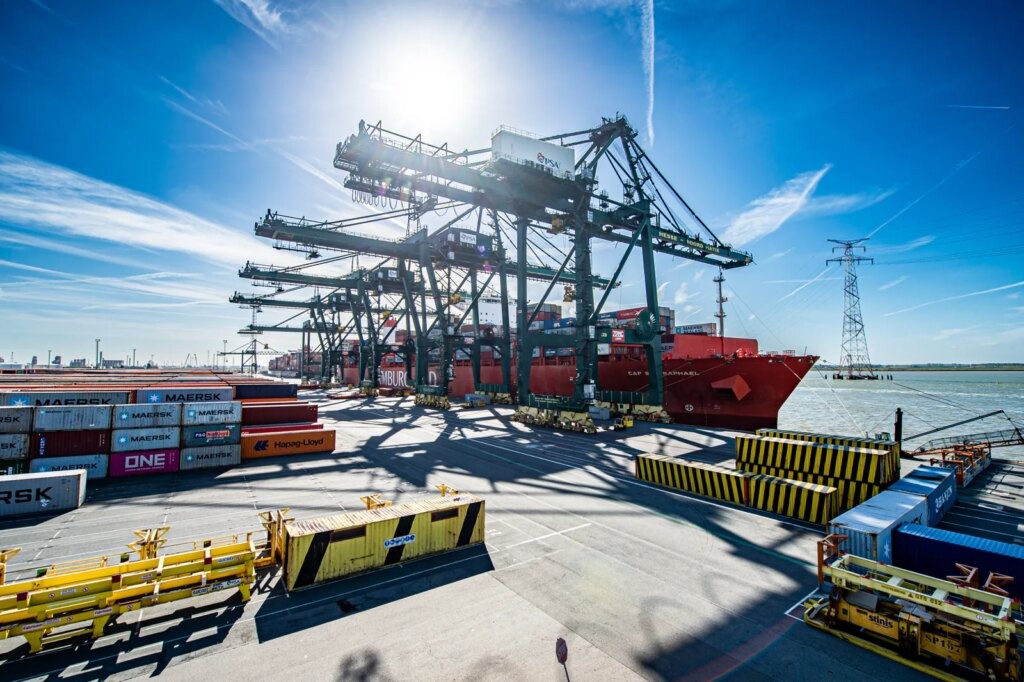
A major reason for Belgium’s exposure is the Port of Antwerp-Bruges, one of Europe’s most important transport and industrial hubs. The port is home to Europe’s largest chemicals cluster and provides connections between maritime trade and inland waterways serving industrial areas across Germany and beyond.
More than half of the maritime traffic at the Antwerp site involves inland waterways. These routes connect the port with cities along the Rhine, including Stuttgart and Basel. The port and related activities are also a major contributor to Belgium’s economy.
Parts of the Rhine have reached their lowest recorded water levels since measurements began in 1880, with further declines possible. Significant rainfall may not restore water levels until later in the year.
Low water does not necessarily cut Antwerp’s connections immediately. However, shallow sections of the Rhine can restrict access to destinations farther upstream. The area around Kaub is particularly important because water levels there can determine whether vessels can continue toward locations such as Stuttgart and Basel.
Shipping companies have already responded to the lower water levels by reducing the amount of cargo carried by some vessels. Lower loads allow ships to navigate shallower sections but reduce the amount of goods transported per journey.
If the disruption continues, storage facilities at ports such as Antwerp could come under additional pressure as cargo movement slows.
Belgium is also dealing with drought-related challenges within its own waterways. De Vlaamse Waterweg, the organisation responsible for managing Flanders’ inland waterway network, has introduced several measures to conserve water while keeping commercial shipping operational.
The measures include shutting down hydropower plants, grouping vessels at canal locks and restricting vessel depth at some locations. Such restrictions can reduce the amount of freight that ships are able to carry.
Liliane Stinissen, a spokesperson for De Vlaamse Waterweg, said the measures are intended to preserve available water for as long as possible while allowing commercial shipping to continue safely.
Stinissen said there is currently no clear evidence of a broad domino effect on Belgian shipping volumes caused directly by drought elsewhere in Europe. She cautioned that it is too early to describe the situation as a nationwide economic disruption, although local problems could increase if dry conditions persist.
Climate change is expected to increase the frequency and intensity of drought conditions across Europe’s inland waterways. Research from Vrije Universiteit Brussel indicates that about 40% of inland waterways could face drought conditions by 2050. Under current policies, that share could exceed 70% by the end of the century.
Dr Marie Cavitte, a researcher involved in the VUB study, said the number of drought events affecting inland waterways could eventually be many times higher than during the current decade.
The risks extend beyond shipping. Persistent low water levels could increase transport costs, disrupt industrial supply chains and force companies to reconsider how they move essential materials.
Belgian authorities are already preparing for more frequent dry periods. De Vlaamse Waterweg says climate change is expected to bring longer and more intense periods of drought, while rainfall may increasingly arrive in short, heavy episodes rather than being evenly distributed.
The operator is investing in measures designed to reduce water losses, expand pumping capacity and improve monitoring of water availability and consumption.
For now, Belgium may avoid a major economic shock if rainfall restores key waterways before supply constraints become severe. But the current drought is highlighting a growing structural vulnerability.
As climate change places greater pressure on Europe’s rivers and canals, Belgium’s inland waterways may require substantial investment and new management strategies to remain reliable economic arteries in the decades ahead.

