

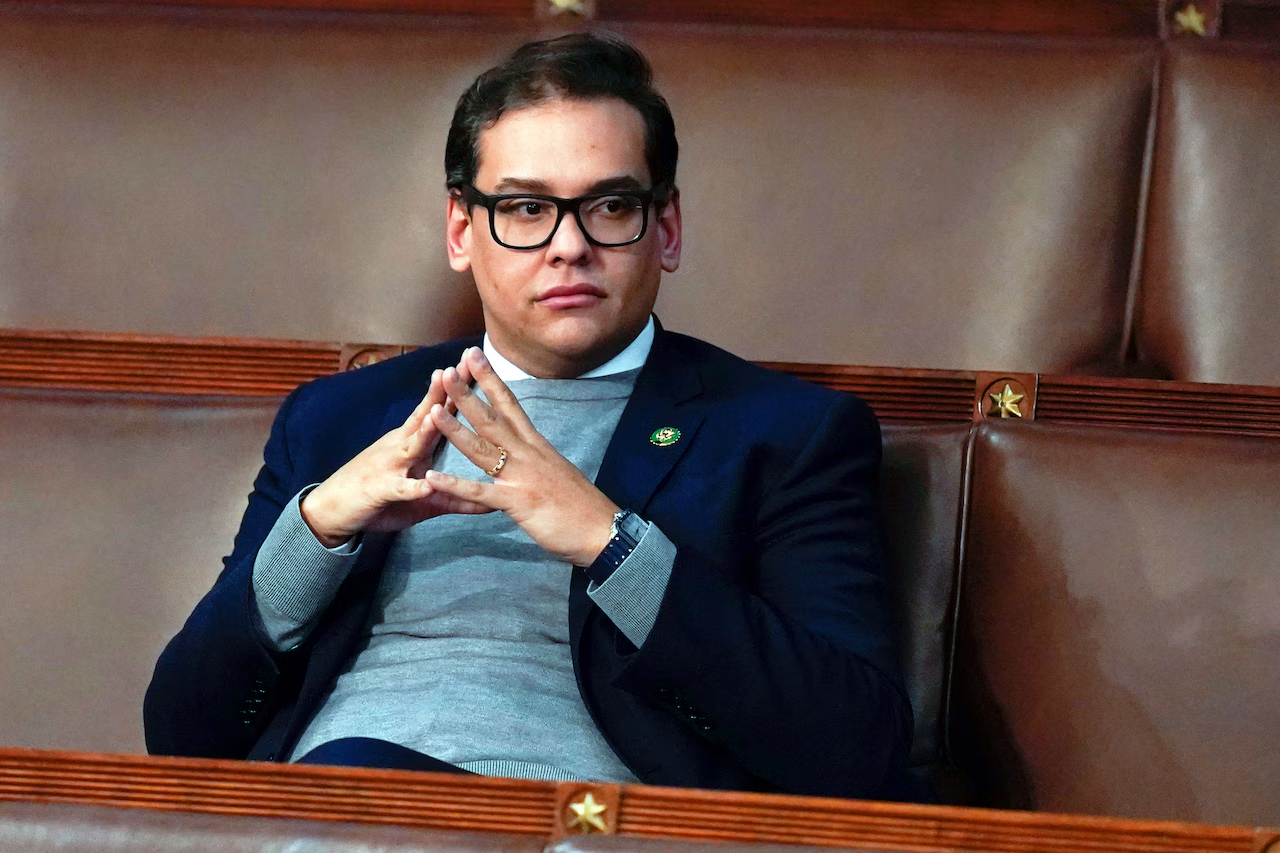
President Trump has commuted the prison sentence of former Congressman George Santos, citing concerns over Santos’ treatment while incarcerated. The decision has drawn significant attention from both political observers and the public.
Santos, who served in the U.S. House of Representatives, was sentenced for financial and campaign-related misconduct. His time in prison sparked debate over the conditions and fairness of his treatment while in custody.
Trump’s announcement emphasized the need for justice and fairness in the legal process. The president noted that Santos’ well-being and the circumstances of his imprisonment raised serious concerns.
The commutation does not erase Santos’ conviction but reduces his sentence, allowing him to regain freedom earlier than originally scheduled. Legal experts point out that commutations are a long-standing presidential power intended to correct perceived injustices or show mercy in certain cases.
Supporters of Santos welcomed the move, arguing that he had faced harsh conditions and that the sentence was disproportionate. They praised Trump for intervening and highlighting what they see as issues in the penal system.
Critics, however, expressed concern about the political implications of the commutation. They argue that such actions may undermine accountability for elected officials and could set a precedent for leniency in politically sensitive cases.
Santos himself released a statement expressing gratitude toward Trump. He described the commutation as a “second chance” and pledged to focus on rehabilitation and future contributions to the community.
The case has drawn attention to broader debates about prison conditions in the United States. Advocates for criminal justice reform noted that concerns over treatment and safety in custody are common issues that merit attention.
Legal analysts said that presidential commutations, while relatively rare, are a constitutionally supported tool. They provide an opportunity for the executive branch to address perceived inequities in the judicial system.
The timing of the commutation has also sparked discussion. Some observers believe the move could influence public opinion and political discourse, especially among supporters of Trump and Santos.
While the decision has immediate effects for Santos, it also raises questions about the role of presidential authority in cases involving elected officials. The balance between justice, mercy, and political considerations is central to ongoing debates.
Prison advocates emphasized the importance of transparency in such cases. They called for closer scrutiny of prison conditions and treatment of inmates, regardless of their political standing.
Trump’s commutation of Santos’ sentence is part of a broader history of presidential interventions in criminal cases. Past presidents have used similar powers to address legal concerns, show clemency, or correct perceived excesses in sentencing.
The announcement is expected to have both legal and political repercussions. Analysts will be watching closely to see how this decision affects perceptions of justice, presidential authority, and accountability for public officials.
Santos’ legal team indicated that he would continue to comply with any remaining conditions of his sentence and probation. They also suggested that he plans to engage in advocacy and public work following his release.
The commutation underscores the significant impact of presidential powers on individual cases. It also highlights ongoing debates about fairness, justice, and the intersection of politics and the legal system in high-profile cases.

