

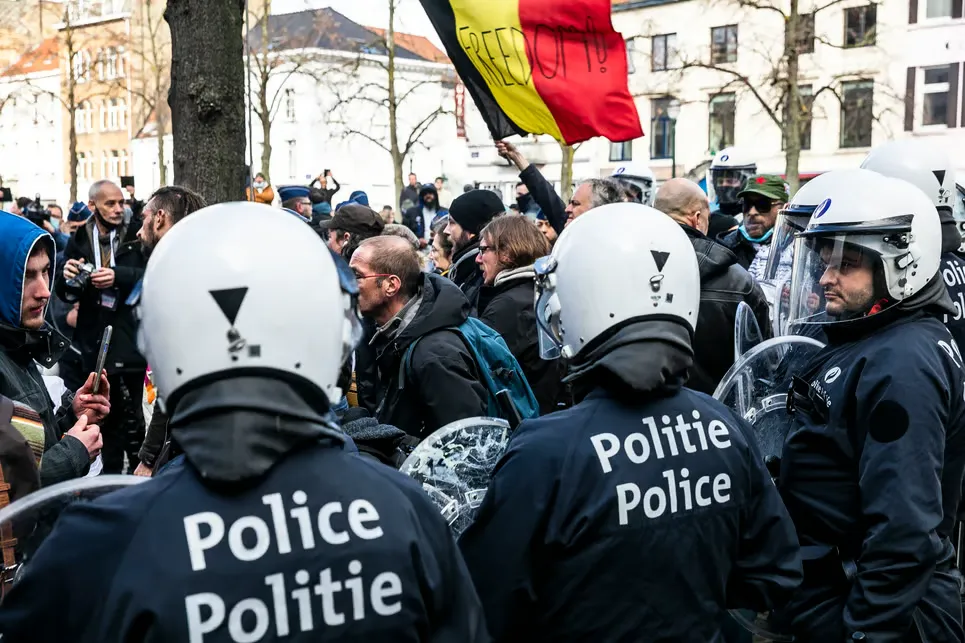
Brussels has stepped up police presence near its Central Station after days of unrest linked to disputed education reforms. Officers moved in following online calls for fresh protests, as authorities try to prevent a repeat of the violent scenes that shook parts of the city in recent days. The unrest stems from anger over planned changes to French-language schooling in the Brussels region.
The reforms, pushed by regional education officials, aim to reshape parts of the French-speaking school system. Supporters say the changes will improve teaching standards and give schools more resources to handle rising student numbers. Critics argue the reforms were rushed through without enough input from teachers, parents, and student groups, sparking anger that soon spilled onto the streets.
Early protests started peacefully, with crowds gathering to voice concern over the changes. In recent days, however, some demonstrations turned violent, leading to clashes between protesters and police in parts of the city. Authorities say a small number of people used the protests as cover for unrelated disruption, while most demonstrators remained peaceful throughout.
Police have increased patrols around key transport hubs, including Brussels Central Station, one of the busiest points in the city. Officials say the added security aims to protect commuters and prevent further unrest from spreading into other neighborhoods. Local business owners near the affected areas have voiced worry about lost trade during the disruption, with some shops choosing to close early on tense nights.
Regional leaders have called for calm while promising to review parts of the reform plan. Some officials have offered to meet with student and teacher groups to discuss concerns, hoping dialogue can ease tensions before further unrest breaks out. Others argue that giving in to street pressure could set a bad example for future policy disputes in the city.
The unrest adds to a string of recent protests across Belgium this year, as workers and students alike have taken to the streets over various policy disputes, including planned pension changes. Analysts say the country faces a tense period as its government works through a heavy list of reforms, many of which touch sensitive issues like education, retirement, and public spending.
City officials stress that most of Brussels remains calm and that daily life continues largely as normal outside the areas directly affected by protests. Even so, the heightened police presence serves as a reminder of how quickly local disputes can grow into wider unrest when trust between citizens and government wears thin. As talks over the education reforms continue, both officials and residents hope for a peaceful resolution that avoids further clashes while addressing the real concerns behind the protests, which many say reflect deeper frustration over how major decisions get made in the city.

