

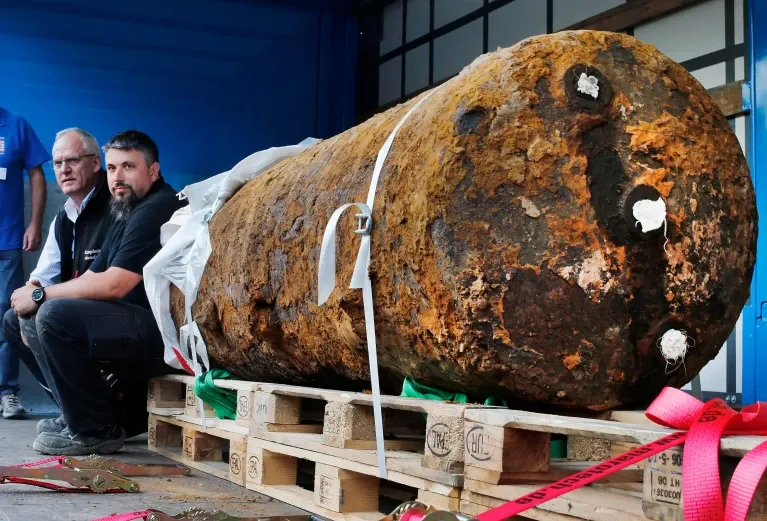
Wildfires across Europe are revealing a hidden danger left from the two world wars. Old bombs, mines and other weapons are being exposed by flames and heat. Belgium is among the countries facing this risk.
Some of the old weapons have also exploded. Blasts have been reported in Belgium and other parts of Europe. The danger is greatest in places where heavy fighting took place during the First and Second World Wars.
Belgium has a long history of war on its soil. Many areas still contain weapons that were never found or removed. For decades, soil, plants and forests have hidden these dangerous objects from view.
Now, extreme summer weather is changing that.
Wildfires burn away trees, grass and other plants that once covered the ground. Strong heat can also damage old weapons. In some cases, the heat can cause them to explode.
This creates a serious problem for firefighters. Crews may enter forests to stop a fire without knowing that old weapons are buried below them.
Belgium has a special team that deals with explosive war remains. The team receives more than 3,000 calls each year. It removes and destroys hundreds of tons of old war material.
The work is already difficult. Wildfires can make it even harder.
When a fire reaches an area with old weapons, firefighters cannot always work in the same way. They may have to keep a safe distance. Bomb experts may then need to check the area before other crews can enter.
This can slow the fight against a fire.
The risk is not limited to bombs. Mines and other weapons can also remain underground. Some may have been buried during battles. Others may have been left behind after military forces moved away.
Many of these weapons are now more than 80 years old. Their age does not mean they are safe.
In fact, old explosives can become less stable over time. Rust and damage can make them harder to identify. Fire adds another layer of danger.
Belgium is not facing this problem alone. Similar cases have been reported in France, Germany and the Netherlands. Several of these countries also saw fierce fighting during the world wars.
The problem is becoming more visible as Europe faces hotter and drier summers. Long periods without rain can dry forests and grasslands. This makes fires easier to start and harder to control.
Dry weather can also reveal objects that have stayed hidden for many years.
The threat can appear outside forests as well. Drought can lower water levels in rivers and lakes. This can expose old bombs and mines that were hidden under water.
That means extreme weather can reveal dangers from the past in new places.
For Belgium, the issue is especially important because of the country’s wartime history. Battles were fought across parts of the country during both world wars. Many weapons were used in large numbers.
Not all of them were recovered.
The latest fires have shown that this old problem is still present. A forest may look safe on the surface while dangerous objects remain below it.
Authorities must therefore consider more than fire and smoke when dealing with major wildfires. They also need to know what may be buried beneath the land.
The challenge could grow if hot and dry weather becomes more common. More fires could expose more areas that have remained untouched for decades.
For firefighters and bomb experts, the message is clear. The danger from Europe’s wars has not fully disappeared.
The weapons may be old, but they can still hurt people. As wildfires spread across Belgium and other parts of Europe, the land is revealing a dangerous part of its past.
That makes fire control more than a fight against flames. In some places, it is also a fight against hazards left underground by wars that ended generations ago.

