

The European Commission has defended its selection process for a key diplomatic post in Africa’s Sahel region after a political dispute in Slovenia led to the withdrawal of a candidate and sparked controversy within the European Union.
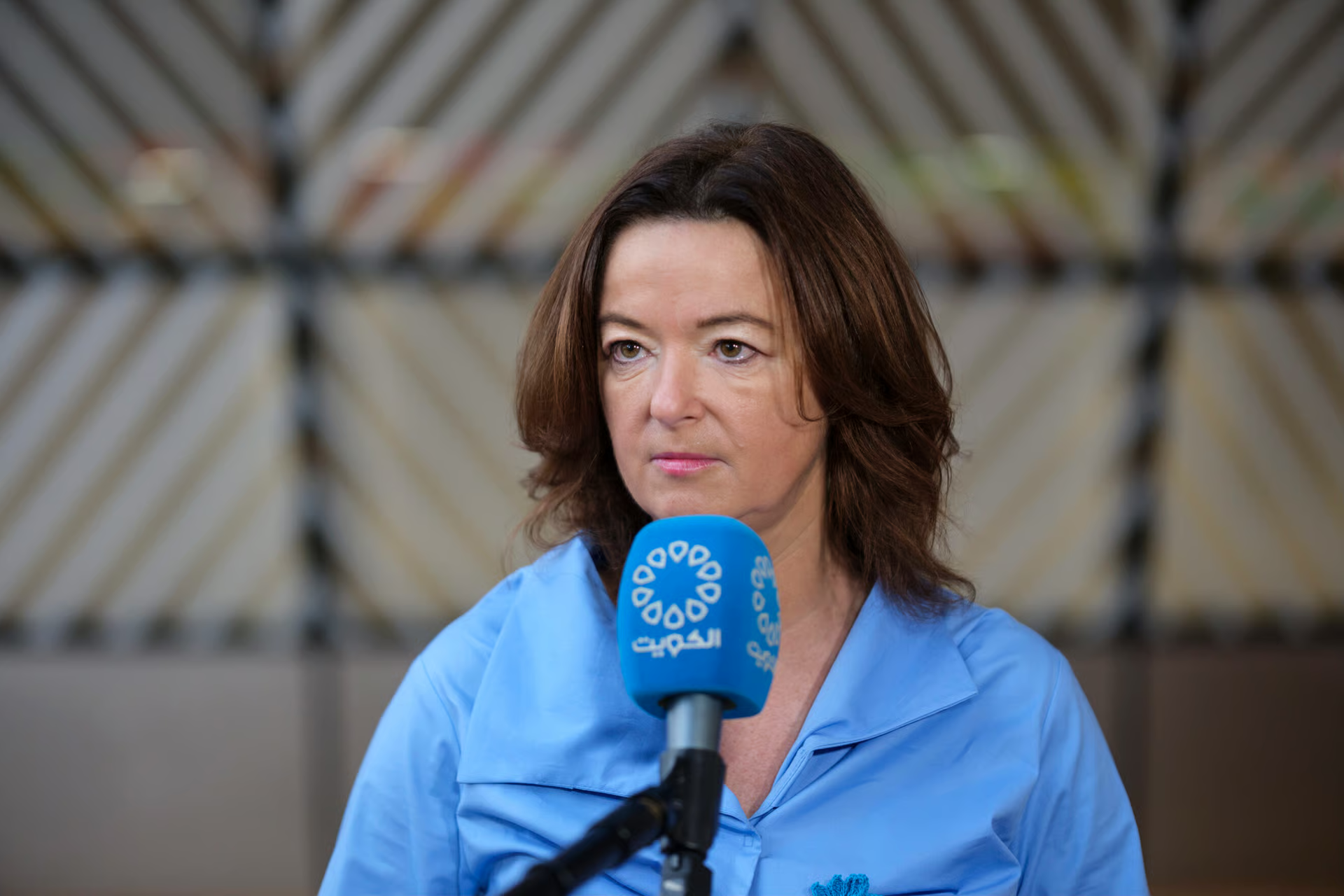
Commission officials said the procedure used to choose a new EU special representative for the Sahel followed established rules. The statement came after questions were raised about the nomination of former Slovenian Foreign Minister Tanja Fajon, whose candidacy became the center of a growing political conflict in her home country.
Speaking on Tuesday, Commission spokesperson Anouar El Anouni said the selection process for the position was conducted in line with the required procedures. The comments followed criticism and legal action connected to Fajon’s proposed appointment.
The position is considered one of the EU’s important diplomatic roles. The special representative for the Sahel oversees relations with countries across a vast region stretching roughly 6,000 kilometers from the Atlantic coast of Africa to the Red Sea. The area faces major challenges, including armed conflicts, political instability, terrorism, and drug trafficking.
Last week, Danish diplomat Birgitte Nygaard Markussen was officially appointed to the role. Her appointment came after Fajon’s name was withdrawn during the selection process.
According to people familiar with the discussions, Fajon was initially proposed by the European External Action Service, the EU’s foreign policy body. However, her candidacy was later removed after objections were raised by Slovenia’s government.
The dispute reflects growing political tensions within Slovenia following the return of Prime Minister Janez Janša to office in June. Since taking power, Janša has repeatedly criticized the previous administration in which Fajon served as foreign minister.
Janša has argued that Fajon was never formally nominated through the proper channels. He claimed that the proposal was submitted by an official who reported directly to her rather than through an approved government process.
As a result, Slovenia’s government has filed criminal complaints alleging irregularities connected to the nomination procedure. The legal action has intensified political debate within the country and drawn attention from European institutions.
Fajon, a former member of the European Parliament and a prominent figure in Slovenia’s center-left political movement, has not publicly commented in detail on the allegations. The case remains politically sensitive as authorities continue their review.
The controversy has also created tensions between Slovenia’s government and President Nataša Pirc Musar. The president criticized the government’s actions and warned that blocking experienced candidates from international positions could weaken Slovenia’s influence abroad.
Pirc Musar said she was disappointed by the government’s approach. She argued that preventing Fajon’s appointment could reduce Slovenia’s representation in important international institutions and diplomatic roles.
According to the president, the failed nomination may benefit certain political interests domestically, but it risks damaging the country’s broader standing within European and international organizations.
European officials have largely avoided becoming involved in the political dispute. Commission spokesperson Guillaume Mercier emphasized that EU special representatives are appointed by the Council of the European Union following a proposal from the High Representative for Foreign Affairs and Security Policy.
Mercier also noted that European institutions do not comment on ongoing national legal proceedings, signaling that Brussels intends to stay out of the domestic investigation taking place in Slovenia.
The disagreement comes at a time when the EU is increasing its diplomatic focus on the Sahel region. Political instability, military coups, humanitarian crises, and security threats have made the area a major concern for European policymakers.
The EU special representative plays a key role in coordinating diplomatic engagement, supporting regional stability efforts, and maintaining relationships with governments and international partners across the region.
While the appointment of Markussen ensures the position remains filled, the dispute surrounding Fajon’s withdrawn candidacy continues to attract attention in both Slovenia and Brussels. The situation has highlighted broader questions about national political influence, international appointments, and the balance between domestic politics and European diplomacy.
For now, European officials maintain that the selection process followed all required procedures, while political leaders in Slovenia remain divided over whether the nomination should have moved forward. The controversy is likely to remain a topic of debate as legal and political developments continue in the coming weeks.

