

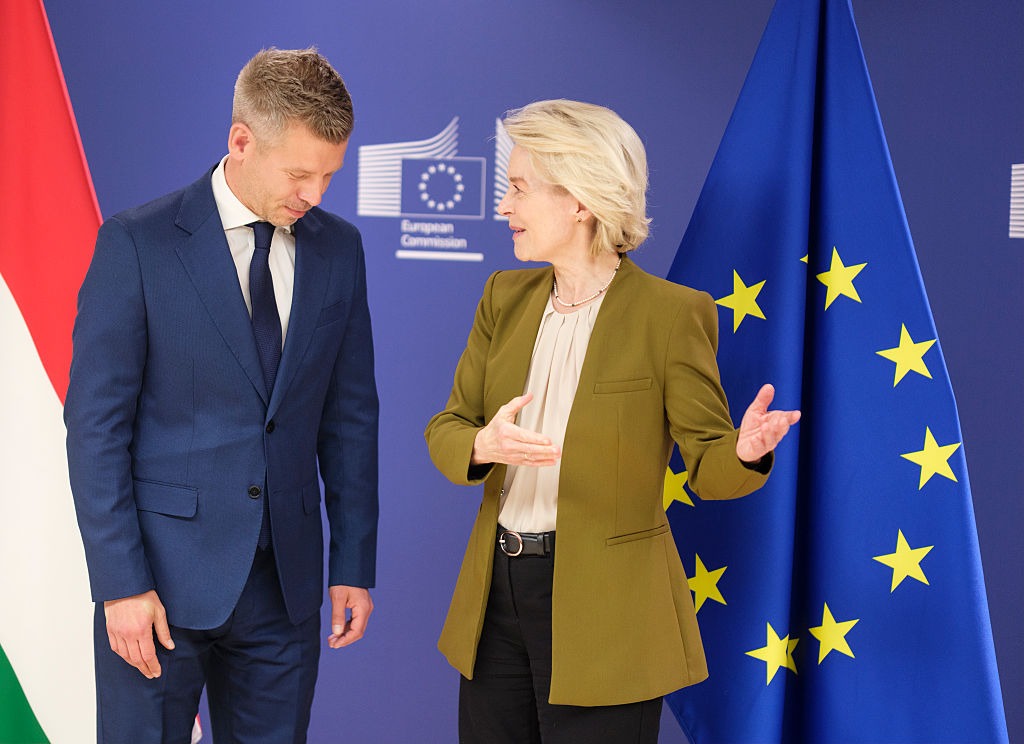
The European Commission is preparing to release up to €17 billion in previously frozen EU funds to Hungary after a major political shift in the country’s leadership, triggering renewed debate over how European Union money is used and what conditions are attached to it.
The funding package includes about €10.4 billion from the EU’s post-Covid Recovery and Resilience Facility and another €6–7 billion from cohesion policy funds that had been blocked for years. The money was withheld over concerns related to rule of law, judicial independence, anti-corruption safeguards, and academic freedom standards.
Hungary had remained the only EU member state largely excluded from major recovery payments after disputes between Budapest and Brussels escalated under former Prime Minister Viktor Orbán, who governed for 16 years and often clashed with EU institutions.
Officials in Brussels argued that concerns over systemic corruption risks and democratic backsliding made it necessary to freeze payments intended for national development and recovery programs. Hungarian authorities consistently rejected these claims, describing them as politically motivated.
The situation changed after the April 2026 election, which brought Péter Magyar and his Tisza Party to power. Magyar, a former ally of Orbán who later became one of his strongest critics, won a decisive victory on a platform focused on restoring ties with the European Union and unlocking frozen funds.
His campaign also emphasized anti-corruption reforms, judicial independence, and greater transparency in public procurement. Following his election, EU leaders quickly moved to signal improved relations with Budapest.
European Commission President Ursula von der Leyen held early talks with the new Hungarian leadership, describing discussions as constructive. EU officials indicated that financial flows could resume once technical and legal conditions are met.
The Commission has linked the release of funds to a set of reforms known informally as “super milestones.” These include strengthening judicial independence, improving oversight of public spending, and increasing transparency in state institutions.
Hungary is also expected to join the European Public Prosecutor’s Office and implement changes aimed at restoring academic freedom and access to EU programs such as Erasmus+. Full access to funds depends on verified progress in these areas.
The Hungarian government has pledged to carry out the required reforms. Officials in Budapest say they are committed to rebuilding trust with Brussels and ensuring that EU funds reach the country after years of delays.
If fully released, the €17 billion package would represent roughly 13 percent of Hungary’s annual national budget, making it one of the largest inflows of EU support in recent years.
The development has also reignited a broader political debate within Europe about the use of EU funds as a tool of enforcement. Critics argue that financial pressure has increasingly been tied to political alignment with Brussels on issues such as governance reforms, migration policy, and social standards.
Supporters of the conditional approach say the measures are necessary to protect taxpayers’ money and ensure that EU funds are not misused. They argue that rule-of-law conditions are essential for maintaining trust between member states.
However, critics claim the system risks creating unequal treatment between countries. They argue that similar concerns in other EU states have not always led to comparable financial restrictions, raising questions about consistency in enforcement.
Some analysts point to cases such as Spain, where political controversies and foreign policy positions have drawn attention but have not resulted in similar funding freezes. This comparison has added to the ongoing debate over fairness and impartiality in EU decision-making.
Attention is also being paid to Hungary’s domestic political direction under its new leadership. Reports suggest internal political tensions over appointments and institutional reforms, including debates over senior government positions and administrative changes.
Observers say the next phase of Hungary’s relationship with the EU will depend on how quickly reforms are implemented and whether both sides can maintain trust during the process. Any delays or disagreements could affect the timeline for full disbursement of funds, which is currently set with a deadline of August 31, 2026 for key recovery payments.
Hungary’s approach to migration policy is also expected to remain a sensitive issue. The European Union continues to emphasize shared responsibility among member states, while Budapest has signaled a more restrictive stance on migration management.
The outcome of these negotiations will help shape not only Hungary’s financial future but also broader questions about how the European Union balances national sovereignty with collective rules.
For Hungary, the potential release of €17 billion represents a major economic boost after years of restricted access to EU funding. For Brussels, it represents both a policy test and a demonstration of its ability to enforce shared standards across member states.
As the reforms move forward, the case is likely to remain a focal point in discussions about the role of EU institutions, the limits of conditional funding, and the political direction of the European Union itself.

