

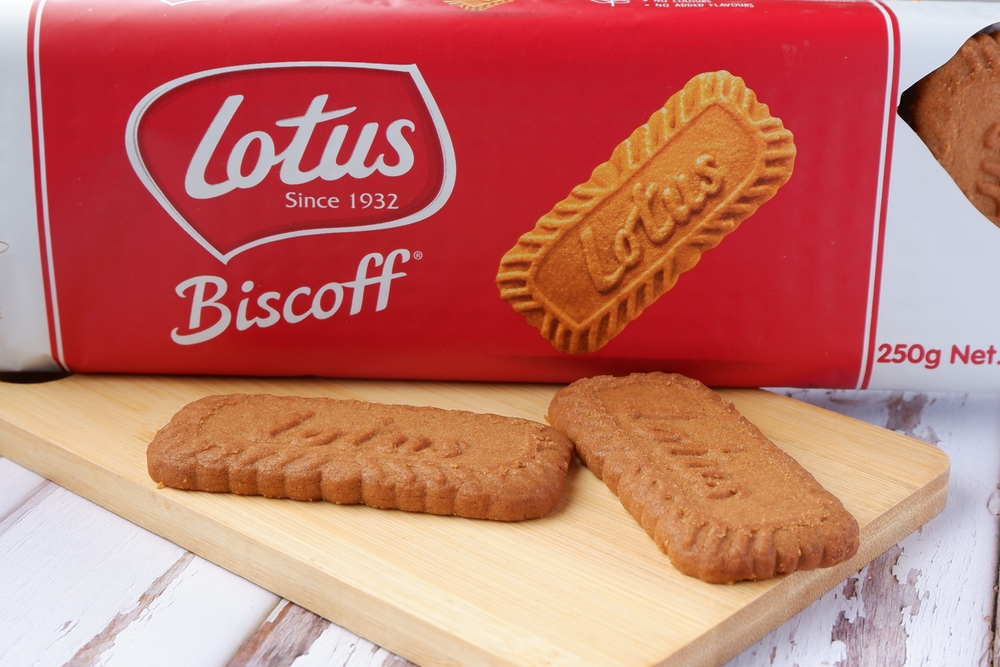
Belgian cookie maker Lotus Bakeries has quietly become one of the most expensive publicly traded stocks in the world, with shares hitting an all time high above fifteen thousand euros in recent weeks. That milestone places the company, best known for its Biscoff caramelized biscuits, among a small handful of firms globally whose share price trades in five figure territory, trailing only a select group of companies including Warren Buffett’s Berkshire Hathaway.
The company’s stock has climbed steadily over recent years, crossing the ten thousand euro mark for the first time before continuing its upward trajectory to reach current levels near fifteen thousand euros per share. Recent trading data placed the stock around twelve thousand seven hundred eighty euros in late August, reflecting a price earnings ratio of roughly fifty one times earnings, a valuation that signals strong investor confidence in continued growth even as the multiple sits well above typical levels for consumer food companies.
Founded in 1932 in the Belgian town of Lembeke, Lotus Bakeries has grown from a small regional bakery into a global consumer brand built primarily around its signature Biscoff cookie, a caramelized biscuit that has become one of the best selling cookies worldwide. The company, still led by Jan Boone, grandson of the original founder, has expanded its product range well beyond the original speculoos recipe while maintaining Biscoff as its core growth driver across international markets.
A significant part of the company’s growth strategy has centered on building brand recognition through partnerships with airlines and hospitality businesses, where Biscoff cookies are frequently served alongside coffee, introducing the product to travelers who might not otherwise encounter it in their home markets. That approach has helped the company establish a presence in more than seventy countries, steadily building global brand awareness through these smaller scale but high visibility distribution channels.
Lotus Bakeries crossed the billion euro revenue mark for the first time in recent years, a milestone that underscored the company’s transformation from a modest regional bakery into a genuine global consumer goods player. The company has continued investing in expanded manufacturing capacity to support that growth, including plans for a new production facility in Thailand aimed at better serving the Asian market and reducing the distance between production and its fastest growing international markets.
Financial analysts tracking the stock note that its lofty valuation reflects investor expectations for continued strong earnings growth in the years ahead, with per share earnings currently sitting well below the headline share price, a gap that only closes if the company can sustain rapid profit growth over an extended period. That dynamic makes Lotus Bakeries shares particularly sensitive to any signs of slowing growth, since much of the current valuation already prices in continued expansion.
The company’s rise to prominence among the world’s priciest stocks has drawn attention well beyond typical Belgian business circles, with international financial commentators increasingly citing Lotus Bakeries as a case study in how a niche regional food product can achieve genuinely global market penetration. Comparisons to Berkshire Hathaway, while somewhat tongue in cheek given the vast difference in company size and business model, highlight just how unusual a five figure share price remains among publicly traded companies worldwide.
As investors look ahead to the company’s next earnings update, market watchers will be paying close attention to whether Lotus Bakeries can continue justifying its premium valuation through sustained international expansion and steady growth in its core Biscoff business. For a company built on a simple caramelized cookie recipe, its emergence as one of the world’s most expensive stocks marks a remarkable chapter in Belgian corporate history.

