

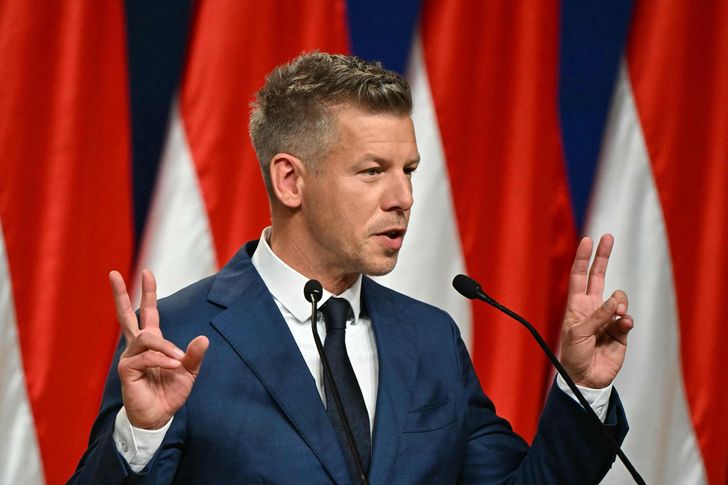
Hungary is preparing for a major shift in its relationship with the European Union as new political leader Peter Magyar visits Brussels with a plan for a full reset. The Hungary EU reset talks mark a possible turning point after years of tension between Budapest and EU institutions.
Magyar’s visit signals a sharp change from the previous government under Viktor Orban, whose long rule often clashed with EU leaders. Orban’s administration frequently criticized Brussels, while disputes over rule-of-law concerns led to frozen EU funding for Hungary.
Now, Magyar is seeking to rebuild trust and restore cooperation with the bloc. His approach focuses on dialogue and fast action to repair political and financial ties. EU leaders have responded positively, calling the election result a moment of unity for the European Union.
European Commission President Ursula von der Leyen said Hungary’s political change makes the EU stronger and more united. Other EU officials have also welcomed early talks with Magyar’s team, even before he formally takes office.
The Hungary EU reset process is already underway, with multiple meetings held between Hungarian representatives and senior EU officials. These discussions aim to address long-standing issues that blocked cooperation during the Orban era.
A key priority for Magyar is unlocking around 18 billion euros in frozen EU funds. These funds were suspended due to concerns over governance and rule-of-law standards. Hungary also risks losing part of its Covid recovery funds if reforms are not started before a strict deadline.
EU officials have made clear that financial support will depend on concrete reforms. They expect the incoming Hungarian government to act quickly once in office. Brussels has outlined a set of conditions that Hungary must meet to restore full access to funding.
Magyar has said there is no time to waste and has promised rapid progress on reforms. His team has already held multiple rounds of talks with EU representatives, focusing on legal and institutional changes required by the bloc.
One possible early breakthrough could come from EU defence funding. A separate package worth around 16 billion euros in loans has been delayed in recent years due to political tensions between Brussels and Budapest. EU officials say this could be unlocked faster if reforms begin quickly.
Beyond financial issues, Ukraine policy is another major focus of the Hungary EU reset discussions. Under Orban, Hungary often blocked EU decisions supporting Ukraine, including sanctions on Russia and financial aid packages.
Since Magyar’s election victory, some of these blockages have already eased. The EU recently approved a major loan package for Ukraine and new sanctions on Russia after months of delay linked to Hungary’s veto.
EU leaders now expect Hungary to take a more cooperative stance on Ukraine’s EU membership process. This includes allowing the next steps in Ukraine’s accession path to move forward. However, full membership is still seen as a long-term process across the EU.
Brussels officials say they are hopeful but cautious about the new Hungarian leadership. While early signals from Magyar are positive, they emphasize that real progress must be seen in policy actions, not just political statements.
Some EU diplomats describe the current approach as “wait and see,” reflecting both optimism and caution. They note that Magyar previously served in Orban’s political circle before breaking away, which adds both familiarity and uncertainty to his new role.
Despite this, there is growing belief in Brussels that Hungary may be entering a new phase in its relationship with the EU. The Hungary EU reset could reshape cooperation on funding, security, and foreign policy if reforms are implemented quickly.
For now, both sides are continuing structured talks aimed at rebuilding trust. The coming months will be critical in deciding whether Hungary fully reintegrates into EU decision-making or continues to face financial and political restrictions.

