

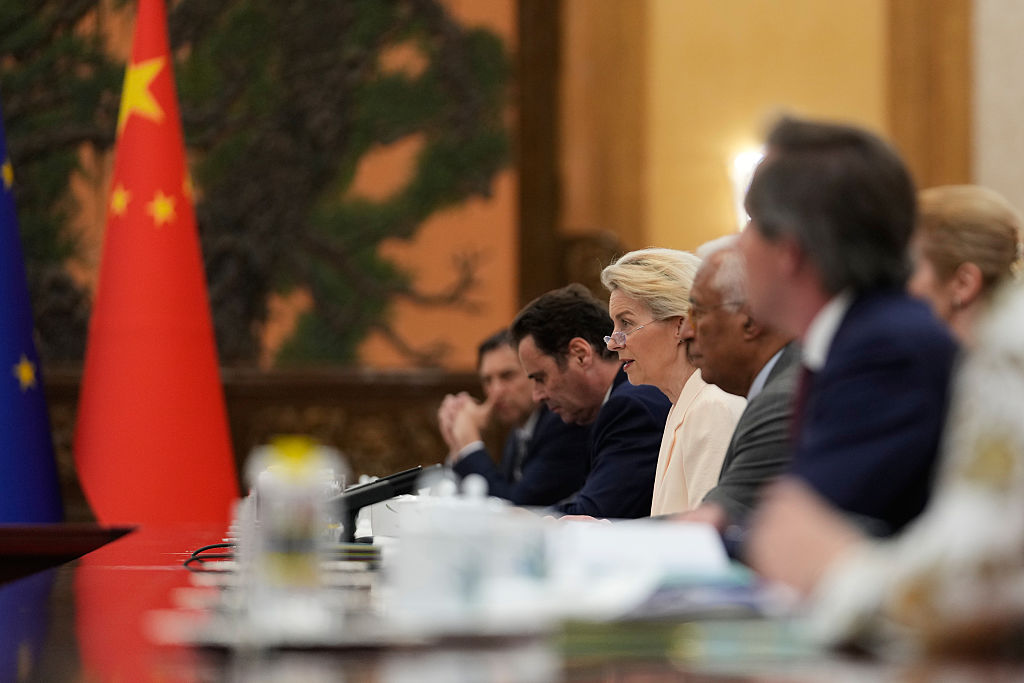
Tensions between Brussels and Beijing have increased after the European Commission defended its new industrial policy law and rejected Chinese criticism. The dispute centers on the EU’s “Made in Europe” framework, which China says is discriminatory, while the European Union insists it is based on fair trade principles and reciprocity.
The European Commission said its policy fully complies with international trade rules. A spokesperson stressed that the EU remains one of the most open markets in the world. They added that the EU has a wide network of free trade agreements and expects other global partners to show the same level of openness in return. According to the Commission, fair access must work in both directions.
The law, formally known as the Industrial Accelerator Act, was presented in March by the European Union executive. It aims to limit access for non-EU companies to public subsidies and government contracts in key industrial and green technology sectors. These sectors are often dominated by Chinese firms, according to EU officials. The goal is to support European industry and strengthen competitiveness.
The policy comes at a time when European manufacturers are under pressure. High energy costs, global trade tensions, and strong competition from heavily subsidized Chinese exporters have affected the sector. Recent geopolitical instability has also added pressure to the European economy. EU officials say these combined factors make industrial protection more important.
China strongly criticized the EU law earlier this week. The Chinese Ministry of Commerce said the proposal violates World Trade Organization rules. It also described the measure as discriminatory toward Chinese companies. Beijing warned that it could take countermeasures if the law is approved and implemented by EU institutions.
China has already submitted a formal complaint to the European Commission. Chinese officials said they have “grave concerns” about the impact of the law on trade relations. They argue that the policy undermines cooperation between China and the European Union. Beijing also says it could harm long-term economic ties if not addressed through negotiation.
In response, the European Commission said its policies are carefully designed to balance economic goals and public interest. Officials said the law is intended to protect European citizens and businesses while ensuring fair competition. They also emphasized that the EU continues to follow WTO rules and international obligations.
The Commission added that it is open to dialogue with global partners, including China. Officials said they are willing to discuss concerns and explain the purpose of the policy. However, they stressed that EU decision-making will continue based on internal economic needs and strategic priorities.
The dispute also follows another recent point of tension between the EU and China. Beijing recently criticized the inclusion of Chinese companies in a new round of EU sanctions related to Russia. China said the move damages mutual trust and goes against earlier agreements between leaders of both sides.
EU officials, however, argue that sanctions and industrial policy are separate issues. They say sanctions are linked to geopolitical concerns, while industrial rules focus on economic fairness and market access.
The latest exchange reflects growing friction between the two major economic powers. Trade experts say the relationship is becoming more competitive, especially in areas like clean energy, advanced manufacturing, and technology. Both sides are trying to protect their industries while maintaining trade ties.
The Industrial Accelerator Act still needs approval from EU member states and the European Parliament before it becomes law. Negotiations are expected to continue in the coming months. The outcome will likely shape future trade relations between the European Union and China.
For now, both Brussels and Beijing are maintaining their positions. The EU is emphasizing reciprocity and fair access, while China is warning against restrictions it sees as discriminatory. Analysts say the dispute highlights a deeper shift in global trade, where economic cooperation is increasingly mixed with strategic competition.

