

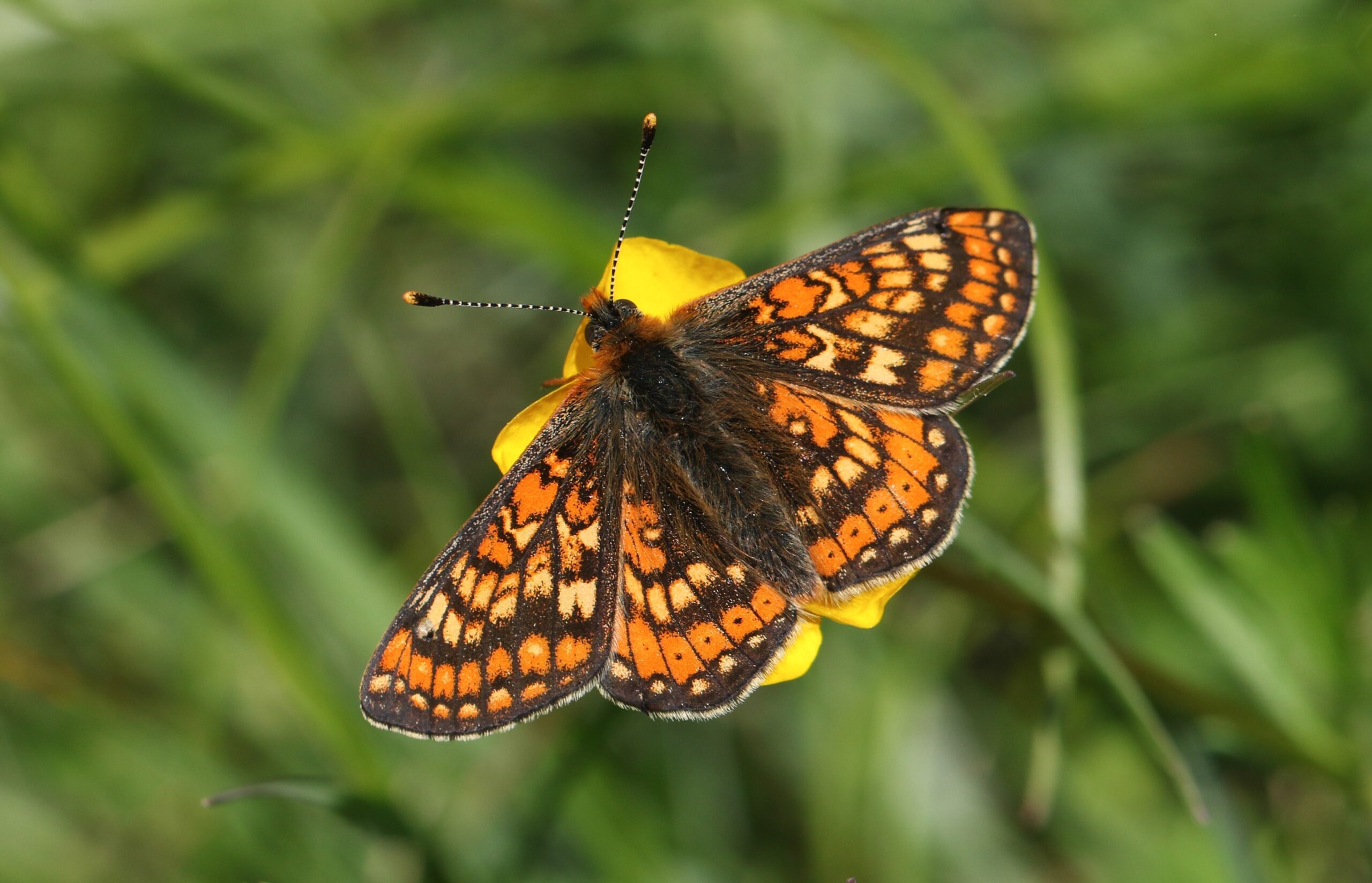
The rare Marsh Fritillary butterfly has had a strong year in Northern Ireland, thanks to warm weather and long-term conservation work. Once widespread, the species declined sharply as farming practices changed and its key food plant, Devil’s-bit Scabious, disappeared from many sites.
Surveys by Butterfly Conservation found large increases in caterpillar nests on managed land. One site saw numbers rise from 24 to 53, another from 24 to 139, and a third from five to 27.
Conservation manager Rose Cremin said good weather helps only in the short term and that restoring and managing habitat is crucial for the species’ survival. Volunteers monitor the butterflies each autumn by counting their communal silken webs, which show how populations are changing.
The Marsh Fritillary produces just one brood a year, making it vulnerable to habitat loss. Despite recent successes, its long-term decline reflects wider troubles for UK butterflies, with 80% of species in decline since the 1970s.

