

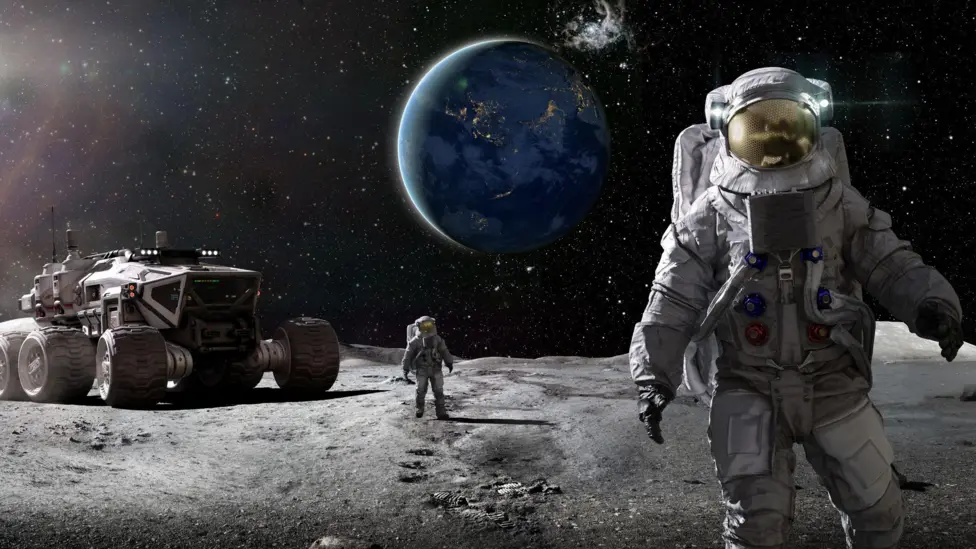
The US space leadership is entering a new and powerful phase in 2026. After decades of development, the United States is once again at the center of global space exploration. NASA missions and private space companies are working together more closely than ever before. This partnership is driving new technology, faster innovation, and deeper space exploration goals.
Experts say the US space leadership is now shaped by both public and private efforts. NASA continues to lead major scientific missions. At the same time, private companies are building rockets, satellites, and space systems at a rapid pace. This shared model is changing how space programs operate.
One of the most important developments is the return to deep space exploration. NASA is preparing new missions to the Moon and beyond. These missions aim to build a long-term human presence in space. Scientists believe the Moon can serve as a base for future exploration of Mars and other planets.
Private companies are playing a key role in this effort. They are developing reusable rockets that reduce the cost of space travel. These rockets can be launched, landed, and used again. This has made space missions more affordable and frequent. It is one of the biggest reasons US space leadership is growing stronger.
Satellite technology is another major area of progress. Thousands of satellites now orbit Earth, helping with communication, navigation, and weather forecasting. These systems support daily life on the ground, from mobile phones to GPS services. The expansion of satellite networks is also improving global internet access in remote areas.
The US space leadership also benefits from strong innovation in robotics and artificial intelligence. Space probes and rovers are now more advanced and can perform complex tasks with less human control. These technologies allow scientists to explore distant planets and gather more accurate data.
International cooperation is also increasing. The United States works with other countries on space missions and research. These partnerships help share costs and knowledge. However, competition remains strong, especially with other major space powers investing heavily in their own programs.
Economic impact is another important factor. The space industry is creating new jobs in engineering, manufacturing, software, and research. Many regions in the United States now have growing space-related industries. This contributes to local economies and supports high-skilled employment.
Education and training are also expanding. Universities are offering more programs in aerospace engineering, astrophysics, and space technology. Students are being prepared for careers in a rapidly growing industry. This helps ensure a steady flow of skilled workers into the sector.
Despite strong progress, challenges remain in US space leadership. Space missions are expensive and require long-term funding. Political changes can sometimes affect budgets and planning. There are also technical risks involved in launching and operating spacecraft.
Space debris is another concern. Thousands of pieces of old satellites and rocket parts orbit Earth. These can create risks for new missions. Scientists are now working on ways to track and reduce space debris to keep orbits safe.
Safety is also a major priority. Human space travel carries risks, and space agencies must ensure strong protection for astronauts. New technologies are being developed to improve life support systems and mission safety.
Looking ahead, experts believe the US space leadership will continue to grow. Missions to Mars, deeper space exploration, and commercial space travel are all expected to expand. Private companies may also offer more space tourism opportunities in the future.
In conclusion, the United States is entering a new era of space exploration. The combination of NASA missions and private innovation is strengthening its global leadership. While challenges remain, the progress so far shows that space exploration is becoming more advanced, more collaborative, and more important than ever before.

