

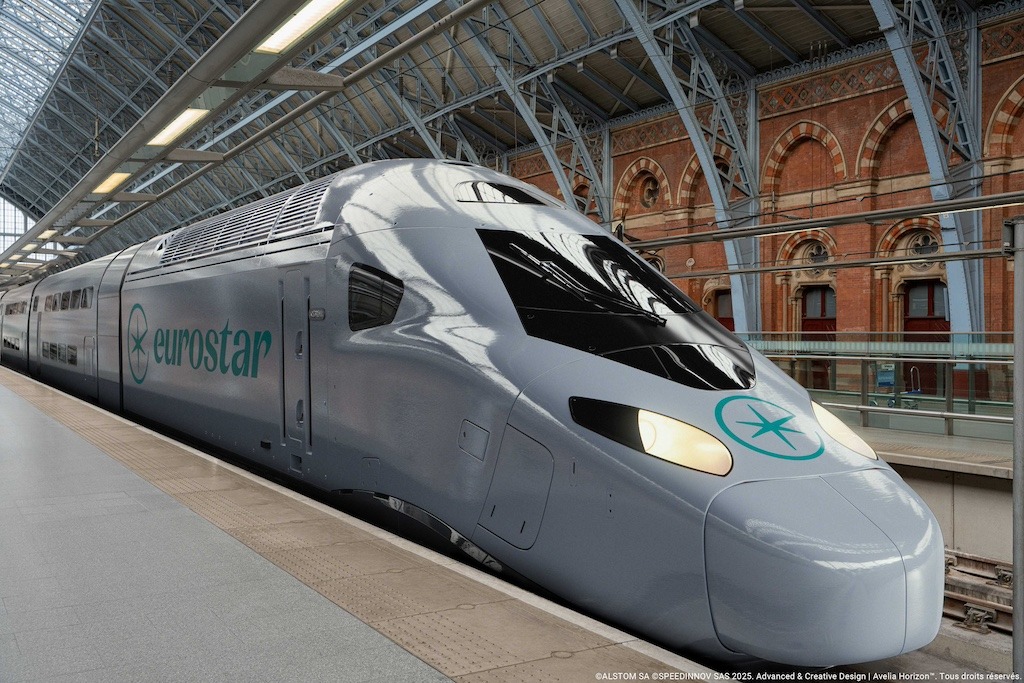
Eurostar has unveiled new details of a future double-decker train fleet designed to carry more passengers and offer new features on international European routes. The announcement was highlighted in Brussels on Sunday, September 20, as the company looks toward the next stage of high-speed rail travel between Belgium, France, Britain and other destinations.
The new trains are designed around higher passenger capacity. A double-decker layout allows an operator to place more seats in a single train while continuing to use existing rail paths. Eurostar has also presented a two-storey bar concept, giving the planned trains a distinctive feature aimed at making the journey itself part of the travel experience.
Brussels is one of Eurostar’s important hubs. The service connects the Belgian capital with London and Paris and plays a major role in business and leisure travel. Any future change to the fleet could therefore affect large numbers of passengers who use the network for work, tourism and international events.
European rail companies are investing in new trains as they compete with airlines on journeys between major cities. High-speed rail offers passengers the ability to travel from city center to city center without the airport transfers and long security procedures associated with many flights. Capacity and comfort are increasingly important parts of that competition.
The double-decker design must also meet strict technical requirements. Eurostar operates across several national rail systems and through the Channel Tunnel, so trains must satisfy safety and infrastructure rules in different countries. The final vehicles will need extensive testing before they can enter normal international service.
The company has placed attention on passenger experience as well as capacity. Modern trains increasingly include spaces for work, food and social travel. A larger onboard bar area is unusual for high-speed rail, but Eurostar is presenting it as part of a wider effort to make long international journeys more attractive.
For Brussels, stronger rail capacity could be useful because the city is a major European business and institutional center. Thousands of people travel between Brussels, London and Paris every day, and reliable international rail connections are important for companies, government institutions and tourists.
The new fleet will not arrive immediately. Train design, manufacturing, testing and certification take time, especially when vehicles must operate across borders. Passengers will therefore continue using the existing fleet while Eurostar works through the development process and determines where the new trains will eventually be deployed.
The announcement nevertheless shows that international rail remains an area of investment. As European travelers look for alternatives to short-haul flights, operators are seeking trains that can carry more people while providing a comfortable experience. Eurostar’s double-decker plan is a sign that the company expects demand for cross-border rail to remain important in the years ahead.
Eurostar’s plans come as international rail faces growing demand for efficient links between major European cities. More seats per train can help operators respond to passenger growth without simply adding more departures. That can be important on busy routes where rail capacity is limited by infrastructure, station space and cross-border scheduling.
The design also reflects a wider change in how passengers view long train journeys. Travelers increasingly expect reliable internet, comfortable seating, food and places where they can work or relax. Eurostar’s emphasis on a two-storey bar suggests that the company wants the journey to offer an experience as well as a transport service.
The project will still depend on technical and financial decisions before passengers see the new trains. International rolling stock must pass demanding tests and work safely across different railway systems. The announcement is therefore an early step, but it signals that Eurostar is planning for a future in which cross-border rail remains a major part of European travel.
The announcement is particularly relevant as European governments seek to reduce transport emissions and improve links between cities. Rail can carry large numbers of passengers efficiently, but demand can also create pressure on existing services. A higher-capacity Eurostar fleet could help address that challenge if the planned trains meet technical, financial and operational requirements.
The plan will require careful testing before passenger service begins.

