

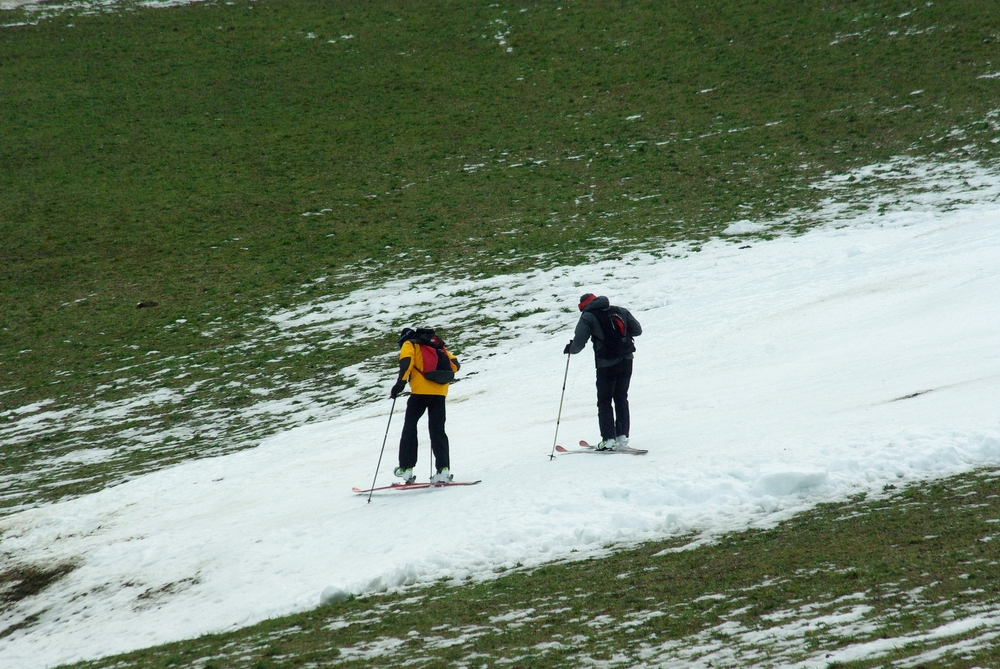
Rising temperatures and increasingly unreliable snowfall are forcing ski resorts across Europe to rethink how they operate. What was once a dependable winter economy is now under pressure from climate change, growing costs, and shrinking accessibility for ordinary skiers.
With the Winter Olympics set to open in Milan-Cortina on 6 February, the slopes in the Dolomites are currently blanketed in snow. But conditions like these are becoming less predictable, even in traditionally snow-rich regions, and often depend heavily on artificial snowmaking.
Winter Sports in a Warming Climate
Across the Alps, higher temperatures mean natural snowfall is increasingly confined to higher altitudes and shorter periods. To compensate, resorts rely on artificial snow, which comes with significant environmental and financial costs. These expenses are often passed on to visitors, pushing ski holidays out of reach for many Europeans.
The International Olympic Committee has acknowledged that climate change—driven largely by the burning of fossil fuels—is reshaping winter sports. A 2021 study by researchers at Canada’s University of Waterloo found that, without drastic climate action, only four past Winter Olympic host locations would still be viable by mid-century. Under a worst-case warming scenario of 4°C, just one—Sapporo in Japan—would remain suitable by 2080.
Even if global warming is limited to 2°C, as outlined in the Paris Agreement, only a handful of former Olympic venues would still be able to host the Games by 2050. This reality highlights how fragile the future of winter sports has become.
Europe’s Heavy Dependence on Snow Tourism
While the Olympics last only a few weeks, the ski economy supports entire regions year-round. Europe’s winter tourism sector generated around €180 billion in 2022, with the Alps at its core. The Alpine region alone is home to about 80 million people and spans parts of Germany, France, Italy, Austria, Slovenia, Switzerland, and Liechtenstein.
Germany currently has the most ski resorts in Europe, followed by Italy and France. But research published in Nature Climate Change in 2023 paints a stark picture: more than half of Europe’s 2,234 ski resorts face a very high risk of insufficient snow under a 2°C warming scenario. In the French Alps, around a third of resorts could become unviable, while in the Pyrenees the figure rises to nearly 90 per cent. At 4°C of warming, almost all European ski resorts would struggle to survive.
Water, Energy, and Rising Costs
Artificial snowmaking places enormous strain on water and energy resources. According to WWF, covering just one hectare of slope with around 30 centimetres of artificial snow requires at least one million litres of water. Ongoing snow production can consume even more—comparable to the annual water use of a large city.
The European Union has warned that coordinated management of Alpine water resources is becoming essential as climate pressures intensify. Snow cannons also require large amounts of electricity, increasing emissions and reinforcing the cycle of climate change. Supplying artificial snow across Alpine resorts is estimated to require about 600 GWh of electricity each year—roughly the annual consumption of 130,000 households.
These costs are already hitting consumers. Since 2015, the price of skiing in Europe has risen by nearly 35 per cent on average, far outpacing inflation. Switzerland, Austria, and Italy have seen the steepest increases, leaving many major resorts affordable only to wealthier visitors.
As snow becomes scarcer and costs continue to climb, Europe’s ski industry is being forced to confront a difficult question: how to survive in a future where winter can no longer be taken for granted.

