

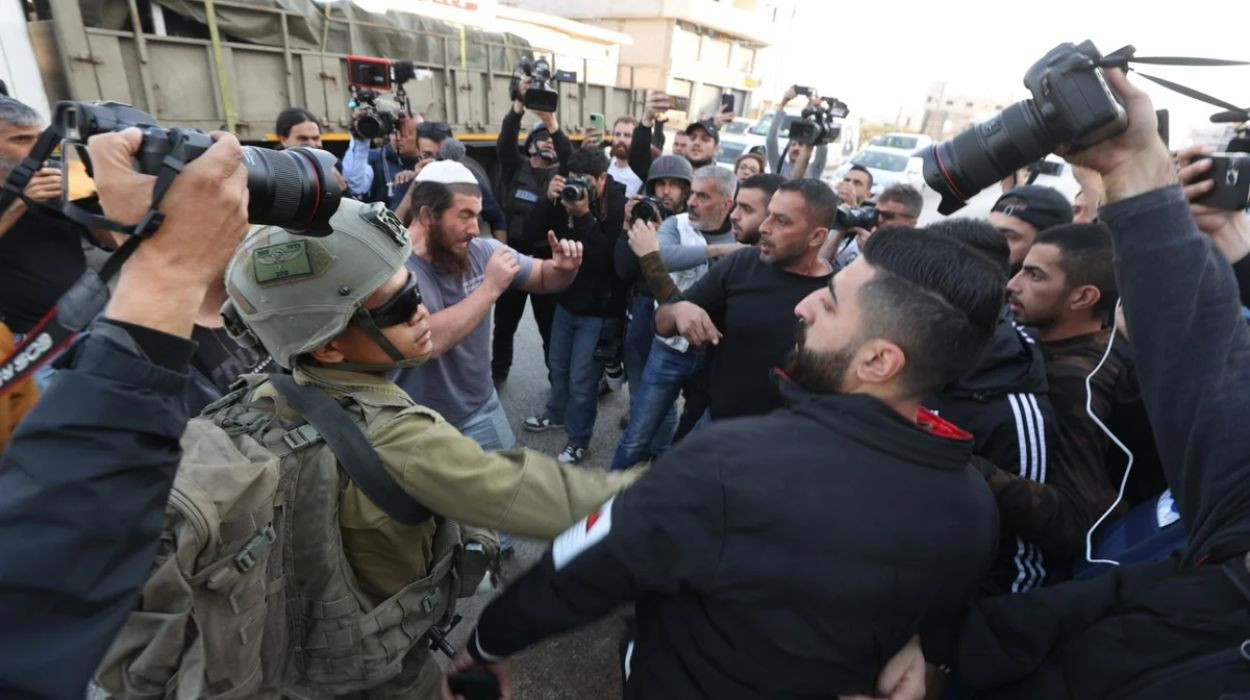
The European Union has stepped up its response to violence and settlement activity in the occupied West Bank by introducing new EU West Bank sanctions against individuals and organisations it says are linked to abuse and coercion against الفلسطيني communities. The move signals a stronger and more structured approach from Brussels, using its global human rights sanctions system to apply direct pressure.
The latest package includes restrictive measures against four settler organisations and three individuals. The groups listed are Nachala Settlement Movement, Regavim, Hashomer Yosh, and Amana. The individuals named in the sanctions are Daniella Weiss, Meir Deutsch, and Avichai Suissa. The EU says these actors were involved in supporting extremist settler activity, encouraging intimidation, and contributing to displacement-related practices in the West Bank.
The sanctions include asset freezes and travel bans. This means those listed cannot access funds or financial resources within EU jurisdictions, and they are barred from entering EU member states. Officials say these measures are designed to isolate individuals and groups linked to what the bloc describes as serious human rights concerns.
The decision also expands the EU’s Global Human Rights Sanctions Regime. With this move, the system now covers 136 individuals and 41 entities worldwide. This shows a broader shift in EU foreign policy toward using targeted sanctions not only against governments but also against non-state actors involved in alleged abuses.
EU officials have increasingly framed the issue of West Bank settlement activity as a human rights matter rather than only a political or security issue. They argue that settler violence, property destruction, intimidation, and restrictions on movement form part of a wider pattern of harm affecting Palestinian civilians. These concerns include access to land, housing, education, and personal safety.
By using this framework, Brussels is able to justify direct sanctions instead of relying solely on diplomatic statements. The approach reflects a belief that repeated condemnation has not stopped settlement expansion or related incidents on the ground.
The sanctions also come in the context of earlier EU criticism of continued settlement approvals. Brussels has previously condemned the expansion of settlements in the West Bank, saying they are illegal under international law and reduce the possibility of a two-state solution. The latest action builds on those earlier positions and adds enforcement tools to political statements.
According to EU statements, some of the sanctioned organisations are linked to activities such as financing or supporting violent outposts and promoting displacement of Palestinian communities. In certain cases, groups are also accused of backing demolition efforts targeting Palestinian structures, including infrastructure projects.
The EU’s action highlights a growing view in Brussels that settlement expansion, settler violence, and long-term political outcomes are closely connected. Officials say these developments cannot be treated separately because they influence each other and shape conditions on the ground.
Israel has rejected the sanctions, describing them as politically motivated. However, the EU maintains that its actions are based on documented patterns of behaviour and are consistent with its human rights obligations and legal framework.
The timing of the decision reflects rising concern within the EU over continued reports of violence in the West Bank and ongoing expansion of settlements. Officials say repeated warnings have not produced sufficient change, prompting a shift toward enforceable measures.
The sanctions may also have wider diplomatic consequences. They add further strain to already tense relations between the EU and Israel over settlement policy. At the same time, they signal that the EU intends to maintain pressure on issues it views as central to regional stability and the future of the peace process.
Despite the new measures, the EU has not introduced broader economic sanctions or trade restrictions. Instead, it continues to rely on targeted penalties aimed at specific individuals and organisations. This reflects an attempt to balance diplomatic engagement with accountability measures.
However, EU policymakers have indicated that the situation remains under review. If conditions worsen, additional measures could be considered under the same sanctions framework. For now, the current package is being presented as both a punitive step and a warning.
The EU West Bank sanctions represent a clear escalation in how Brussels addresses settlement-related violence. By combining human rights language with enforceable financial and travel restrictions, the EU is signalling that it is prepared to take stronger action against actors it believes contribute to instability and abuse in the occupied territories.

