

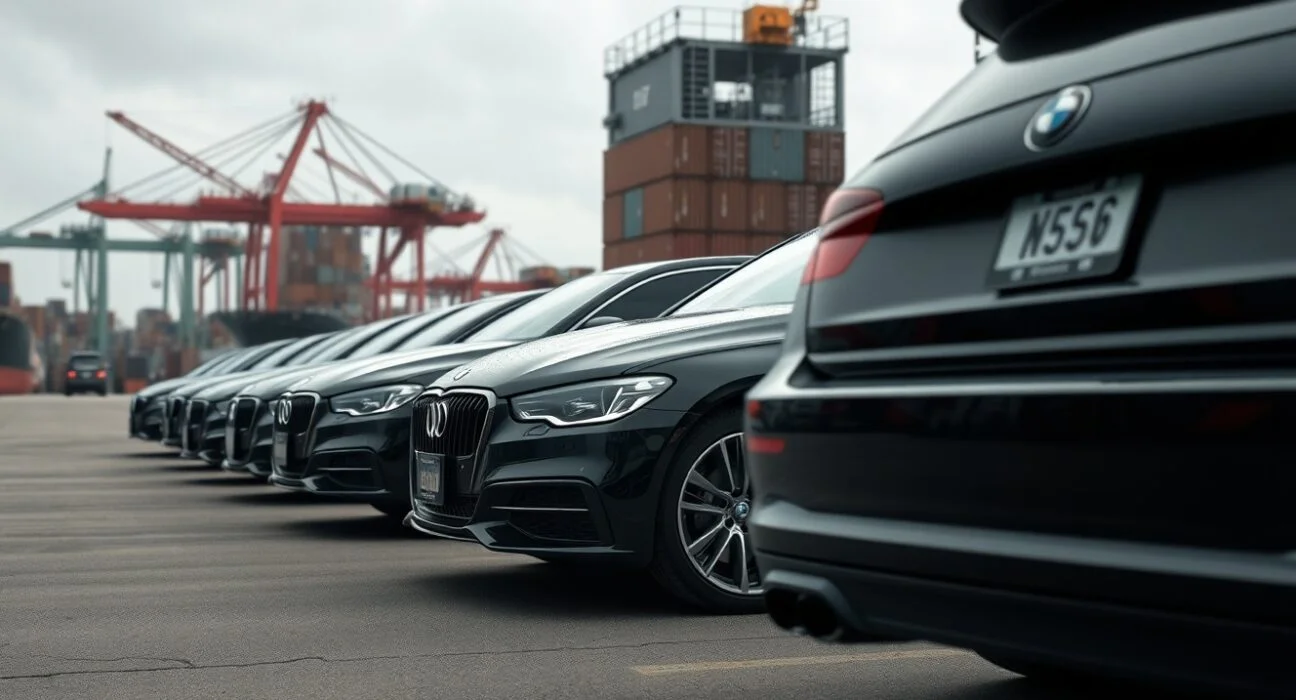
Europe has moved into a state of alert as tensions grow over possible EU US Car Tariffs linked to threats from the United States on European auto imports. The European Commission says it is preparing all possible responses if new tariffs are introduced by the U.S.
The warning comes amid rising trade pressure between Brussels and Washington. U.S. President Donald Trump has signaled potential tariffs on European vehicles, raising concerns across the European Union’s key industrial economies.
In response, the European Commission is now preparing countermeasures. Officials say they are not relying only on diplomatic talks anymore. Instead, they are actively developing “proportionate response” plans to protect Europe’s automotive sector.
The EU US Car Tariffs dispute is particularly sensitive because the car industry plays a central role in Europe’s economy. Countries like Germany, France, and Italy depend heavily on vehicle exports to the U.S. market.
If tariffs are imposed, European officials warn that supply chains could face serious disruption. Higher costs could also affect both manufacturers and consumers on both sides of the Atlantic.
Brussels is reportedly considering multiple options. These include filing a complaint with the World Trade Organization and introducing retaliatory tariffs on selected American goods. The aim is to respond in a controlled and legal way if trade measures are implemented.
The European Commission believes any action must remain balanced. Officials say the goal is not escalation but protection of key industries. At the same time, they want to avoid triggering a full-scale trade conflict.
The EU US Car Tariffs situation has created uncertainty in global markets. Businesses are closely watching developments, as car manufacturing relies on highly integrated international supply chains.
Many European automakers depend on smooth access to the U.S. market. Any disruption could increase production costs and affect competitiveness in global trade.
Despite the rising tension, diplomatic channels between Brussels and Washington remain open. EU officials continue to communicate with U.S. counterparts in an effort to prevent escalation.
The European Commission is trying to maintain a careful balance. On one hand, it wants to protect domestic industries. On the other, it aims to avoid damaging broader economic relations with the United States.
Experts say the current approach is one of cautious negotiation. The EU is preparing for worst-case scenarios while still hoping for a political solution.
The EU US Car Tariffs issue also reflects wider global concerns about protectionism. Trade disputes between major economies often lead to uncertainty in investment and long-term planning.
For Europe, the automotive sector is not just an industry but a strategic economic pillar. Any tariff shock would have ripple effects across jobs, exports, and industrial growth.
Brussels’ preparation of countermeasures signals a shift in tone. Instead of reacting after decisions are made, the EU is now positioning itself to respond immediately if needed.
At the same time, officials stress that their preferred outcome remains dialogue. They continue to call for stable trade relations and predictable rules between major economies.
However, uncertainty remains high. The final outcome depends on whether the United States moves forward with its tariff plans or chooses to ease pressure through negotiation.
For now, the EU US Car Tariffs debate remains unresolved. Europe is preparing for all possibilities while hoping that diplomacy can still prevent a broader trade confrontation.

