

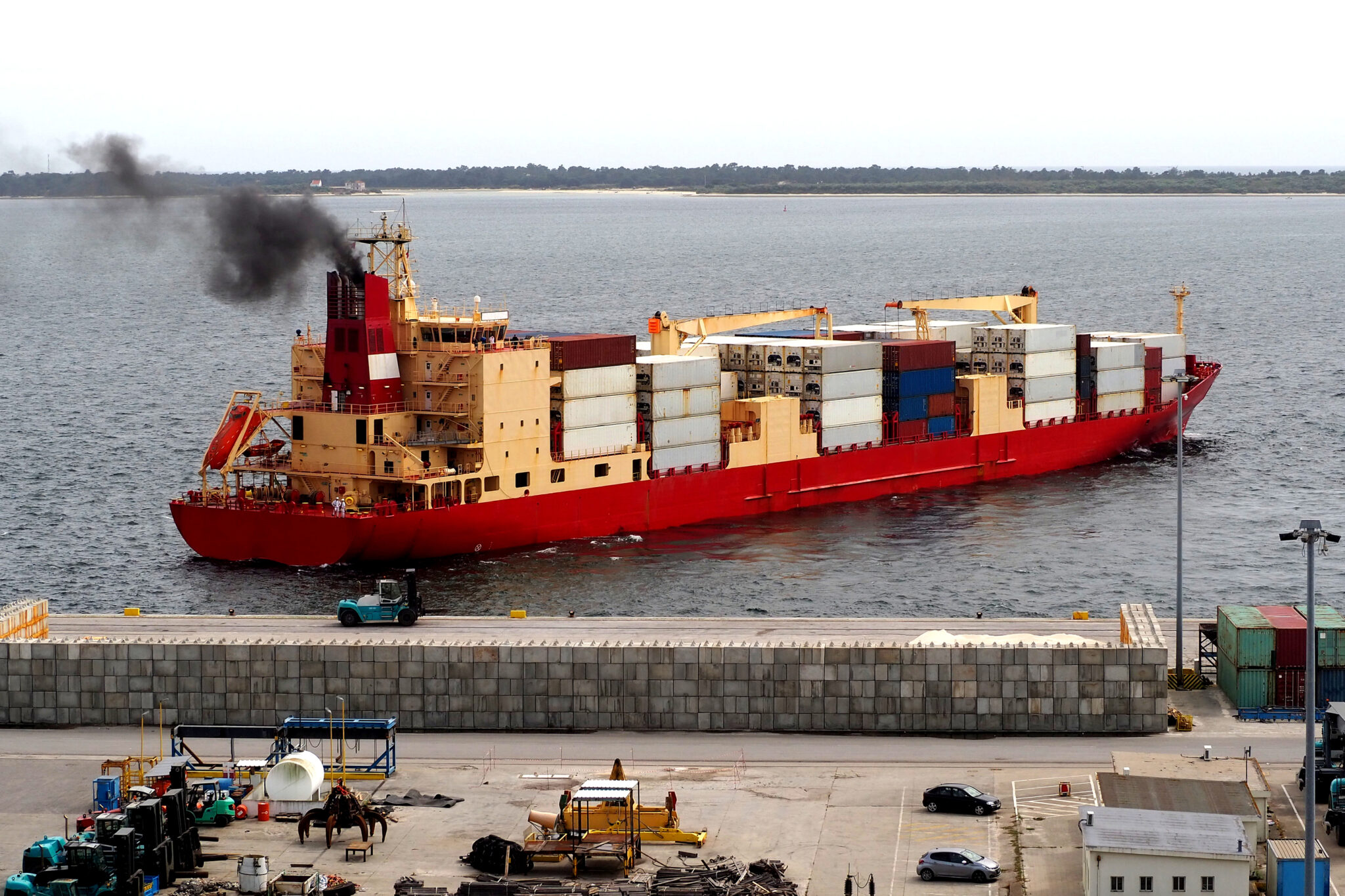
EU shipping carbon charges will not result in double payments for shipping companies, according to assurances from Brussels aimed at easing industry concerns over overlapping climate regulations.
European shipowners received confirmation that they will not be required to pay carbon costs twice under both European Union rules and International Maritime Organization frameworks.
Apostolos Tzitzikostas said European companies would be protected from duplicate charges during remarks at the Posidonia international shipping exhibition held in Athens.
He stressed that while the energy transition will involve costs, the system will be designed to avoid double taxation under different regulatory regimes.
The clarification is significant for the global shipping industry, which has raised concerns about the potential financial burden of parallel carbon pricing systems.
Tzitzikostas said the intention is to ensure that companies operating in Europe do not pay twice, either under EU emissions trading rules or international maritime frameworks.
The European Union’s emissions trading system already includes shipping as part of its broader climate policy. At the same time, global discussions continue under the International Maritime Organization on reducing greenhouse gas emissions from the sector.
Officials said coordination between these systems is essential to prevent duplication and maintain competitiveness in European maritime transport.
The shipping sector plays a major role in global trade, carrying around 80 percent of the European Union’s external trade. EU maritime imports alone are valued at approximately €1.3 trillion annually.
Europe also has a large maritime industrial base, including more than 300 shipyards and tens of thousands of equipment manufacturers, making policy decisions highly significant for the region’s economy.
The commissioner also emphasized that revenues collected through the EU emissions trading system should be reinvested into the maritime sector.
He said funds generated from shipping emissions should support clean fuel development, new propulsion technologies, and innovation in sustainable shipping systems.
This approach is intended to accelerate decarbonisation while helping the industry manage transition costs.
In addition to carbon pricing rules, the discussion also addressed Europe’s tonnage tax systems, which are used to support competitiveness in global shipping markets.
Tzitzikostas described these mechanisms as important tools for keeping European ship registries attractive in a highly competitive global industry.
He also confirmed that the European Commission is working to simplify administrative requirements under both the emissions trading system and FuelEU Maritime regulations.
The goal is to reduce bureaucracy and streamline reporting obligations for shipowners operating across multiple jurisdictions.
On climate policy, he said the EU is seeking practical solutions that can achieve consensus while still reducing emissions from shipping.
He emphasized that regulatory measures must be fair, realistic, and workable for the industry while still supporting environmental targets.
He also noted that regulation alone will not be enough to achieve full decarbonisation of the sector.
Success, he said, will depend on cooperation between shipowners, ports, fuel suppliers, governments, and technology providers, along with the development of affordable alternative fuels.
Shipping currently accounts for about 2 percent of global greenhouse gas emissions, but remains a key focus of international climate negotiations.
Tzitzikostas also highlighted the importance of protecting freedom of navigation and ensuring safety for seafarers working in international waters.
He warned against measures such as transit fees or informal toll systems that could restrict access to major shipping routes.
He specifically pointed to sensitive maritime corridors such as the Strait of Hormuz, stressing that freedom of navigation is a core principle of international law.
He added that any weakening of these principles could create long-term risks for global trade and maritime security.
The EU’s position reflects a broader effort to balance climate goals with the economic realities of one of the world’s most important industries.
As discussions continue at both European and international levels, the shipping sector remains closely focused on how future carbon rules will be implemented without harming competitiveness or global trade flows.

