

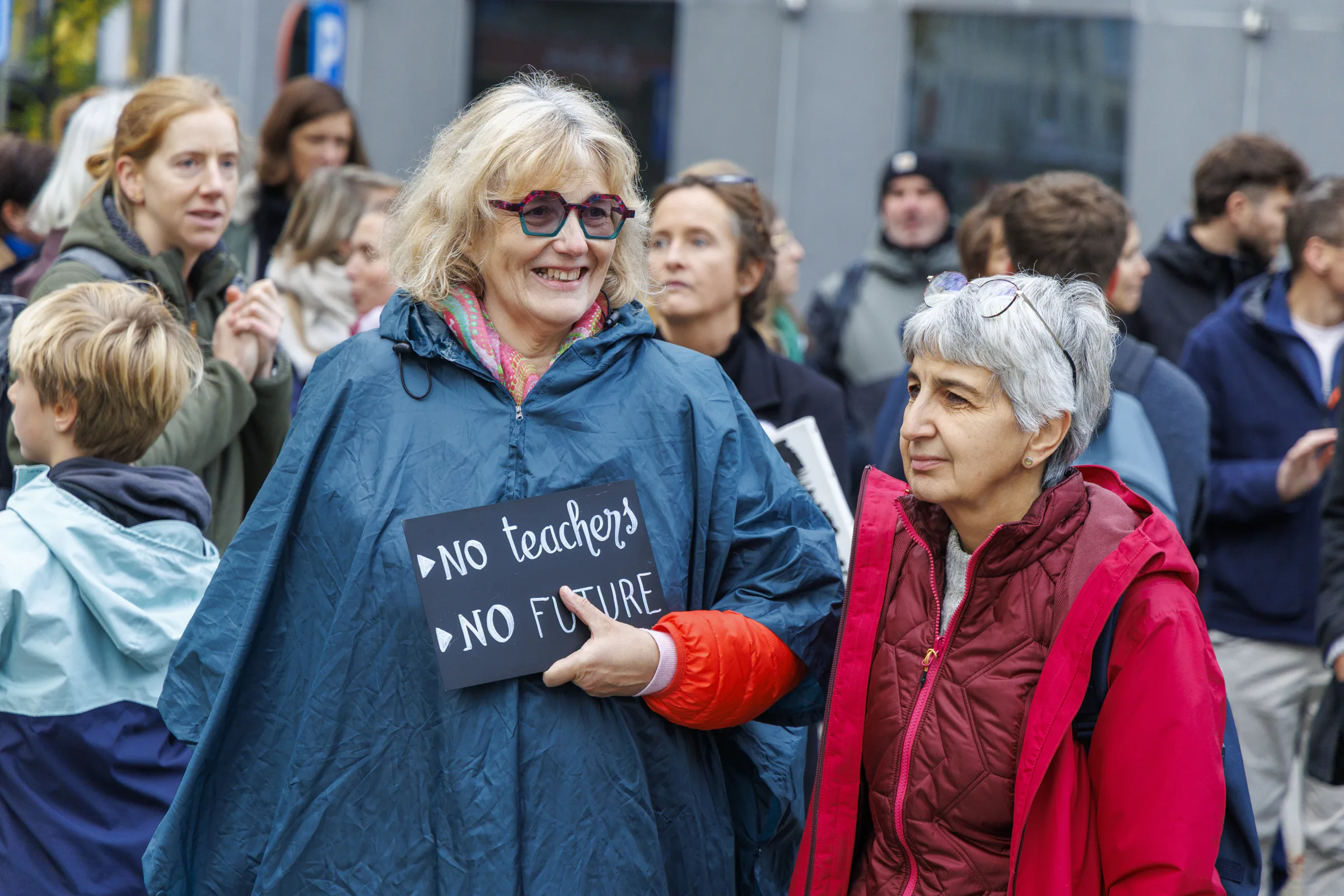
Teacher strikes and education reform tensions are continuing in Brussels as education unions maintain pressure over funding cuts and workload changes in the French-speaking school system. The situation follows large-scale protests that have already disrupted parts of the education sector.
The ongoing dispute is centered on proposed reforms for the 2026–2027 school system, including budget adjustments and changes to teacher workload policies. Union leaders argue that the reforms could increase pressure on staff and reduce teaching quality.
Schools across parts of the region have been affected by staffing shortages and operational disruptions. Some institutions are reporting reduced class coverage, while others are relying on temporary arrangements to keep lessons running.
The protests have drawn attention to long-standing concerns about education funding and teacher working conditions. Unions say that current policies do not adequately support classroom demands or student needs.
Education authorities in Brussels say the reforms are intended to improve efficiency and address structural challenges in the education system. Officials argue that changes are necessary to manage long-term budget constraints.
However, teacher organizations strongly oppose several aspects of the reform plan. They say increased workloads without sufficient resources could worsen burnout and staff shortages.
Demonstrations in recent months have brought thousands of teachers and education workers onto the streets. The protests highlight widespread dissatisfaction within the French-speaking education sector.
Schools continue to face pressure as negotiations between unions and authorities remain ongoing. In some cases, students have experienced interruptions in regular class schedules and reduced access to learning support.
Education experts say the dispute reflects broader challenges in European education systems, where governments are balancing budget limitations with growing classroom demands.
Union representatives are calling for increased investment in education, improved staffing levels, and clearer limits on teacher workload. They argue that stable funding is essential for maintaining education quality.
Authorities, meanwhile, say they remain open to dialogue but emphasize the need for reforms to ensure long-term sustainability of the education system.
Parents and students have expressed concern about the continued disruption, particularly as the academic calendar progresses toward key assessment periods.
Negotiations are expected to continue, with both sides under pressure to reach a compromise that stabilizes the school system ahead of the next academic cycle.
For now, the education sector in Brussels remains under strain, with teacher strikes and policy disagreements continuing to shape the outlook for schools in the region.

