

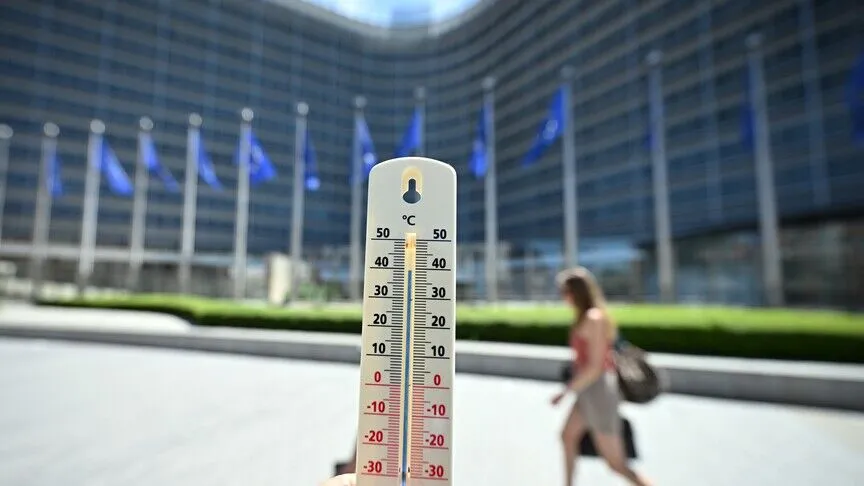
Schools across Belgium’s Brussels-Capital Region remain poorly prepared for prolonged heat waves, with many buildings lacking proper ventilation and other cooling features, according to concerns raised by local officials.
The issue has gained attention after recent periods of extreme heat disrupted classes and childcare services across the city.
Brussels lawmaker Fouad Ahidar raised the matter during a meeting of the Flemish Community Commission (VGC) Council. He questioned officials responsible for education, school construction, and public welfare about the condition of school buildings.
Ahidar said several schools and childcare centers were forced to close temporarily during the latest heat wave because their buildings became too hot for students and staff.
He argued that schools should remain safe learning environments even during periods of extreme weather.
According to Ahidar, students should not have to leave school simply because buildings are unable to cope with rising temperatures.
A survey conducted by the VGC in 2024 highlights the scale of the challenge facing schools in Brussels.
The study found that about half of the Dutch-language school buildings in the city were built before 1970.
Many of these older buildings were designed before climate change made frequent heat waves a growing concern. As a result, they often lack modern cooling systems and energy-efficient construction.
The survey also showed that 40 percent of schools do not have roof insulation or double-glazed windows.
In addition, only 25 percent of the schools surveyed have ventilation systems.
Without proper ventilation and insulation, classrooms can become extremely hot during summer months, making it difficult for students to learn and teachers to work comfortably.
Experts say high indoor temperatures can affect concentration, reduce learning performance, and increase health risks during severe heat waves.
Ahidar has called for faster action to improve school infrastructure across Brussels.
He urged government authorities and school administrators to make greater use of available subsidy programs and funding for climate-resilient upgrades.
Suggested improvements include better insulation, modern ventilation systems, energy-efficient windows, and other building upgrades that help keep classrooms cooler during hot weather.
The discussion reflects a broader challenge facing many countries across Europe.
Compared with other parts of the world, many European schools, homes, and public buildings have traditionally relied on natural ventilation rather than air conditioning because extreme heat was less common in the past.
However, climate experts say Europe is experiencing more frequent and more intense heat waves as global temperatures continue to rise.
This has increased pressure on governments to modernize public buildings, including schools, hospitals, and childcare centers.
Improving school infrastructure has become an important part of climate adaptation efforts in many European cities.
Officials say investments in better ventilation, insulation, and energy-efficient construction can improve student comfort while also reducing energy use throughout the year.
The Brussels debate highlights the growing need to prepare schools for changing weather conditions as heat waves become more common.
Local leaders continue to discuss how existing funding programs can be used more effectively to modernize aging school buildings and create safer learning environments.
As climate challenges increase across Europe, improving school infrastructure is expected to remain a key priority for education authorities seeking to protect students and ensure that classrooms remain open during periods of extreme heat.

