

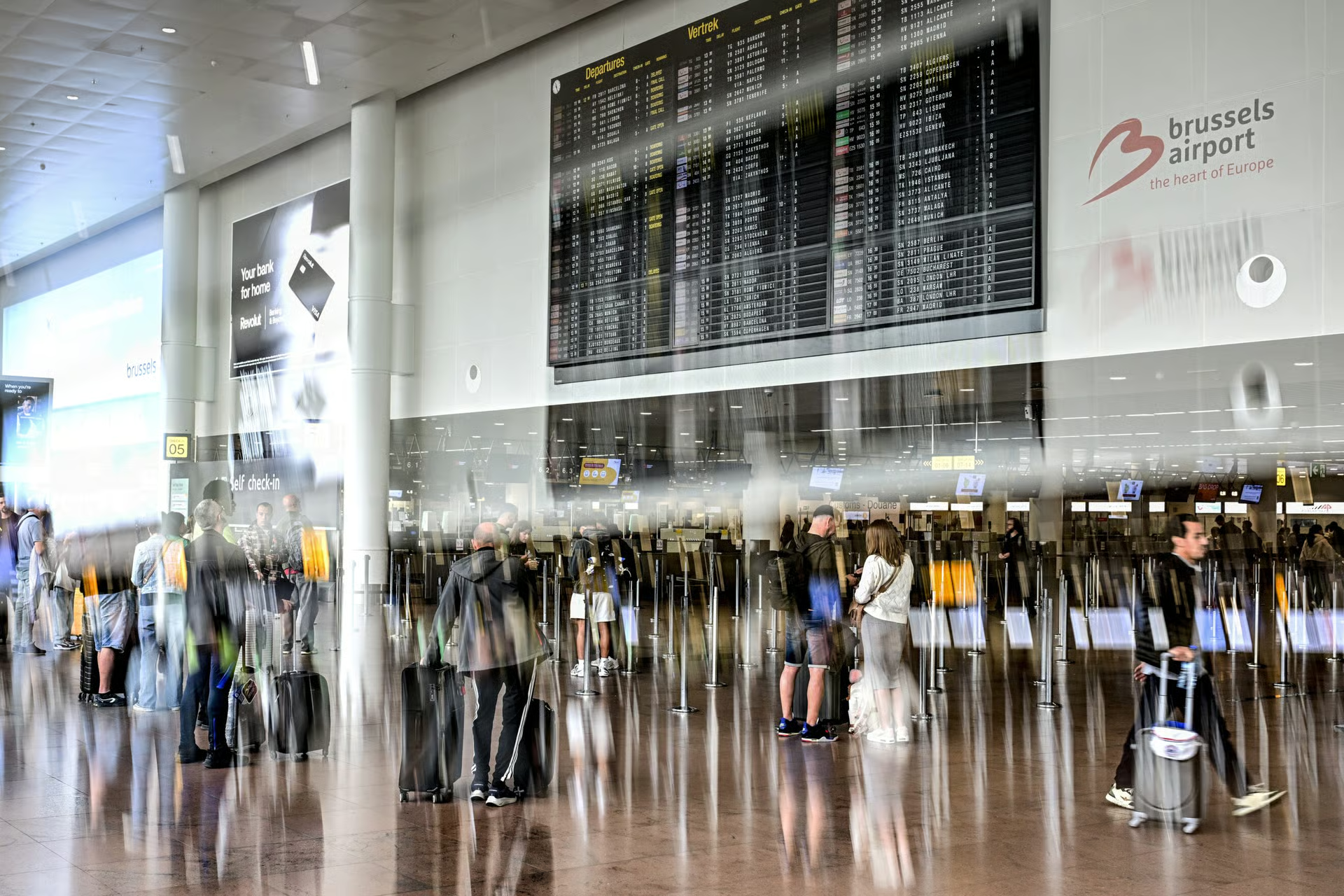
Nine European countries have asked the European Commission to extend temporary flexibility for the European Union’s new Entry/Exit System (EES), saying border authorities still face major challenges as the system is introduced.
The request comes in a joint letter dated July 7 and sent to Internal Affairs Commissioner Magnus Brunner. Belgium, France, Germany, Greece, Italy, Malta, the Netherlands, Portugal, and Switzerland signed the letter, expressing support for the new border system while asking for more time before emergency measures end.
The Entry/Exit System is designed to improve border security across the Schengen area. It records the entry and exit of non-EU travelers and replaces manual passport stamping with a digital system that stores travel information.
As part of the system, travelers from outside the European Union are required to provide biometric information, including fingerprints and facial scans, when crossing external Schengen borders.
The countries said the first months of using the system have revealed important technical and operational challenges. They warned that these problems should not be underestimated and could affect border operations if current emergency measures are removed too soon.
The ministers stressed that they fully support the Entry/Exit System and its long-term goals. However, they want the European Commission to extend the system’s emergency flexibility beyond September 6, 2026, when the current arrangement is due to expire.
The emergency mechanism allows border officers, in exceptional situations, to temporarily stop collecting fingerprints and facial scans if long queues begin to form. Travelers are still registered when entering or leaving the Schengen area, even when biometric checks are temporarily suspended.
According to the letter, keeping this flexibility available would help border authorities manage heavy travel periods while avoiding serious delays for passengers.
The nine countries also asked the European Commission to provide written guarantees confirming that member states will be allowed to continue using the emergency mechanism if needed after the current deadline.
The European Commission said it welcomed the countries’ continued support for the full implementation of the Entry/Exit System.
Commission spokesperson Markus Lammert said the legislation already contains built-in flexibility for member states. This includes the option to temporarily suspend biometric data collection during busy periods, such as the summer travel season, if exceptional conditions require it.
Lammert added that the Commission remains in close contact with the small number of countries experiencing operational difficulties at certain border crossing points.
He said there is a shared commitment among European institutions and member states to ensure the system works effectively across all borders.
The request from the nine countries comes as airports, airlines, and ferry operators continue to raise concerns about the impact of the new border system.
Industry groups have warned that the collection of biometric information has contributed to longer waiting times at some border crossings during the busy summer travel season.
Transport operators also say technical issues and operational challenges may not be fully resolved before early September. They believe additional flexibility would help reduce delays while authorities continue improving the system.
The Entry/Exit System is one of the European Union’s largest border management projects. It is intended to strengthen security, improve border monitoring, and provide more accurate records of travelers entering and leaving the Schengen area.
Officials believe the digital system will help identify people who overstay their permitted visits while improving the overall management of external EU borders.
Despite the concerns raised by several member states, the European Commission has not indicated that it plans to extend the emergency flexibility beyond September 6, 2026.
For now, discussions between the Commission and national governments continue as border authorities prepare for the next phase of the Entry/Exit System. European officials say they remain focused on ensuring the system operates smoothly while balancing border security with efficient travel for millions of international passengers.

