

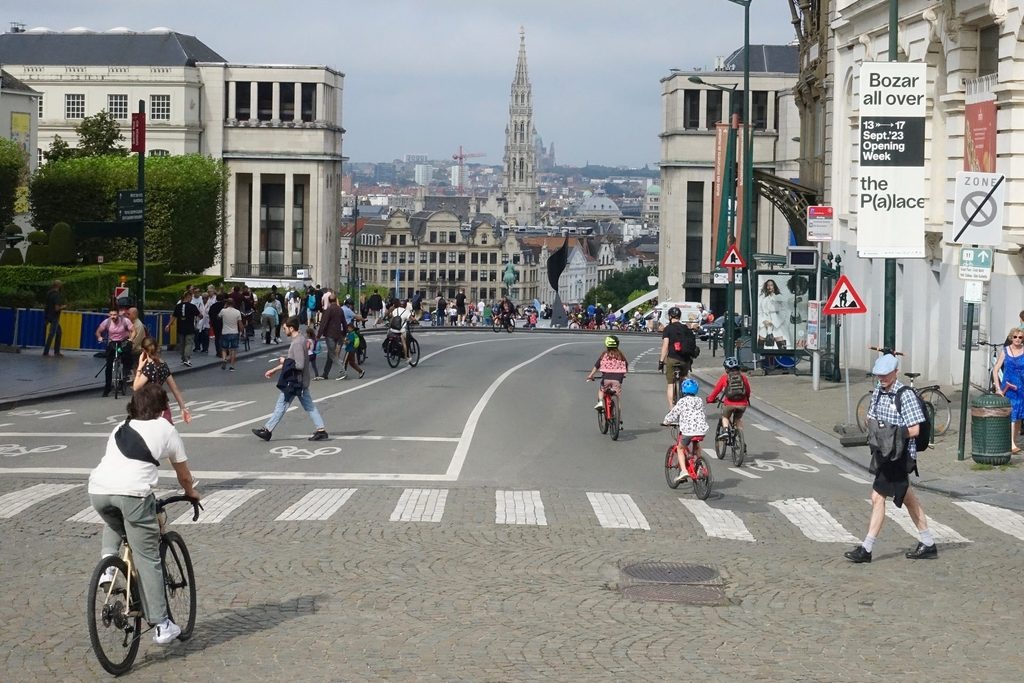
Brussels will close its streets to cars on Sunday for its yearly car free day. The ban runs from half past nine in the morning until seven in the evening. It covers all 19 districts of the Brussels Capital Region. For those hours the city becomes the largest car free zone in Europe. Only a short list of vehicles may drive.
The event is the high point of Mobility Week. That week runs from 16 to 22 September across Europe. Its aim is to get people to try other ways to travel. Cities take part in their own way. Brussels goes further than most by closing the whole region.
Emergency and police vehicles may still move. So can buses, trams and taxis at ranks. Drivers with a special permit are also allowed through. Any vehicle on the road must keep to 30 kilometres an hour. That low limit is meant to keep walkers and cyclists safe.
Public transport will be free for the entire day. Metro, tram and bus services will run on a Saturday style timetable. Extra capacity has been added to cope with the crowds. Metro trains will run every six and a half minutes through the afternoon. No ticket is needed at any point.
Traffic rules still apply even with no cars around. The transport operator has reminded people of that. Cyclists and walkers must respect red lights and crossings. Trams need a long distance to stop. Riders are urged to give way and take care near tracks.
Drivers coming from outside the city have options. The motorways and the ring road stay open. Only the slip roads into the region are shut. Park and ride sites sit on the edge of the city. Many people are being asked to take the train instead.
Activities are planned in every part of the region. Some districts will hold flea markets and street parties. Others will run workshops and shows for children. Brass bands and open air music are on the list. Nearly all of the events are free to attend.
This year carries a special note. The Brussels metro turns 50. Events will mark that anniversary through the day. The network has grown steadily since it opened. City leaders say it remains the backbone of local travel.
The date also overlaps with European Heritage Days. Those run on 19 and 20 September. Buildings that are usually closed will open their doors. Guided tours are on offer at many sites. Walkers can mix a stroll with a look inside the city’s history.
Support for the day is broad but not total. Many residents enjoy the quiet and clean air. Families use it to cycle with small children. Some shopkeepers say trade suffers. Others report a busier day than normal thanks to foot traffic.
City officials point to the wider goal. Brussels has spent years trying to cut car use. New cycle lanes and low traffic zones have been added. Air quality has improved in parts of the centre. The car free day is meant to show what is possible.
Critics say one day a year changes little. They argue that steady investment matters more than a symbol. Others complain about the permit system. Getting an exemption can take time and paperwork. Officials say the rules are needed to keep the ban meaningful.
The numbers tell their own story. This is the 26th edition of the event. It has grown from a small trial into a fixed date on the calendar. Other European cities have copied the idea. Few have matched the scale of the Brussels version.
Advice for the day is simple. Plan the trip in advance. Leave the car at home or park on the edge. Check the timetable before setting out. Allow extra time, as the streets will be busy with people on foot. Then take the chance to see a city that sounds very different for one day.

