

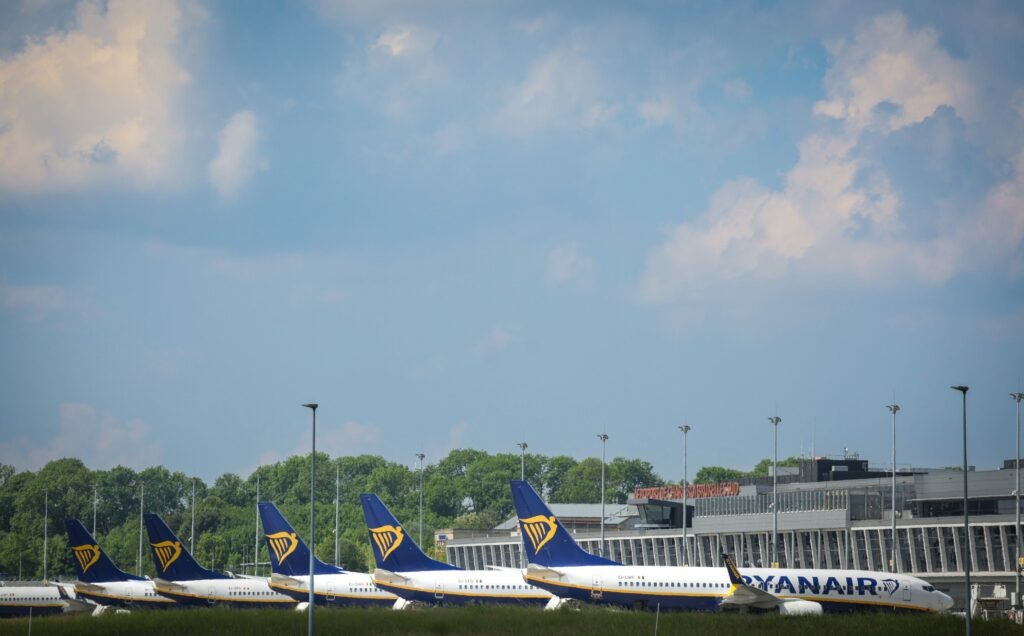
Brussels South Charleroi Airport recorded its first night of disruption today, with air traffic controllers launching a series of overnight strikes that resulted in forty four flight cancellations between last night and eight this morning, affecting more than seven thousand passengers. The industrial action, organized by controllers employed by Belgium’s air navigation service provider Skeyes, is scheduled to continue every night through October 10, threatening as many as eight hundred thirty two flight movements across the full three and a half week period.
The dispute centers on night shift compensation for air traffic controllers working at Charleroi, following the breakdown of five separate rounds of negotiation between Skeyes management and unions representing affected workers. Controllers are seeking to increase their night allowance to one hundred sixty percent of its current level, while Skeyes management maintains the existing allowance already exceeds one thousand euros per shift and has rejected the requested increase as excessive.
Strike action runs nightly from ten in the evening until eight the following morning, a window specifically targeting the overnight operations that budget carrier Ryanair relies on heavily for its large based fleet at Charleroi. On the very first night of action, Ryanair canceled fourteen rotations beginning at ten past four in the afternoon, covering routes to destinations including Bucharest, Ibiza, Madrid, Venice, Manchester, and Stockholm, followed by eight additional early morning departure cancellations affecting flights to Helsinki, Barcelona, Budapest, and several other European cities.
Skeyes has warned that the disruption’s impact could extend beyond the official overnight strike window itself, since aircraft unable to return to Charleroi during affected hours may not be positioned to operate their first scheduled flight the following morning. This knock-on effect means passengers booked on early morning departures should verify their flight status even when their specific departure time falls technically outside the ten in the evening to eight in the morning strike window.
Union representatives have raised concerns extending beyond the immediate pay dispute, pointing to broader structural changes within Belgian air traffic management, including plans for an eventual centralized digital control tower network that could further alter working conditions and staffing arrangements for controllers across the country. These wider anxieties about industry restructuring appear to have added additional urgency to the current dispute over night shift compensation specifically.
A trade union had originally submitted a strike notice back in late July, though that initial planned action did not proceed at the time as negotiations continued. The subsequent breakdown of mediation efforts over recent weeks ultimately led to today’s actual implementation of the strike, following what unions characterized as an exhausted process of attempted dialogue with management.
Travel industry analysts have noted the particularly challenging nature of this kind of extended, rolling overnight disruption compared to a single day walkout, since the multiweek span makes it considerably harder for airlines and passengers to plan around with confidence. Skeyes estimates suggest roughly four hundred eighty seven morning flights and three hundred forty five night flights could ultimately be affected across the full strike period, though actual disruption will depend heavily on airline scheduling decisions and any potential resolution to the underlying dispute.
As today’s first night of cancellations settles, passengers with upcoming Charleroi bookings through early October face genuine uncertainty about their travel plans, with airport and airline officials urging travelers to check individual flight status directly before heading to the airport, particularly for any departures scheduled before eight in the morning or arrivals expected after ten at night throughout the coming weeks.

