

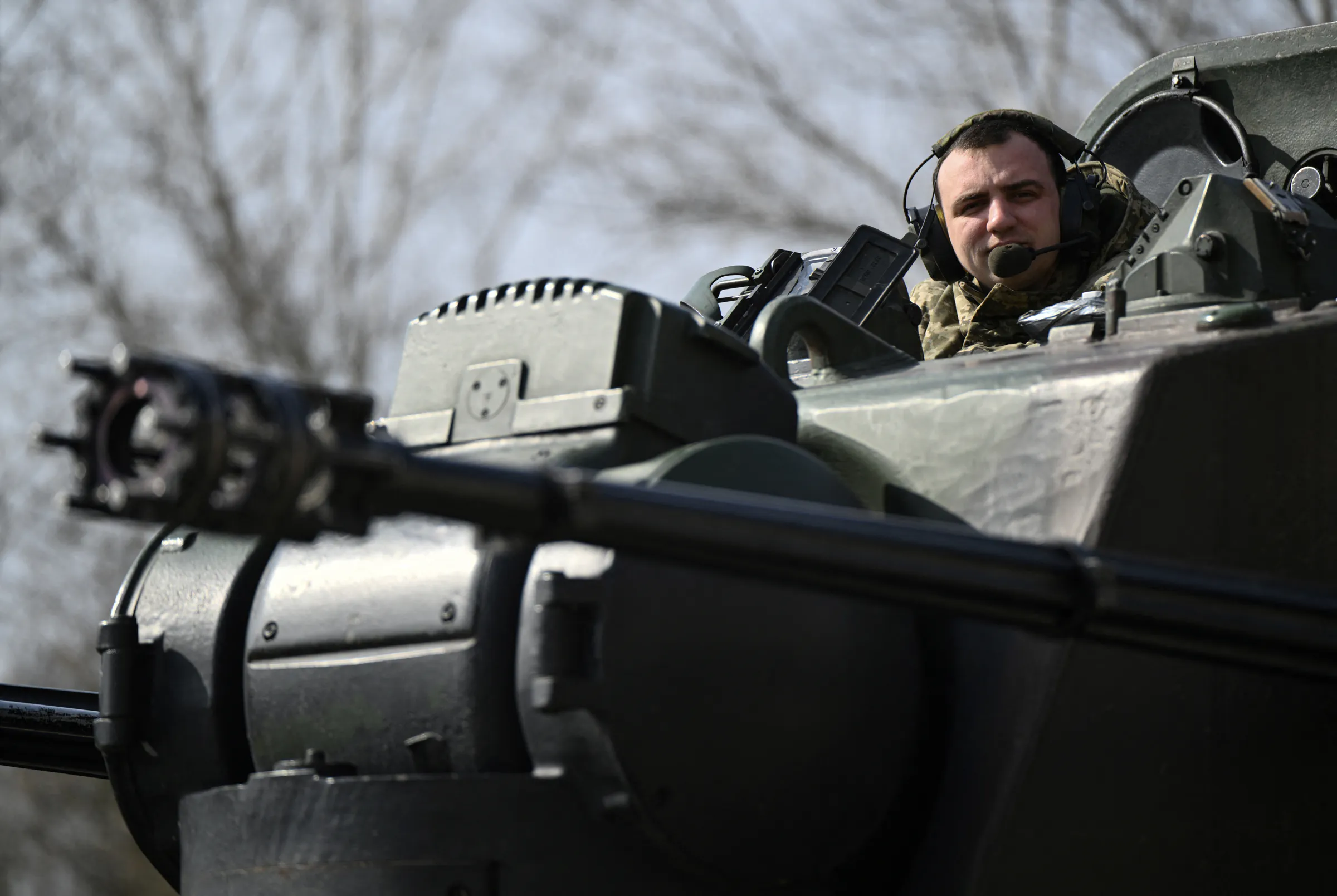
Belgium has approved a new military support package for Ukraine that includes the transfer of refurbished air defence vehicles. The move is part of a wider €1 billion defence aid plan aimed at strengthening Ukraine’s ability to defend against drones and low flying missiles.
The Belgium Gepard deal involves the purchase and transfer of 15 Gepard air defence tanks. These vehicles will be sent to Ukraine after refurbishment and technical upgrades carried out in Belgium.
The tanks were originally built in the 1970s and used by the Belgian army during the Cold War period. They were later retired and sold off in the 2000s when Belgium modernised its armed forces.
Under the new agreement, Belgium will repurchase the vehicles from OIP, a Belgian subsidiary of Elbit Systems, an Israeli defence technology company. The vehicles will then be upgraded before delivery.
The Gepard system is based on the Leopard 1 tank platform. It is a tracked armoured vehicle designed for short range air defence. It carries two 35mm anti aircraft guns and radar systems that detect and track fast moving targets.
The version being supplied is the Gepard anti-aircraft tank, a system originally developed during the Cold War. Although it was not used in combat for decades, it has proven highly effective in modern battlefield conditions.
In Ukraine, Gepard systems are mainly used to defend against drones, cruise missiles, and low flying aircraft. They are considered cost effective because they use gun based ammunition instead of expensive missile interceptors.
Belgian defence companies will handle part of the refurbishment work. The chassis of the vehicles will be restored in Belgium. Ukraine will complete additional upgrades to the turret and combat systems after delivery.
Officials have not revealed the total cost of the deal. However, it is included in Belgium’s broader €1 billion military assistance package for Ukraine.
The Belgium Gepard deal reflects growing European support for Ukraine’s air defence network. Several countries have already provided similar systems since the start of the conflict with Russia.
Germany has previously supplied dozens of Gepard units to Ukraine. These deliveries have played a key role in defending infrastructure and military positions from aerial attacks.
Early concerns about ammunition supply were raised when Switzerland restricted exports of certain components. However, production lines in Germany were later restarted, resolving the shortage and allowing continued use of the system.
Belgium had earlier considered buying back its retired Gepard fleet for Ukraine. However, that plan was delayed due to high costs and political debate over sending heavy weapons.
The latest decision shows a renewed commitment to support Ukraine with practical battlefield equipment. Officials say the focus is on systems that can be delivered quickly and used effectively.
The Belgium Gepard deal also highlights a shift in European defence policy. Instead of only supplying modern missile systems, countries are now also sending older but reliable platforms that can be repaired and reused.
Military experts say the Gepard system remains highly useful in modern warfare. Its radar guided guns can track and destroy small aerial targets with high accuracy. This makes it especially effective against drone attacks, which have become more common in recent conflicts.
Ukraine has increasingly relied on layered air defence systems. These include advanced missile systems, radar networks, and mobile gun platforms like the Gepard.
The refurbished vehicles are expected to be delivered in phases after upgrades are completed. Training and logistics support will also be part of the cooperation between Belgium and Ukraine.
The agreement shows continued coordination among European allies to strengthen Ukraine’s defence capabilities. It also reflects the use of older military equipment in new roles on the battlefield.
As the Belgium Gepard deal moves forward, further details on delivery timelines and operational deployment are expected in the coming months. The project remains part of a wider effort to reinforce Ukraine’s air defence against ongoing aerial threats.

