

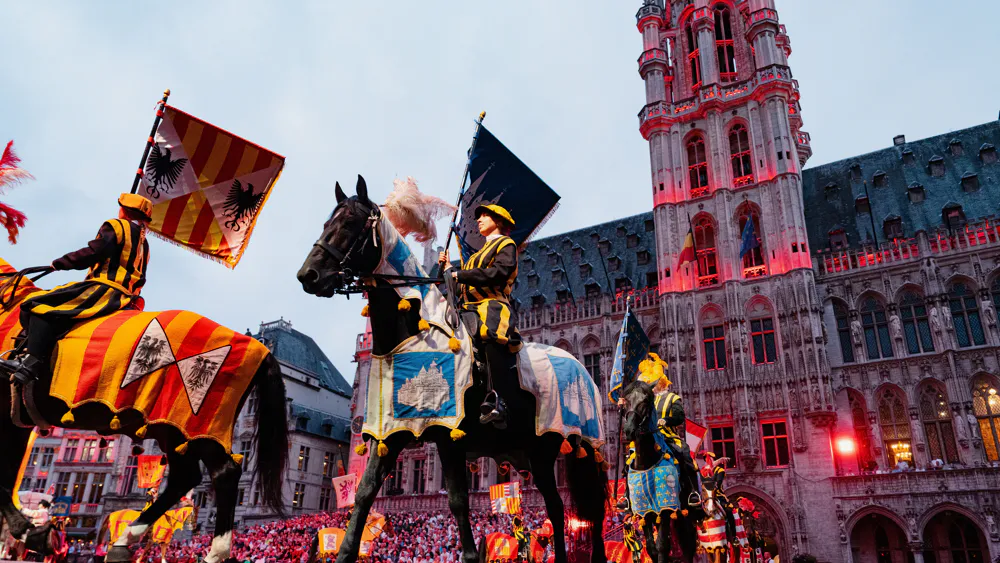
The Brussels Ommegang Festival has once again transformed the streets of Belgium’s capital into a colorful celebration of Renaissance history. Thousands of visitors gathered to watch a grand historical parade that recreated one of the most important moments in the city’s past.
The festival traces its roots to the 16th century and commemorates the ceremonial entry of Emperor Charles V and his son Philip into Brussels in 1549. At that time, Brussels was an important political center within the Habsburg Empire, and the royal visit became one of the city’s most memorable historical events.
Over the centuries, the celebration has developed into one of Belgium’s best-known cultural traditions. Today, the Ommegang combines history, music, costumes, and live performances to bring the Renaissance period back to life for modern audiences.
Around 1,400 participants took part in this year’s pageant. The procession featured historical groups, knights, crossbowmen, musicians, giant figures, and horses, creating an impressive display through the heart of Brussels.
Performers dressed in carefully designed period costumes recreated scenes inspired by life during the Renaissance. The event gave visitors a chance to experience the atmosphere of a period that played a major role in shaping European history.
The Renaissance is generally considered to have lasted from the 14th century to the 17th century. It marked a time of major progress in art, science, literature, philosophy, and politics as Europe rediscovered many ideas from classical civilizations.
The parade followed a traditional route through Brussels. It began in the Zavel district before making its way through the city’s historic center. The procession ended at the famous Grote Markt, where the main evening performances took place before large crowds.
The historic square provided a dramatic setting for the final part of the celebration. Music, ceremonial performances, and historical reenactments helped recreate the atmosphere of the royal celebrations that took place centuries ago.
Visitors who missed the first performance still have another opportunity to experience the event. Organizers have scheduled a second Ommegang parade for Friday, July 3, allowing more people to enjoy the unique historical spectacle.
In addition to the parade, several supporting events are taking place throughout the festival period.
One of the main attractions is the Renaissance Village, which has returned to the Zavel area from July 1 to July 4. The village allows visitors to explore everyday life as it may have appeared during the Renaissance.
Guests can visit traditional craft workshops, browse market stalls, and watch artisans demonstrate historic skills. These activities offer families and tourists an interactive way to learn about the customs and occupations of earlier centuries.
The Renaissance Village also features jousting tournaments, where riders on horseback demonstrate traditional combat skills. Live demonstrations and historical performances add to the immersive experience, giving visitors a closer look at medieval and Renaissance traditions.
The festival has become an important part of Brussels’ cultural calendar. Each year, it attracts local residents as well as international visitors interested in history, heritage, and European culture.
Beyond its entertainment value, the event also helps preserve Belgium’s historical traditions by introducing younger generations to important moments from the country’s past. Educational displays and live reenactments allow visitors to connect with history engagingly and memorably.
Cultural festivals such as the Ommegang also support tourism by encouraging visitors to explore Brussels’ historic neighborhoods, museums, restaurants, and local businesses during the celebrations.
Organizers continue to present the festival as a living tribute to the city’s rich history while combining historical accuracy with public entertainment.
As the Brussels Ommegang Festival continues this week, visitors still have the opportunity to witness one of Europe’s most celebrated historical reenactments. With its grand parade, Renaissance Village, traditional performances, and cultural activities, the festival offers a unique journey into the past while celebrating the enduring heritage of Brussels.

