

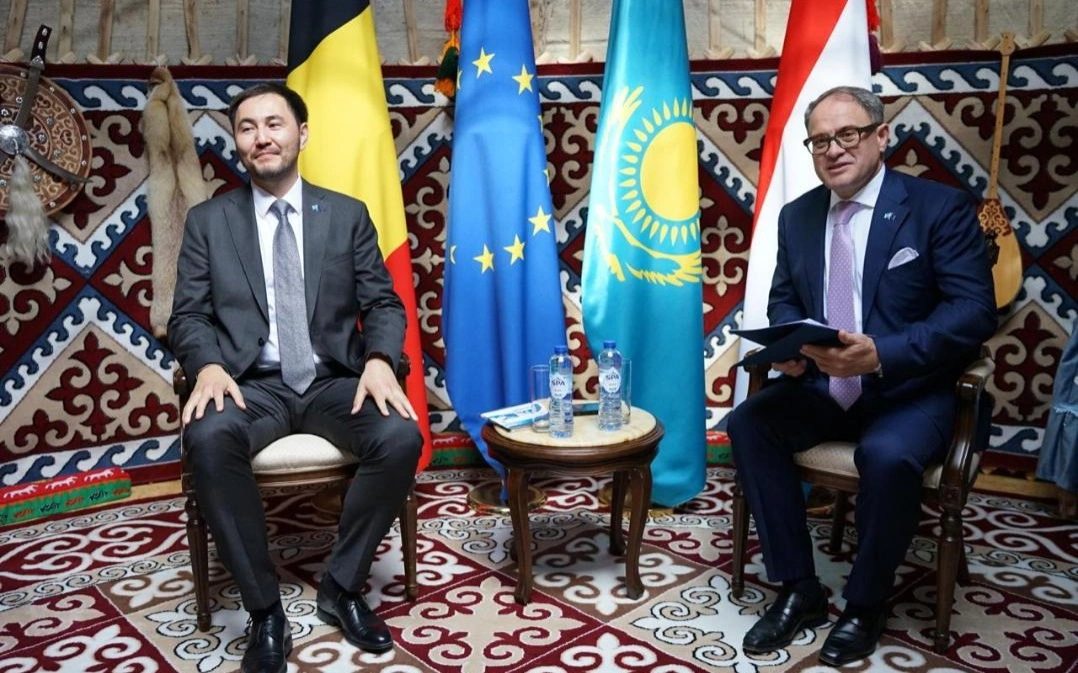
Kazakhstan’s ongoing political reforms were the focus of a high-level discussion in Brussels as diplomats, policy experts, and European representatives gathered for a roundtable under the Shanyraq Dialogue platform. The event marked the entry into force of the country’s new Constitution and highlighted Kazakhstan’s efforts to strengthen democratic governance and cooperation with the European Union.
The roundtable was hosted by the Embassy of Kazakhstan in Belgium. The event brought together government officials, researchers, and representatives from European institutions to exchange views on the country’s constitutional changes and future reforms.
Kazakhstan’s Ambassador to Belgium, Roman Vassilenko, opened the discussion by describing the new Constitution as a major step in the country’s political modernization. He said the constitutional changes reflect Kazakhstan’s commitment to building stronger public institutions and improving governance.
The ambassador also linked the reforms to the recent visit of President Kassym-Jomart Tokayev to Brussels. According to Vassilenko, the visit demonstrated the growing relationship between Kazakhstan and the European Union and highlighted expanding cooperation in political and economic areas.
The main presentation was delivered by Zhandos Shaimardanov, Director of the Kazakhstan Institute for Strategic Studies.
Shaimardanov explained the key features of the new constitutional framework. He said the reforms place greater emphasis on protecting human rights, personal freedoms, and human dignity while strengthening accountability, justice, and the rule of law.
According to Shaimardanov, the constitutional changes are intended to improve the balance between government institutions and create a more transparent system of public administration. He said the reforms support Kazakhstan’s long-term goal of modernizing its political system while responding to the expectations of its citizens.
Participants also discussed how the constitutional reforms could contribute to greater public trust in state institutions and strengthen legal protections for individuals.
Representatives from the European Union welcomed Kazakhstan’s reform efforts during the roundtable.
Among those attending were Eduards Stiprais and Dietmar Krissler, who expressed support for Kazakhstan’s transformation agenda. They also reaffirmed the European Union’s interest in continuing cooperation with Kazakhstan as the country advances its political and institutional reforms.
The discussions covered broader cooperation between Kazakhstan and European partners, including governance, public policy, and regional development.
Officials said open dialogue remains an important part of building stronger international partnerships and sharing experience on governance and institutional development.
The Shanyraq Dialogue platform has become an important forum for discussing Kazakhstan’s domestic reforms with international partners. The initiative encourages open exchanges between policymakers, researchers, diplomats, and experts on issues affecting the country’s political and economic development.
Participants said the platform continues to support constructive discussions while helping strengthen cooperation between Kazakhstan and European institutions.
The event concluded with broad recognition of the importance of maintaining regular dialogue as Kazakhstan continues implementing its reform agenda.
The new Constitution officially entered into force on July 1. On that day, President Kassym-Jomart Tokayev congratulated the people of Kazakhstan, describing the Constitution as an important step in the country’s continued development.
The constitutional reforms form part of Kazakhstan’s wider modernization program, which aims to improve governance, strengthen legal institutions, and increase public participation in national development.
Government officials have said the reforms are designed to create more accountable institutions while supporting long-term political stability and sustainable economic growth.
Kazakhstan has continued to engage with international partners throughout its reform process, seeking closer cooperation with regional and global organizations. The European Union remains one of the country’s key partners in areas including trade, investment, education, and governance.
The Brussels roundtable highlighted the growing importance of political dialogue between Kazakhstan and the European Union. As constitutional reforms move forward, both sides expressed support for continued cooperation based on shared interests, institutional development, and stronger international partnerships.
The discussions also reflected Kazakhstan’s broader effort to present its reform agenda to international audiences while encouraging continued engagement with European partners on governance, economic development, and regional cooperation.

