

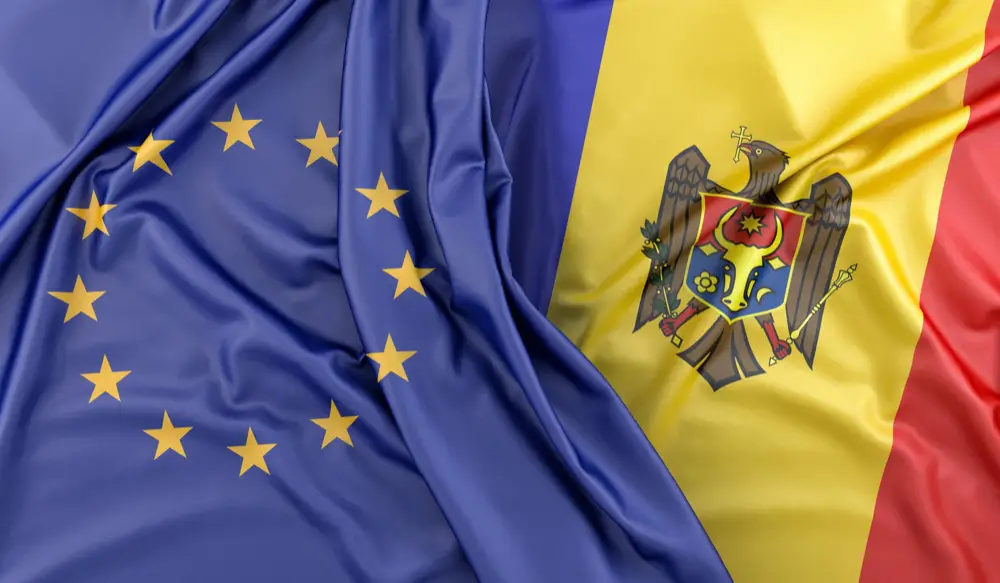
The European Union has reaffirmed its commitment to Moldova’s path toward membership during the second EU-Moldova Summit held in Brussels, where leaders reviewed progress in accession talks and outlined next steps in the country’s reform process.
The summit was co-hosted by European Commission President Ursula von der Leyen and European Council President António Costa, alongside Moldovan President Maia Sandu. The meeting focused on strengthening political and economic ties and advancing Moldova’s integration into the EU framework.
A key topic was Moldova’s progress under the newly opened “fundamentals cluster” in its accession negotiations. This cluster covers core requirements for EU membership, including rule of law, democratic institutions, and governance reforms. EU officials described the opening of this phase as a significant milestone in the country’s European path.
The summit comes shortly after both Moldova and Ukraine began formal steps in their accession processes. EU leaders used the meeting to signal continued support for expansion efforts and to underline the strategic importance of deeper integration with Eastern European partners.
Officials also reviewed Moldova’s Reform Agenda under the EU Growth Plan. According to EU data, the plan has already unlocked €504 million in financial support aimed at strengthening the country’s institutions and economy. The funding is designed to support long-term stability and alignment with EU standards.
Discussions also focused on practical areas of cooperation between the EU and Moldova. These included improvements in transport and energy connectivity, education programs, and expanded people-to-people exchanges. Leaders also addressed shared security concerns, particularly hybrid threats targeting democratic systems and infrastructure.
EU representatives emphasized that Moldova’s progress is closely linked to its ability to implement reforms consistently. Strengthening judicial independence, improving public administration, and reinforcing democratic governance were highlighted as essential steps in the accession process.
Security cooperation was another major focus of the talks. EU officials said Moldova continues to face external pressures and cyber-related risks, making resilience against hybrid threats a priority for both sides.
The summit concluded with commitments to maintain close coordination as Moldova continues its accession journey. Leaders stressed that the process is based on merit and progress, while also reaffirming political support for Moldova’s long-term European integration goals.
Following the summit, the leaders are expected to hold a joint press conference outlining the outcomes and future steps in EU-Moldova relations. The event is part of a broader EU strategy to strengthen ties with candidate countries and reinforce stability in the region.

