

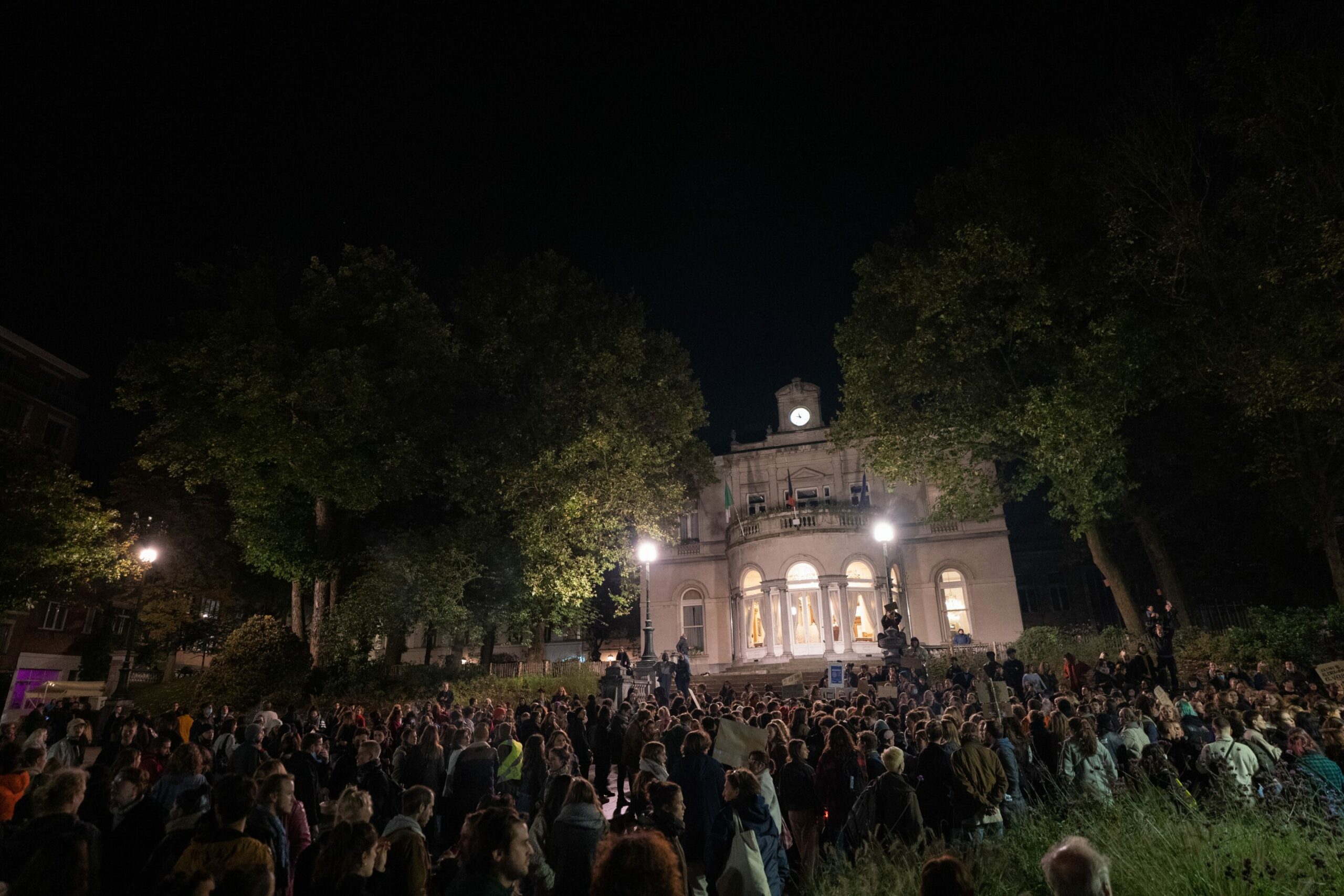
The municipality of Ixelles in Brussels has introduced new rules to control the rapid growth of student housing. Local officials say the move is needed to prevent what they describe as a “speculative bubble” in the student accommodation market. The decision comes as the area continues to attract large numbers of students and new housing projects.
Ixelles is known as one of the main student hubs in Brussels. Nearly 45% of students in the region study in the municipality. This is mainly due to the presence of major universities such as Université libre de Bruxelles and Vrije Universiteit Brussel. As a result, demand for student housing has increased sharply in recent years.
According to local data, Ixelles currently has around 4,900 student housing units. Another 2,450 units are planned or under review. These include large developments such as Universalis Park and Usquare. Officials say this fast expansion has raised concerns about balance in local neighborhoods.
The municipality says the growing number of student residences is starting to affect housing availability for permanent residents. It also says some areas are losing social diversity. In districts near the Solbosch and Plaine campuses, officials report a high concentration of student buildings.
City leaders also warn against assuming that all students need dedicated housing. Brussels has around 37,000 higher education students living away from home. However, only about 11,300 purpose-built student rooms exist across the region. Authorities say many students prefer private housing or shared apartments instead of student residences.
Mayor Romain De Reusme said the issue is not only about supply but also about how the market is developing. He warned against what he called the financialisation of student housing. He said many projects are being treated as investment products rather than solutions for student needs.
He added that Ixelles must avoid becoming a place driven by speculation. He said housing decisions should focus on long-term community needs instead of short-term profit. His comments reflect growing political concern over real estate trends in student-heavy areas.
Under the new framework, developers must now follow stricter rules. Since March 2025, all major student housing projects in Ixelles must include at least 15% affordable units. Authorities are also working with Perspective Brussels to better track housing demand and supply.
The new guidelines introduce six main conditions for future projects. These include minimum room sizes of 12 square meters, proper shared spaces, and adequate bathroom facilities. Officials also require projects to be located in well-connected neighborhoods that follow the “15-minute city” model, where shops and services are close by.
The municipality also wants to encourage redevelopment of existing buildings instead of large new constructions. Officials say this approach helps reduce pressure on land use and supports sustainable urban growth. It also helps maintain the character of established neighborhoods.
Another key rule requires developers to design buildings that can be converted into regular housing in the future. This means student residences should not become permanently fixed assets that cannot adapt if demand changes.
Local authorities will also give special attention to projects linked directly to universities. Housing built in cooperation with academic institutions may still move forward, but under closer review and planning standards.
Julie de Groote, the councillor responsible for urban planning, said the new policy is meant to prevent mistakes from the past. She pointed to earlier cases where office buildings were built in large numbers and later remained empty for years. She said Ixelles does not want a similar situation in student housing.
She explained that careful planning is needed to avoid overbuilding. She said uncontrolled expansion could lead to long-term problems for the housing market and local communities.
Residents in some areas have already expressed concern about rising student housing density. They say it can change the character of neighborhoods and increase pressure on local services. Officials say the new rules aim to balance student needs with the needs of long-term residents.
The municipality says it will continue to monitor the market closely. It will also adjust policies if demand changes in the coming years. Leaders say the goal is to keep Ixelles both a strong student center and a livable community for all residents.
With these new measures, Ixelles is taking a more controlled approach to student housing development. The city hopes to avoid unchecked expansion while still supporting its large student population and maintaining urban balance.

