

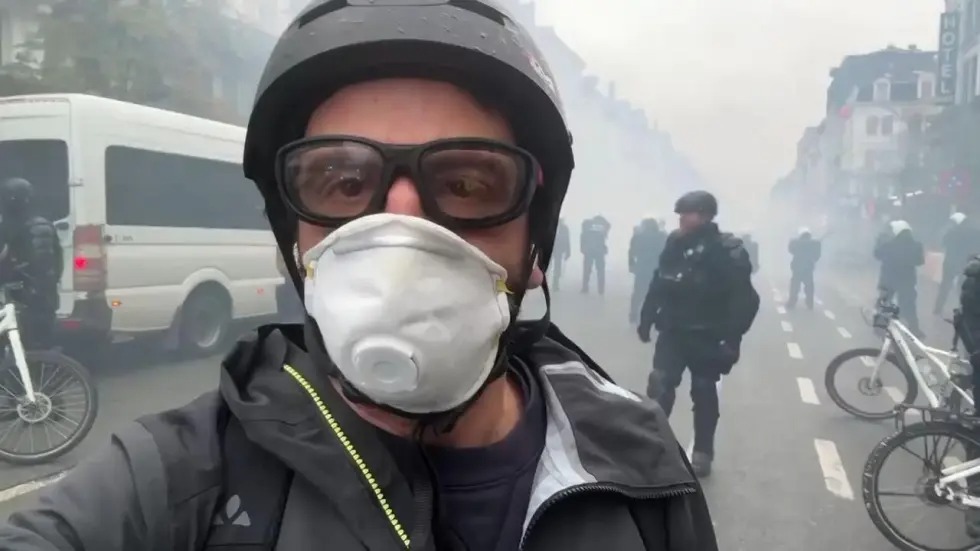
Thousands of people gathered in Brussels on 9 October to protest against rising living costs and government measures intended to reduce public spending. Trade union members, workers and students joined the demonstration as Belgium faced difficult decisions over its finances. The rally reflected concerns that budget reductions could place greater pressure on families already struggling with transport, education and other daily expenses. Organisers said the demonstration attracted a large crowd, while police reported that the main march remained separate from the group involved in violent clashes.
The demonstration was largely peaceful until masked individuals confronted police near Brussels Central railway station. Some threw rocks and firecrackers, and fires were set in the area. Police responded with tear gas, water cannons and batons to disperse the group. Authorities stressed that the people involved in the clashes were not linked to the main union-organised march. The violence disrupted traffic and public transport and raised concerns about public safety in the city centre.
The protest took place while Belgium’s government was working on its budget for the following year. The country faces significant public debt and pressure to balance spending with the need to maintain essential services. Union representatives argued that workers and families should not bear the largest share of the financial adjustments. Some demonstrators also expressed concern about rising transport fares and the cost of education.
The government faces the challenge of finding savings without increasing hardship for vulnerable households. Public spending decisions can affect employment, education, social protection and access to services. Protesters want officials to consider these consequences before finalising their plans.
The demonstration also showed how economic pressure can become a wider political issue. When people feel that their living standards are declining, public dissatisfaction may spread beyond a single policy dispute. Belgium’s budget debate is therefore likely to remain an important issue for unions, political parties and residents in the coming weeks.

