

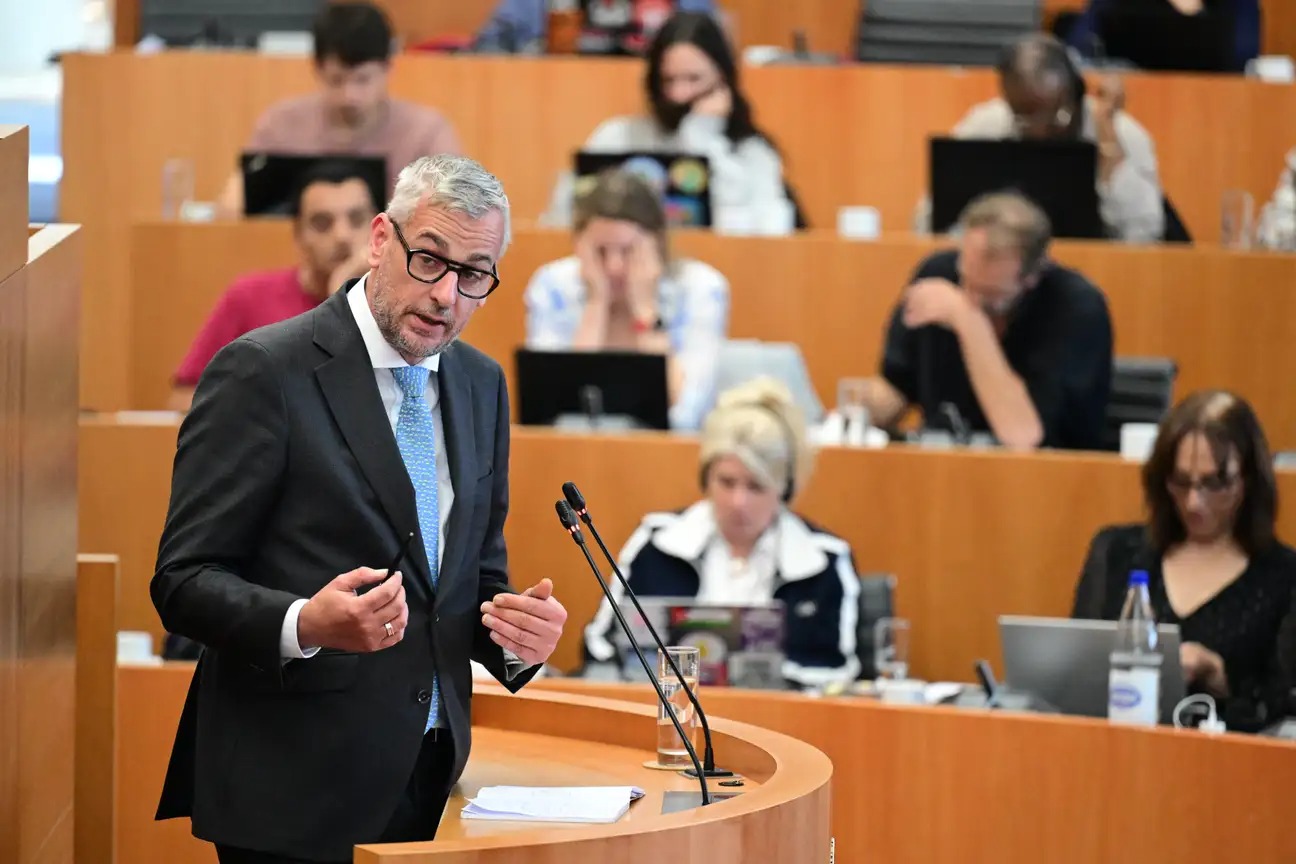
The Brussels regional government has submitted its 2027 budget documents to parliament after approving the plan during an electronic cabinet meeting. The announcement was confirmed by Finance and Budget Minister Dirk De Smedt on October 30. The government says the budget follows the financial path agreed under its coalition programme and aims to reduce the regional deficit to 719 million euros in 2027. Officials have also repeated their goal of reaching a balanced budget by 2029, although they acknowledge that the task will require several years of financial discipline.
The government says it intends to reduce spending mainly through changes to administration and public services rather than increasing taxes. One of the measures is the continuation of a staffing freeze in parts of the regional administration. Under this policy, employees who retire or leave are generally not replaced, although exceptions will be made for essential roles such as firefighters, waste collectors, street cleaners and metro drivers. The government expects the staffing measure to save around 75 million euros. Other savings are planned through the merger of support services and the delay or restructuring of selected technology projects.
Additional reductions are expected from several public bodies and regional services. The government has identified savings involving parking management, road infrastructure and public transport. It also plans to address administrative backlogs and review the use of public property. Officials argue that these steps will help reduce operating costs without raising taxes for residents. However, the budget process is likely to attract debate because spending reductions can affect the availability and quality of public services.
The budget also includes financial support for certain community institutions and municipalities affected by federal decisions. The regional government has set aside 17.8 million euros in compensation for community commissions, while removing a planned reduction from a municipal refinancing fund. These measures are intended to limit the impact of wider public finance changes on local services. At the same time, the government plans to keep some large investments outside the main budget through financial participation in organisations and development projects.
The submission of the budget documents means parliamentary committees can begin examining the proposals after the autumn recess. Lawmakers will review the figures and may question the government about its savings plans and long-term targets. The full parliament is expected to consider final approval in December. The budget will be an important test of whether the Brussels government can reduce its deficit while maintaining essential services and supporting the region’s economic and social needs.

