

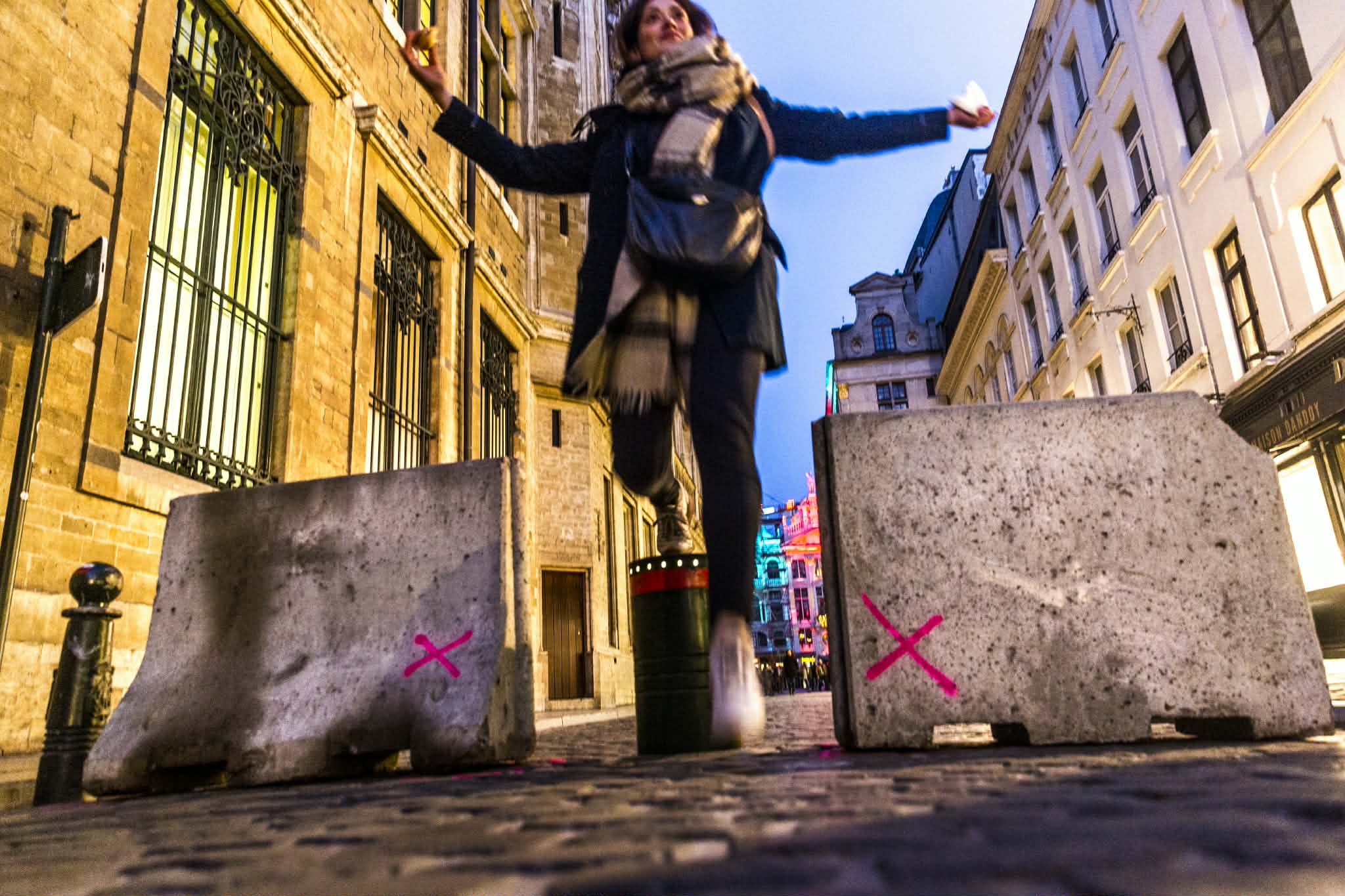
Brussels has begun a major effort to remove thousands of concrete blocks placed across the city over the past decade. The move is part of a wider plan to improve public spaces and reshape the urban landscape. Officials say the project will gradually dismantle around 3,000 blocks placed in streets, intersections, and public areas.
The first symbolic removal took place on Avenue de la Toison d’Or near Porte de Namur, on the border between Ixelles and the City of Brussels. The event was attended by President Boris Dilliès of the Reformist Movement (MR), Secretary of State for Urban Planning Audrey Henry, and Minister of Mobility Elke Van den Brandt of Groen. They jointly marked the start of the removal process.
The concrete blocks were originally installed in the mid-2010s. Many European cities introduced similar barriers after a series of terror attacks on the continent. The goal was to stop vehicle-ramming incidents and improve public safety in busy urban areas.
At first, the blocks were seen as temporary security tools. Over time, they were also used for traffic control, cycling lanes, and road safety projects. Their use expanded during the Covid-19 pandemic when cities quickly adjusted road layouts to support cycling and pedestrian movement.
However, what started as temporary solutions slowly became permanent fixtures. Many blocks stayed in place for years. This led to criticism from residents, urban planners, and political groups who said the city had not clearly planned their long-term use.
The Brussels regional government says the situation now needs correction. Officials confirmed that an inventory has been completed and a removal schedule is ready. They say the goal is to make streets more attractive and restore a cleaner public space design.
Audrey Henry said many of the blocks have been in place for over ten years. She said the city now wants to “turn the page” and improve the image of Brussels. She added that the capital should reflect a more modern and welcoming urban design.
According to regional data, there are nearly 3,000 concrete blocks spread across Brussels. Officials estimate that residents encounter one every few hundred meters in some areas. The density of these structures has made them a visible part of daily city life.
Elke Van den Brandt said the blocks helped improve road safety in recent years. However, she also said the visual impact is too strong. She explained that the region now wants to replace them with more permanent and better-looking solutions, such as bollards.
The issue has also been linked to earlier mobility policies in Brussels. Some critics associate the blocks with controversial traffic changes under the city’s “Good Move” mobility plan. Critics argued that temporary road changes were implemented without enough public consultation.
Residents in some neighborhoods also complained that temporary installations stayed in place far longer than planned. In certain cases, local groups filed complaints after road changes exceeded legal time limits without proper permits.
Urban planning authorities previously warned that some temporary setups were not fully compliant with regulations. This added pressure on the regional government to review long-standing installations and formalize or remove them.
The removal campaign is being presented as part of a broader effort to improve the city’s appearance. Officials say Brussels should have safer streets without relying heavily on concrete barriers that were meant to be temporary.
During the announcement, Dilliès said the initiative is about making the city more visually appealing. He said removing the blocks is part of a wider commitment to improving public spaces and restoring confidence in urban planning decisions.
The government slogan for the campaign states, “Brussels is beautiful – let’s show it.” Officials say the message reflects a shift from emergency-style urban design toward long-term city planning.
The removal process will not happen all at once. Authorities say it will be gradual, based on location priorities and safety needs. Some areas may see faster changes, while others will require new traffic solutions before blocks are removed.
The Brussels government says it will continue working on alternative safety measures. These may include redesigned road layouts, bollards, and improved traffic systems that do not rely on large concrete structures.
The project marks a new phase in Brussels’ urban development strategy. It also reflects a wider European discussion about balancing security, mobility, and city aesthetics in modern urban spaces.

