

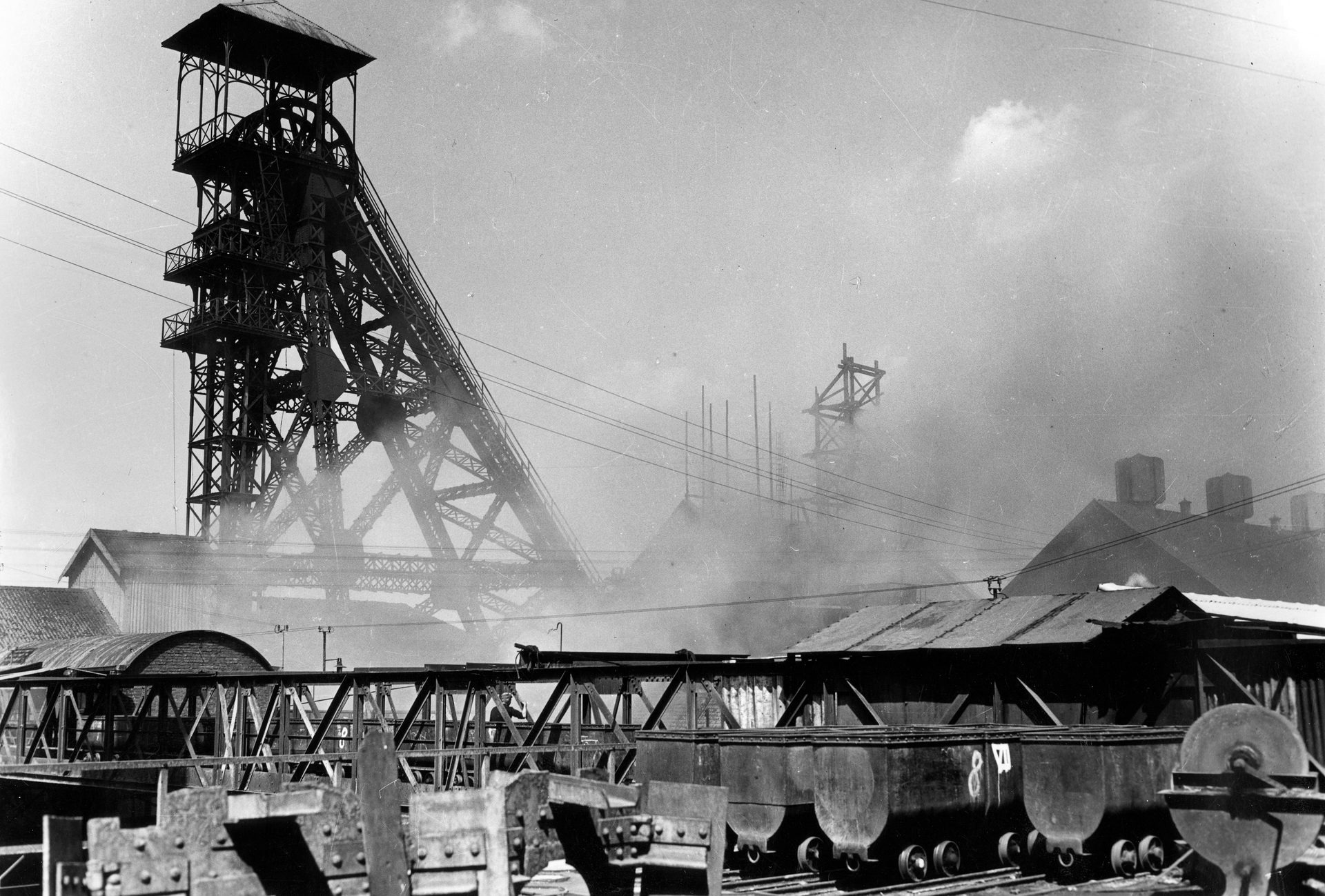
Seventy years after the tragic Bois du Cazier Disaster, stories of survival and loss continue to highlight one of Europe’s deadliest mining accidents and its lasting impact on families, communities, and generations of migrant workers.
The disaster occurred on August 8, 1956, at the Bois du Cazier coal mine in Marcinelle. A fire broke out deep underground, trapping hundreds of miners and leading to a tragedy that would become a defining moment in Belgian industrial history.
Among the workers connected to the disaster were two men from the Italian coastal town of Fano. Their stories reveal both the human cost of the accident and the broader migration movement that linked Italy and Belgium in the years after World War II.
Just days before the disaster, Urbano Ciacci had married Elsa Tonucci in Fano. He was expected to return to Belgium on August 6 to resume work at the mine. However, a delay in finalizing wedding arrangements changed his plans.
His wife still needed time to prepare and send household items traditionally included in a dowry. Rather than leaving immediately, Ciacci postponed his journey by several days.
That decision proved life-saving.
On the morning of August 8, as the couple prepared to travel from Milan to Belgium, Ciacci learned that a fire had broken out at the mine. Many of his colleagues were trapped underground.
Among them was Filippo Talamelli, another miner from Fano who had returned to work at the site.
Ciacci later traveled back to Belgium and joined rescue efforts. Like many relatives and friends of the miners, he waited anxiously outside the colliery gates for updates.
For weeks, hope remained that some workers might survive.
That hope ended on August 23 when a rescuer emerged from the mine and announced that all those still trapped underground had died.
The Bois du Cazier Disaster claimed the lives of 262 workers from 12 different nationalities. Italians made up the largest group of victims, with 136 losing their lives.
Nine of those victims had connections to the former Italian province of Pesaro and Urbino. Their deaths deeply affected communities across the region and strengthened the historical connection between Fano and Marcinelle.
The tragedy also exposed the difficult conditions faced by thousands of migrant workers who left Italy in search of employment.
Following World War II, both Italy and Belgium faced major economic challenges. Italy needed coal to help rebuild its economy, while Belgium needed workers for its mining industry.
In 1946, the two countries signed an agreement that created a labor exchange program. Under the arrangement, Italian workers traveled to Belgium to work in coal mines, while Italy received coal supplies needed for reconstruction.
The program attracted many young Italians who were seeking better opportunities. Recruitment campaigns promised stable employment and higher wages.
However, many workers discovered a much harsher reality after arriving.
Miners were often housed in basic barracks, including buildings that had previously been used during the war. Working conditions underground were extremely demanding.
Workers regularly descended hundreds of meters below the surface and spent long hours in narrow tunnels. In many areas, miners could not stand upright while performing their tasks.
Life in the mines was highly structured. Each worker was assigned a number that appeared on equipment, lamps, and lockers.
Ciacci later reflected on that experience by recalling how his assigned number became a key part of his daily identity while working underground.
The Bois du Cazier Disaster became a turning point in discussions about worker safety, labor rights, and migrant working conditions across Europe.
The scale of the tragedy led to increased scrutiny of mining practices and contributed to broader conversations about workplace protections.
Today, the memory of the victims remains strong in both Belgium and Italy. Ceremonies, memorials, and historical exhibitions continue to honor those who lost their lives.
The connection between Fano and Marcinelle serves as a reminder of how migration shaped communities far beyond national borders. Families, friendships, and shared histories linked small Italian towns with Belgium’s industrial regions.
Seventy years later, the Bois du Cazier Disaster remains more than a mining accident. It stands as a powerful symbol of sacrifice, resilience, and the human stories behind Europe’s postwar economic recovery.

