

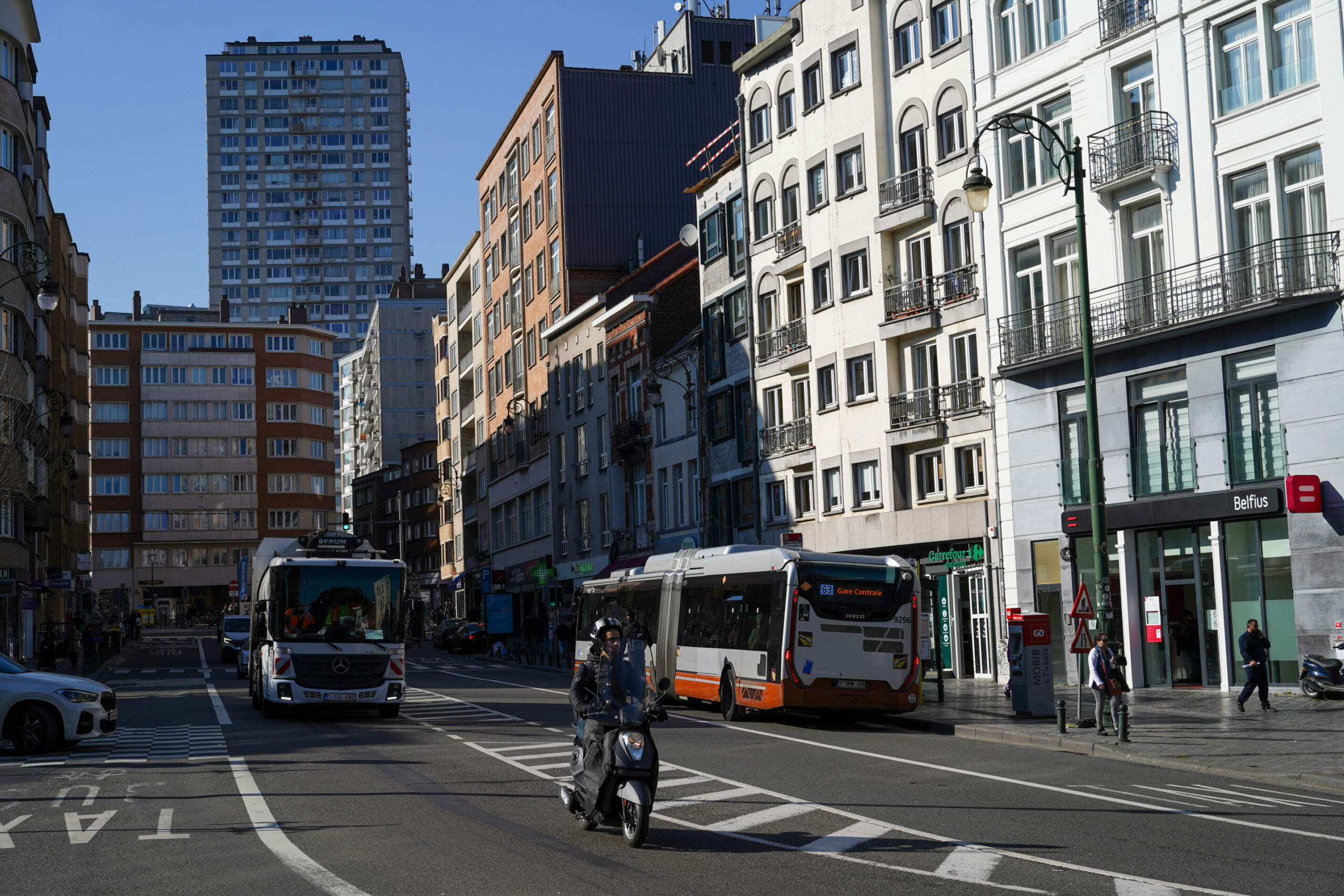
Saint-Josse Brussels inequality stands out sharply in the heart of Belgium’s capital, where extreme wealth and deep poverty exist only a few streets apart. Saint-Josse-ten-Noode, the smallest and poorest commune in the country, sits just next to Brussels’ wealthy European Union district, creating one of the clearest social contrasts in the city.
The commune is home to more than 24,000 residents from over 150 countries. It is also one of the most densely populated areas in Belgium. In daily life, more than 60 languages are spoken among neighbours, reflecting a high level of cultural diversity that is rare even in Europe.
Despite this diversity, Saint-Josse Brussels inequality is reflected in income levels. Official statistics show that Saint-Josse has the lowest median income in Belgium, at around €20,862. Nearby communes such as Molenbeek-Saint-Jean and Anderlecht also report low incomes, but still slightly higher than Saint-Josse.
For residents like political scientist Hanna Penzer, who has lived in the commune for around a decade, the area is more than just statistics. She describes Saint-Josse as a lively and diverse neighbourhood that offers calm within the busy city. She says life there feels both peaceful and active at the same time.
Penzer chose to live in Brussels after studying in Germany, partly because of her interest in languages. She says the multicultural environment in Saint-Josse, including a strong Turkish community, made her feel at home. She describes the area as a place where families of many backgrounds live together across generations.
However, Saint-Josse Brussels inequality is also visible in everyday challenges. Residents report ongoing social issues, including poverty and drug-related activity. Some say even young people are affected, which creates concern among locals.
Penzer says she generally feels safe in the area, but acknowledges that problems exist. She also notes that drug activity can sometimes be seen even on residential streets. She adds that safety concerns increase near transport hubs, especially at night around Brussels North station.
Despite these issues, many residents say the commune has strong community ties. People from different backgrounds often interact closely, and local life remains active. The absence of heavy tourism and nightlife also gives parts of the commune a quieter atmosphere compared to central Brussels.
Saint-Josse Brussels inequality is also linked to long-term structural challenges. Residents and observers say poverty and lack of support for young people remain key issues. Some argue that these problems have remained largely unchanged over the past decade.
Although some statistics show slight improvements in income levels and crime rates, many locals believe change has been slow. There is a shared view that broader regional investment is needed to improve living conditions and opportunities.
Community members say the diversity of Saint-Josse is both a strength and a challenge. While it creates a rich cultural environment, it also brings difficulties in education, integration, and public services. Schools in particular face challenges in adapting to highly multicultural classrooms.
The Belgian-Turkish Women’s Association, based in Saint-Josse, plays an important role in supporting integration. It helps women, mainly from Turkish, Moroccan, and Syrian backgrounds, learn French, understand administrative systems, and adjust to life in Belgium. The group also supports families through community activities.
Members of the association say they feel a strong sense of solidarity in the neighbourhood. They describe a community where people support each other during major life events and maintain close social ties.
At the same time, they acknowledge safety concerns in specific areas, especially near major transport stations at night. However, they say most of Saint-Josse feels safe in daily life.
Saint-Josse Brussels inequality is also shaped by geography. The commune sits next to the European Union institutions, where high-income professionals work, while many local residents face economic hardship just minutes away.
Despite these contrasts, residents highlight several advantages of living in Saint-Josse. Its central location provides easy access to jobs, transport, shops, and European institutions. Many see this as a key benefit that balances some of the area’s difficulties.
Ultimately, Saint-Josse reflects a wider reality in Brussels: a city of sharp contrasts, where global institutions and working-class communities exist side by side. For residents, the challenge is not only addressing poverty, but also building understanding across one of Europe’s most diverse urban communities.

