

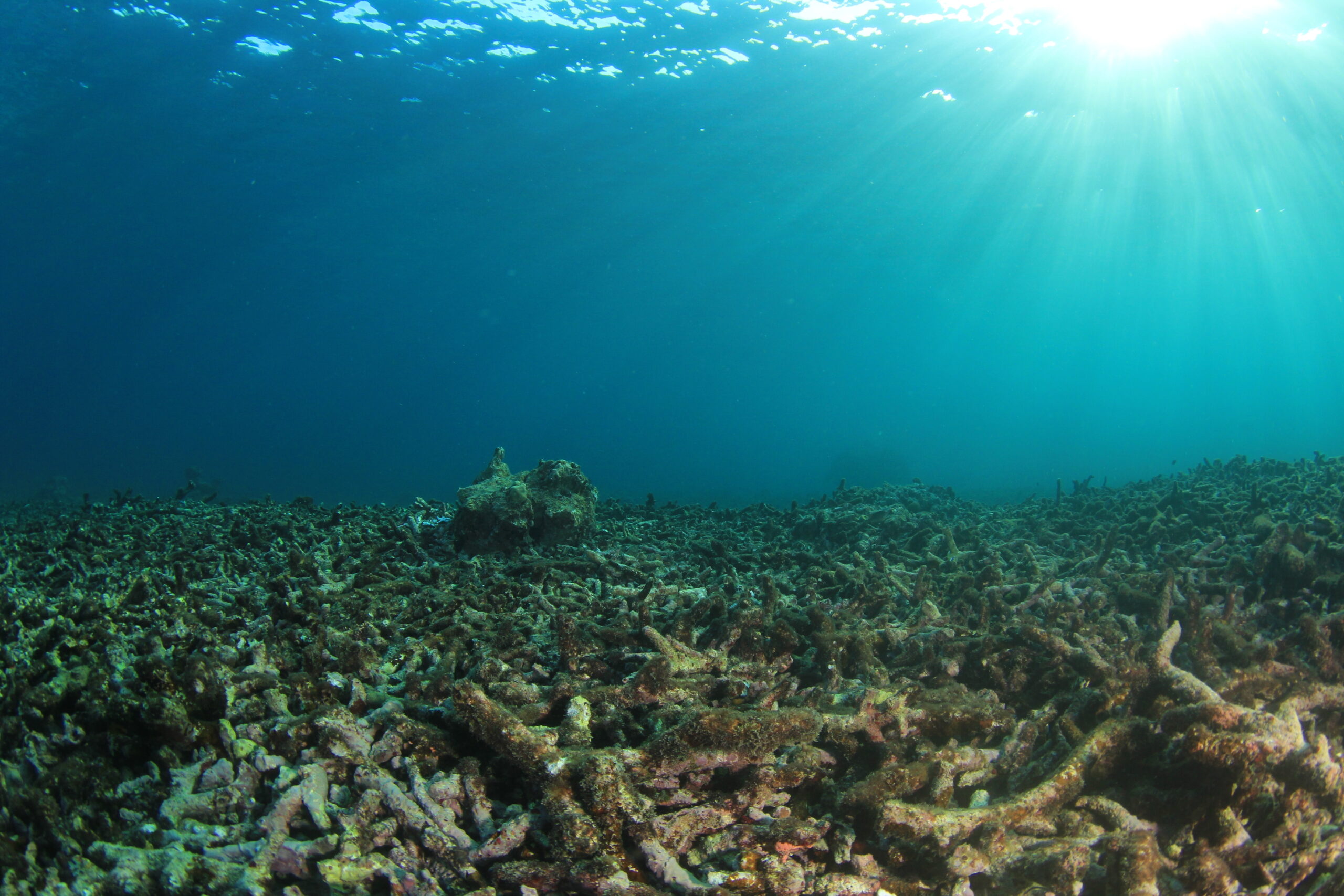
The world’s oceans have failed a crucial planetary health check for the first time, driven largely by fossil fuel emissions.
According to the 2025 Planetary Health Check by the Potsdam Institute for Climate Impact Research, ocean acidity has crossed a critical threshold, making it the seventh of nine planetary boundaries now transgressed. Scientists warn this poses severe risks to marine ecosystems and human food security.
Since the industrial era, surface pH has dropped by 0.1 units – a 30-40% rise in acidity. This shift threatens corals, Arctic marine life, and shell-building species like oysters and clams, with cascading effects on larger animals such as salmon and whales.
Researchers highlight that oceans, which cover 71% of Earth’s surface, are vital climate stabilisers, absorbing heat and up to 30% of atmospheric carbon dioxide. Acidification could undermine this role, further accelerating global warming.
The report stresses that while climate change, biodiversity loss, deforestation, and other boundaries continue to worsen, the breach of this ocean-centred category is especially alarming due to its scale.
Scientists call for urgent reductions in fossil fuel use, better fisheries management, and pollution cuts. They point to past successes like the Montreal Protocol as proof that strong international action can reverse environmental decline.
Johan Rockström, the institute’s director, said: “Even if the diagnosis is dire, the window of cure is still open. Failure is not inevitable; failure is a choice.”

