

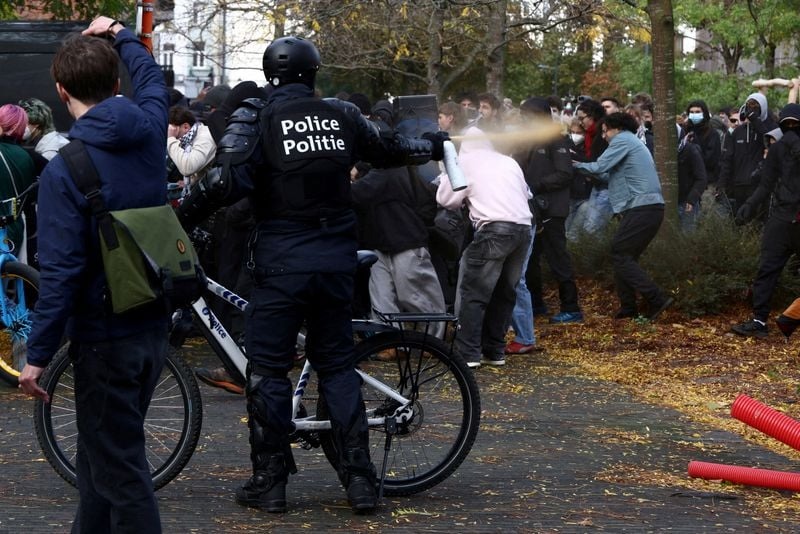
Calls for better education funding remained part of the debate in Belgium after another protest in Brussels brought students and other demonstrators into the streets. The gathering on October 24 was part of a wider series of rallies over public services and government decisions. Although the event was smaller than the previous week’s unrest, it showed that concerns about schools and the treatment of demonstrators had not disappeared. The demands have placed pressure on political leaders to explain how public resources are being used and what changes may be possible.
Education funding affects more than the amount of money allocated to a school. It can influence class sizes, the availability of teachers, learning materials, building repairs, student support, and the range of services offered to young people. When schools lack staff or resources, teachers may struggle to give students the attention they need. Families can also feel the impact when students do not have access to the same learning opportunities as their peers. These concerns help explain why education often becomes a wider public issue rather than a matter limited to school administrators.
Young people have been visible in recent demonstrations, reflecting concern about their own education and their future prospects. For students, school quality can shape access to further study, employment, and social mobility. They may see a lack of support as a sign that their needs are not being treated as a priority. Teachers and education workers can share some of these concerns, particularly when they face heavy workloads or shortages that affect their ability to teach effectively.
The protests have also included criticism of police conduct. Some demonstrators say that officers have used excessive force at earlier gatherings, while authorities argue that they must respond when public order is threatened. These competing views can deepen mistrust if incidents are not investigated clearly and quickly. Public confidence depends on evidence, transparent procedures, and a fair process for examining complaints. It also depends on demonstrators recognising that violence or damage can undermine the public support they hope to gain.
For the government, education policy involves difficult decisions about priorities and budgets. Public authorities must balance school spending with health services, transport, social support, and other needs. Officials may also have to consider differences between regions and communities. This does not remove the pressure to improve schools, but it means that promises must be backed by plans that explain how money will be raised, allocated, and monitored. Clear targets can help families and educators judge whether a policy is delivering real results.
The debate is especially important because education has long-term effects on the economy. Students who receive strong support may be better prepared for work, further training, and changing technology. Schools can also help reduce inequality by giving young people from different backgrounds access to useful skills. Underfunding can make these goals harder to reach and may leave some students with fewer choices after graduation. Investment therefore has both a social value and an economic purpose.
At the same time, protests can create difficulties for residents and businesses when they disrupt roads or lead to clashes. Organisers need to make their demands clear while discouraging behaviour that places others at risk. Police should protect peaceful demonstrators and act proportionately when violence occurs. Both sides have a role in reducing the chance that a dispute over public services becomes a wider conflict about trust in institutions.
The next stage of the debate will depend on whether officials set out practical steps on school resources and whether complaints about police conduct receive a credible response. Demonstrations can draw attention to an issue, but lasting change usually requires detailed decisions and follow-up. Belgium’s challenge is to turn public concern into a clear discussion about what schools need, how those needs should be funded, and how progress can be measured over time.

