

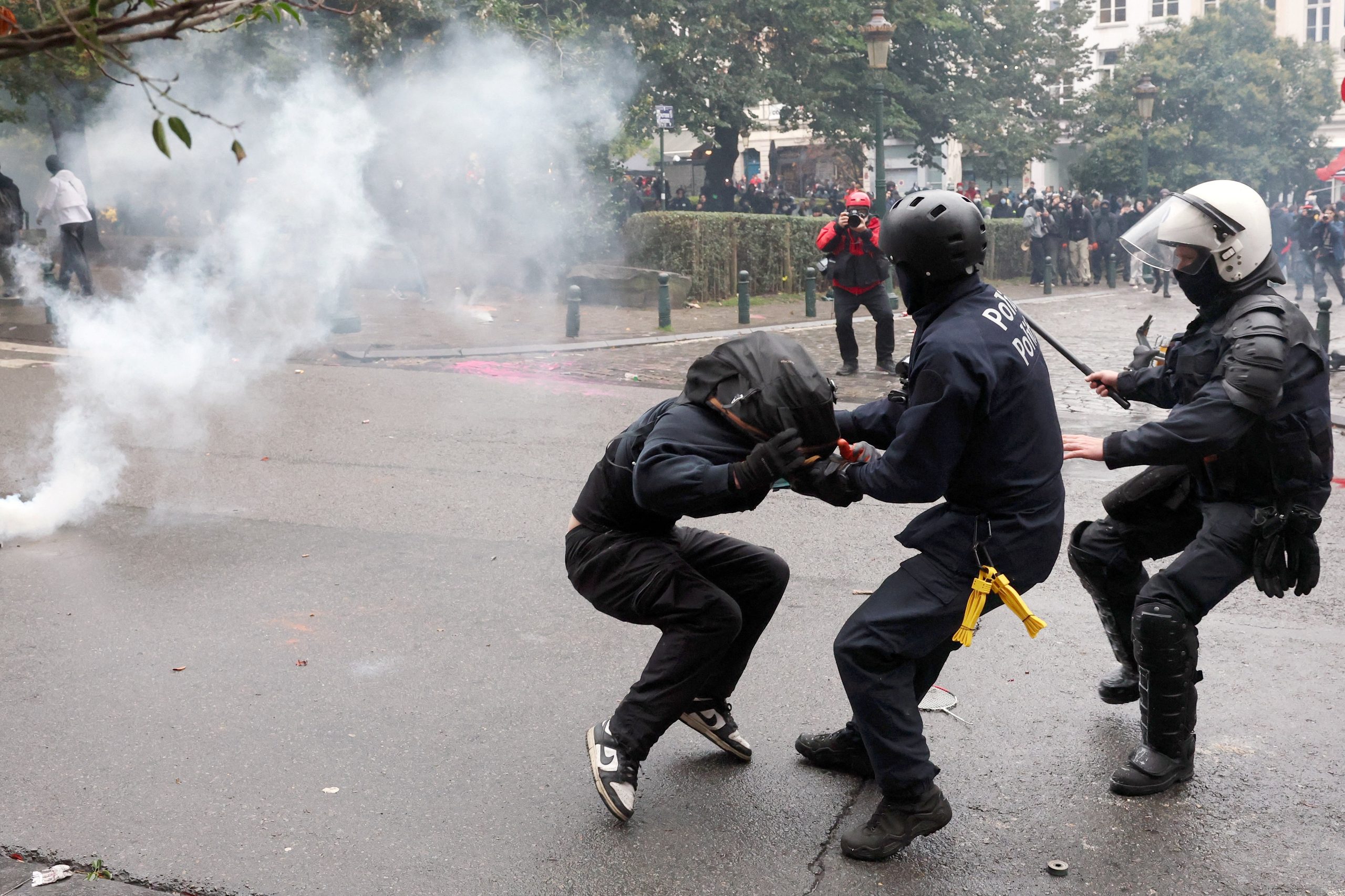
Brussels is facing renewed debate over public order after police and demonstrators clashed during a protest over education funding and wider public concerns on Saturday, October 24. A report published on October 25 said hundreds of people, many of them young, gathered in the city as part of a series of demonstrations held in recent months. The protest was smaller than the major unrest seen the previous week, but it still raised questions about the safety of public gatherings and the way authorities respond when tensions rise.
The demonstrators were calling for better conditions in education and more support for schools. Education funding has become a source of concern for students and others who believe that public services need stronger investment. Protesters have also criticised what they view as excessive police force during earlier gatherings. These complaints have helped keep demonstrations going, even when the number of people attending varies from one event to another. For many participants, the protest was a way to make their concerns visible and press political leaders to respond.
The gathering moved through parts of Brussels as police attempted to keep the situation under control. Some protesters threw objects, and officers used tear gas or pepper spray in incidents reported during the afternoon. Witnesses also described a confrontation in which officers pursued demonstrators. Such events can quickly change the mood of a protest, especially when videos or reports circulate online and lead to competing claims about who caused the escalation.
Police said they had taken steps to maintain public order and protect people in the area. Several people were temporarily detained for disrupting public order, while others were arrested over alleged possession of prohibited weapons or incitement to riot. Authorities said there had been no major incidents during later stages of the operation. The arrests show that police were seeking to prevent further disorder, but they may also lead to questions about how the restrictions were applied and whether they were proportionate.
Public demonstrations are a normal part of political life, and authorities must balance the right to protest with the need to protect residents and property. The challenge becomes more difficult when a gathering moves through busy streets or when a small group begins to act violently. Police need to respond to immediate risks while avoiding unnecessary force against people who are demonstrating peacefully. Protest organisers also face pressure to communicate clearly with participants and discourage actions that could put others in danger.
The dispute over education adds a policy issue to the question of public order. If protesters believe that schools lack the resources they need, a security response alone will not answer their concerns. Government leaders may need to explain how education funding is decided, which improvements are possible, and when changes could be delivered. Clear information can help reduce frustration, even if it does not satisfy every demand. A failure to address the underlying issues could allow tensions to continue.
The demonstrations also affect people who are not involved. Commuters may face delays, local businesses can lose customers, and residents may feel anxious when police block streets or disperse crowds. These effects can be reduced when authorities provide timely updates and organisers communicate planned routes. People living near demonstration areas also need clear information about access to homes, transport, and emergency services.
The coming days will show whether further protests are planned and whether political leaders respond to the demands raised in Brussels. The immediate priority is to protect public safety while preserving the right to peaceful assembly. Longer term, a lasting solution will depend on how authorities handle complaints about education and whether both demonstrators and police can avoid actions that increase mistrust.

